
REPAIR EDUCATION CENTER
Understand the Repair Before You Approve It
Clear, plain-English guidance for what happens after a collision—from the first safety questions through estimates, teardown, structural repair, refinishing, scanning, calibration and delivery.
1 · KNOW YOUR NEXT STEP
Accident help, photos, towing and the first estimate.
2 · UNDERSTAND THE REPAIR
Teardown, supplements, structure, parts and refinishing.
3 · ASK BETTER QUESTIONS
Vehicle technology, manufacturer procedures and final checks.
THE SHORT VERSION
What will you find in Repair Education?
These guides explain the decisions vehicle owners commonly face after a collision. They are meant to help you understand the process and ask useful questions—not replace a vehicle-specific inspection, estimate or repair plan.
START HERE
Guides for the Questions That Come First
AFTER AN ACCIDENT
What should happen first, what photos help and how towing fits into the next decision.
ESTIMATES & INSURANCE
How an initial estimate develops, why supplements happen and what questions to bring to the process.
INSURANCE HELP
Neutral explanations of shop choice, inspections, claim questions and how the repair plan fits the process.
THE REPAIR ITSELF
Follow the Vehicle-Specific Repair Path
The visible damage is only one part of a collision repair decision. These resources explain how inspection findings, structure, manufacturer procedures and vehicle technology connect.
Inspection, Structure & Repair Planning
Scanning, Calibration & Verification
OWNER QUESTIONS
What Owners Ask Most
The right answer depends on the vehicle, the damage and the documented repair requirements. These are the principles that help you understand the conversation.
MORE REPAIR SCENARIOS
Explore Collision Repair Situations
Use these focused guides to understand common damage patterns, repair decisions and quality checks before you approve a repair plan.
Explore Guides by Repair Topic
Open a topic below to find a specific answer and related repair guidance. Ask your selected shop how the information applies to the vehicle and work being discussed.
Weekly owner checklists
Need a practical next-step checklist? Explore Weekly Repair Checklists for common situations and the right questions to ask.
Choose a guide by your stage of the repair
These resources explain decisions and questions. They are not remote diagnoses, insurer coverage decisions or a substitute for the manufacturer procedure that applies to a particular vehicle.
Turn a repair guide into a focused question
Use a guide to identify the decision you want explained. After reading about teardown, ask which area needs access and what finding will resolve the question. After reading about scanning, ask which systems were accessed and which findings need further diagnosis.
For a refinishing question, identify the panel and ask why the plan includes its preparation, color or blending work. At handoff, connect the original concern with the completed operation and the records supplied for it. These questions give the conversation a specific subject without asking you to diagnose the vehicle yourself.
Keep a short note containing the guide topic, your actual observation and the answer you need from the estimator. Add the vehicle and estimate date when contacting New Orleans or Luling. One clearly framed question is easier to resolve than a general request to confirm every possible procedure at once.
How to use the repair guides
Repair access in an owner-supplied project archive
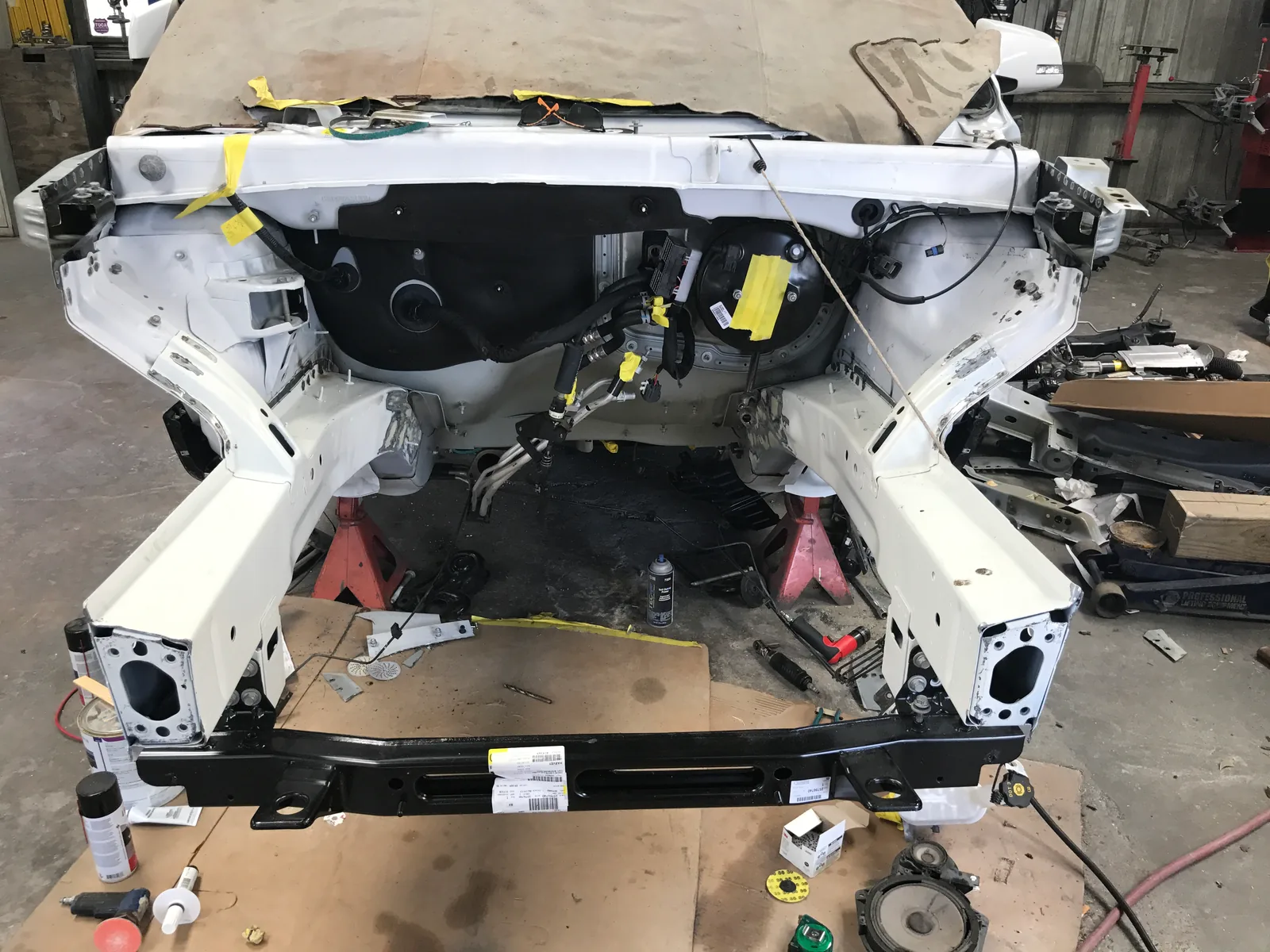
Owner-supplied GMC project archive photograph. The education guides explain questions about inspection, parts and repair planning; this photograph does not document the complete technical scope of that repair.