
BOUDREAUX’S COLLISION · REPAIR EDUCATION
Collision Photos and Personal Information
Accident or damage photographs can unintentionally include documents, people or unrelated personal details. Useful repair photos focus on the vehicle and relevant damage once everyone is safe. Sending more private information does not necessarily make the estimate request more useful.
Illustration: Collision Photos and Personal Information
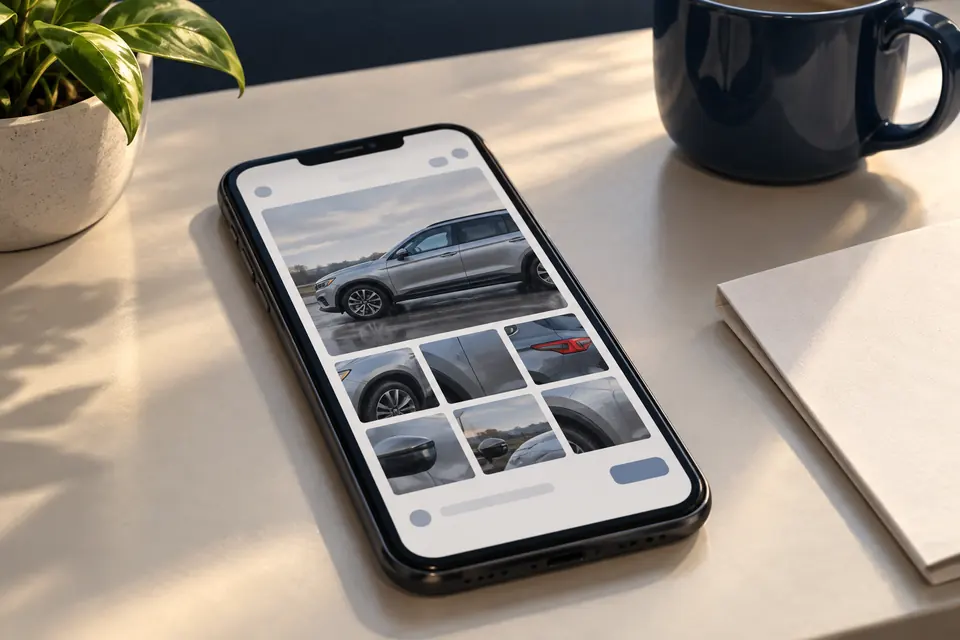
Generated educational illustration: repair photo information review. Not an actual customer repair, diagnostic result, staff member or Boudreaux’s facility.
What to Clarify for Your Vehicle
Review attachments before uploading and include only what the shop needs for the discussion. Use the designated request path rather than posting claim documents publicly. Photos support the conversation but do not confirm all damage or driving safety.
Share repair evidence with only the necessary details
Collision photos can show license plates, personal documents, faces, location information and other unrelated details. Review what is visible before sharing. Use the channel agreed with the shop for intake rather than posting the entire photo collection publicly.
Keep an original copy of useful repair evidence. If you make a version with unrelated personal information obscured, label it so the altered copy is not mistaken for an untouched original.
Make the image useful to its recipient
Send a wider view that locates the damage and a closer view where it adds information. Identify when the images were taken and whether the vehicle had already been moved or disassembled. An unlabeled close-up can be difficult to interpret.
Do not include account, identification or payment documents unless they are needed for a defined purpose through an appropriate channel. Clear, limited sharing protects personal information while still giving the repairer useful evidence.
Example: a useful image contains an unrelated document
A damage photograph also shows a personal document inside the vehicle. Before sending it, review whether that information is necessary for the repair question. A separate sharing copy can obscure unrelated details while preserving the original evidence.
Label an edited copy and avoid altering the damage itself. Pair a close-up with a wider view so the shop can locate the area. Identify the timing and any movement or disassembly that had already occurred.
Use the agreed intake channel rather than publicly posting the collection. Limited, clearly labeled evidence can support the repair conversation without exposing unrelated personal information. If a document is actually required, confirm the purpose and suitable channel instead of including it accidentally in a photograph.
Related Guidance
Check what the photograph shows beyond the damage
A damage photograph can also include personal paperwork, a screen displaying contacts, another person’s face or details unrelated to the repair. Review the image before sharing and focus on what the receiving shop needs to understand the vehicle and affected area.
A safe exterior view and relevant damage detail are usually more useful to an initial conversation than an entire collection of unrelated cabin photographs. Ask the shop which identification or additional records are required for the actual request. Do not assume every visible personal detail is necessary simply because it appears in the same image.
Keep privacy preparation secondary to safety. Do not move the vehicle into a hazardous position, reach into a damaged opening or handle loose parts to arrange a cleaner photograph. If a safe image is unavailable, describe the condition and ask what assessment can be arranged.
Keep useful damage evidence without changing its meaning
If you prepare a copy for sharing, avoid altering the damage area or making a change that misrepresents the observation. Preserve the original image and describe the date or circumstances separately. A cropped view can lose context, so ask whether a wider safe view is needed as well.
Identification and diagnosis are different purposes. A VIN or another relevant vehicle record can help identify the vehicle and fitted equipment, but it does not establish the condition of a damaged component. An exterior photograph helps intake; it cannot reveal every hidden finding or provide a final repair determination.
Use the selected shop’s confirmed contact method and include a concise message explaining the image. A broad public post is not the same as a repair submission. Account passwords, authentication codes and unrelated medical or financial documents do not belong in a general estimate request.
Share the records needed for the next step
Ask which additional material the receiving contact needs, and keep the repair and claim questions distinct. An insurer may request documents for its review, while the repairer needs information about the vehicle and proposed scope. Do not assume one submission supplies every record required by the other party.
Keep a dated copy of the images and accompanying description. If the plan changes after physical assessment, ask what new finding became visible and which operation addresses it. The image remains an intake record rather than proof that the original visible-damage proposal was complete.
For Boudreaux’s New Orleans or Luling, identify the receiving location and provide a reachable contact method. Review the submitted-information guidance for the website and ask about a specific handling question before sending an unrelated sensitive record. This guide does not promise a particular retention period or processing arrangement that has not been confirmed.