
BOUDREAUX’S COLLISION · REPAIR EDUCATION
Door Glass Tracks and Regulators After a Collision
Side-impact damage can affect the glass, its guide path, regulator, attachments or the door structure. A pane that moves once may still have binding or alignment concerns. Repair planning should distinguish the glass function from the surrounding body condition.
Illustration: Door Glass Tracks and Regulators After a Collision
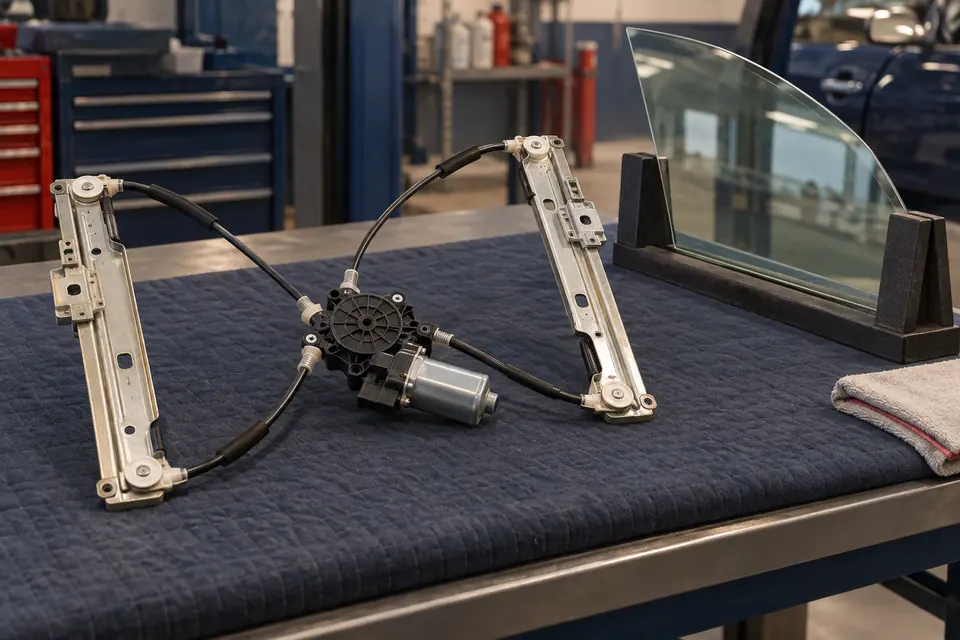
Generated educational illustration: door window regulator scope. Not an actual customer repair, diagnostic result, staff member or Boudreaux’s facility.
What to Clarify for Your Vehicle
Describe uneven movement, noise or incomplete closing. Ask which related components and functions will be evaluated before delivery. Do not force a binding window to test it; additional movement can complicate the condition.
The glass and its operating mechanism are different parts
Door glass moves through guides using a regulator and related components. A collision can affect the glass, tracks, attachments or the surrounding door. Replacing broken glass does not automatically resolve an operating problem in the mechanism.
Binding, unusual noise or a changed position needs assessment. Repeatedly operating a damaged window to see whether it frees itself can worsen a problem.
Describe operation before and after the impact
Tell the shop whether the window was working normally before the collision and what changed afterward. Identify whether it fails to move, moves unevenly or makes a new noise. Those observations guide diagnosis without assuming the motor is the cause.
Ask which components were inspected and whether any required setup applies after the work. At delivery, review the affected operation and visible fit with the shop. If a problem remains, report it before trying to adjust or force the glass.
Example: new glass installed, movement still uneven
A broken door window is replaced, but its movement remains uneven. The new pane does not establish that the tracks, regulator or surrounding door are undamaged. The remaining symptom needs assessment rather than repeated operation to force the window into place.
Tell the shop whether the uneven movement began at the collision or was present earlier. That history helps frame the inspection. Ask which components were checked and what supports any additional repair. If a setup operation applies, its purpose should be explained separately from a physical component replacement.
Review the affected function at delivery where practical. If noise, binding or a changed fit remains, identify it before attempting an adjustment yourself. Keep the scope and follow-up findings together. The useful distinction is between replacing visibly broken material and resolving a diagnosed operating concern; they may be part of the same job, but one is not independent proof that the other has been completed.
Related Guidance
A window symptom can involve several door components
Door glass movement depends on the glass, its guides or tracks, the regulator mechanism and related controls and attachments. A side impact can affect the door opening or the components inside the door. Slow movement, a changed position, a new sound or failure to close therefore needs assessment rather than an automatic regulator replacement.
Describe what changed and when you noticed it. If the glass is visibly displaced, broken or binding, do not operate it repeatedly to demonstrate the problem. Keep hands away from a damaged opening and do not reach into the door. Tell the shop whether the opening can be secured and ask about receiving and transport arrangements.
Also disclose earlier window symptoms or previous door work. Clear history helps distinguish a new collision-related concern from an existing condition. A single successful movement does not establish that the glass, guides, attachments and door geometry are suitable throughout the operating range.
Make the plan identify the finding inside the door
A repair estimate can list removal of trim for access, replacement of glass, work on a regulator or repair of another door component. Ask which finding supports each operation. Removing a trim panel does not mean it is damaged, and a general window repair description may conceal important differences between two proposed scopes.
The vehicle procedure governs glass and mechanism installation, adjustment and applicable checks. Ask whether the assessment includes the opening and relevant attachment areas as well as the moving components. A new regulator alone cannot establish that collision damage to a guide or door has been resolved.
If the vehicle uses a window indexing or initialization function, ask whether the applicable procedure is part of the completed operation. Do not assume every model requires the same reset sequence or attempt a generic internet sequence while the glass is damaged. The repairer should determine the appropriate steps for the vehicle and the work performed.
Include sealing and operation in the handoff conversation
At delivery, ask what caused the original concern, which components were repaired or replaced, and what applicable functional checks followed. Review a reported sticking or closing problem before assuming the repair is complete. If the plan included a seal, guide or opening concern, ask how that finding was addressed as well.
Moisture in a door or cabin needs a clear entry-path assessment. A visible wet area does not automatically establish that the movable glass is the cause. Report when the moisture appeared and which area was wet without pouring water into an opening or dismantling trim to investigate.
Boudreaux’s New Orleans and Luling locations have separate intake arrangements. Identify the collision-related window concern when choosing the facility and confirm the scope of glass or mechanical coordination. Keep the final invoice and part explanation. If binding, wind noise or an incomplete closing condition returns afterward, stop repeated operation and contact the repairer for the next step.