
BOUDREAUX’S COLLISION · REPAIR EDUCATION
Hidden Collision Damage: What Exterior Photos Miss
Hidden collision damage is damage concealed by installed panels, trim or components, or a condition requiring measurement or diagnosis to establish. It should be documented rather than assumed from a dent alone.
An exposed area beyond the exterior view
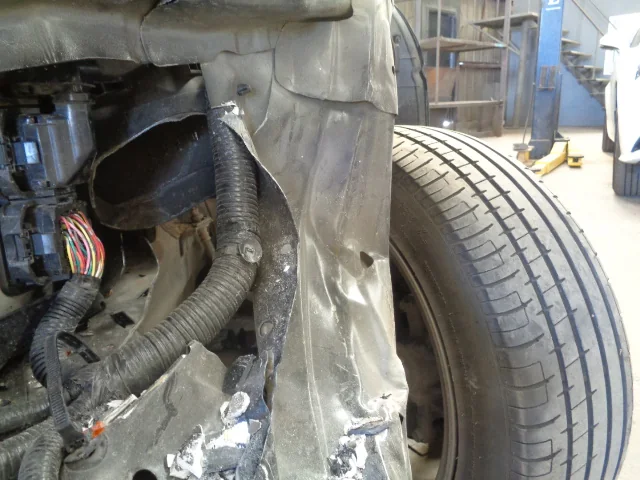
Owner-supplied archive close-up of exposed inner front-area metal and wiring. Ask which identified finding supports each operation in your own repair plan.
Visible exterior damage and concealed findings are different records
The first exterior photograph establishes what the camera could see before access. It does not establish the condition behind installed panels. After an authorized inspection opens the area, a second view can identify a concealed finding and its relationship to the surrounding parts.
The archive close-up here shows bent inner metal beside the front tire and exposed wiring. This is a view of an opened area, rather than evidence that the same condition exists behind every damaged bumper. Your estimate should identify the actual location and finding on your vehicle.
Match each open question to the evidence it needs
A concealed attachment, an uncertain body dimension and a new warning message are separate questions. Ask whether access, measurement, diagnostic investigation or procedure research is needed for each one. One type of evidence may help the repair plan without answering all of those questions.
Use a simple findings list: the area, what is confirmed, what remains uncertain and the next step that will resolve it. When an additional operation is proposed, ask how it follows from the identified finding. This gives a supplement more context than a change in price alone.
Related Repair Guidance
Describe what changed without guessing what failed
Your observations are valuable even when you cannot identify the damaged part. Tell the shop what happened and what you noticed afterward: a new noise, a warning message, an opening that behaves differently or an unusual change in vehicle behavior. Use ordinary words and a timeline. Saying that a noise began after the impact is more useful than naming a component you have not had inspected.
Include conditions you remember, such as whether the symptom occurred once or repeatedly, and whether the vehicle was moving or stationary. If a warning was already present before the collision, say so. This prevents an older condition from being described accidentally as a new event. Keep your observations distinct from advice offered by someone who has seen only an exterior photograph.
Do not create a road test or take panels apart to obtain more information. If there is uncertainty about safe movement, discuss receiving and transport with the selected shop. Photographs should be taken only from a position you can reach safely. A missing view is preferable to crawling beneath an unstable vehicle or approaching an unsafe traffic situation for a more detailed picture.
Prepare a short list of those observations for intake. It helps the estimator connect your concerns to the inspection and gives you a reference when the findings are explained. The list is not evidence that every concern has the same cause; it records what needs to be discussed.
Understand what each kind of evidence can answer
An exterior photograph records the surface presented to the camera. A close view may show a crease or broken edge, while a wider view identifies its position on the vehicle. Neither view establishes the condition of every adjoining component. The useful next question is what additional access or examination is needed to evaluate the concern raised by the picture.
Different questions require different evidence. Access may reveal a concealed attachment. Measurement may be needed to evaluate geometry. Diagnostic information may help investigate an electronic concern. Ask the shop which type of evidence supports the conclusion it is making rather than treating one photo, one measurement or one report as an answer to every issue.
For a hypothetical bumper impact, a cover photograph could support an initial discussion about visible damage. An inspection of the area behind the cover may answer a different question about the attachments. If the vehicle also has a new warning, the shop may need a separate diagnostic path to explain that warning. These examples illustrate separate questions; they do not establish what happened to your vehicle.
When the shop explains hidden damage, ask it to identify the location and the new evidence. Then ask whether the finding is confirmed or whether another step is still required. This distinction is especially helpful if the first estimate was prepared before the shop had physical access. You can understand why a plan changes without having to make the technical diagnosis yourself.
Keep a clear record when the repair scope changes
Request the current estimate and a plain-language explanation of the important changes. Make a note of the date and keep any photographs or reports supplied with it. If several parties are discussing the repair, refer to the same version. A conversation about a preliminary photo estimate can otherwise become confused with a later inspection-based plan.
Ask whether the additional finding changes only one operation or affects the order of other work. The answer may help explain a parts request or a scheduling change. An increase in scope does not by itself tell you how long the repair will take; ask which dependency now controls the next step and when you should expect another update.
If you disagree with an explanation, identify the specific line or finding you want clarified. Ask what evidence supports it and what information would settle the question. This keeps the discussion practical. A second outside opinion based only on the original exterior photos may still be missing the newly exposed area that changed the first plan.
Discuss decisions before assuming that additional work is authorized. The shop can explain its findings and proposed operations; you should understand what approval is being requested and what remains open. Where insurance is involved, ask about the status of the revised documents without assuming submission means acceptance.
Contact the Boudreaux’s location handling the vehicle with your questions and records. Explain whether you are seeking an initial inspection, reviewing a changed estimate or arranging transport. Each requires a different next action, and the New Orleans or Luling team can confirm the arrangement for that location.