
Illustration: When to Tow After an Accident
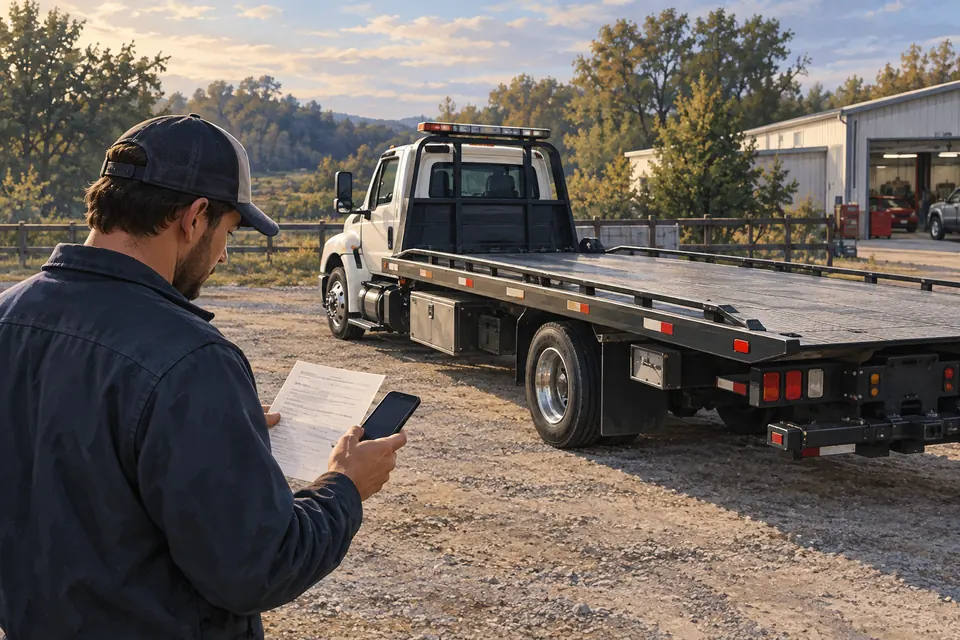
Generated educational illustration: transport destination planning. Not an actual customer repair, diagnostic result, staff member or Boudreaux’s facility.
When should I arrange towing instead of driving?
Towing is the safer starting point when collision damage leaves the vehicle’s condition or control uncertain. Leaks, damaged wheels or tires, loose parts and steering concerns should be assessed before driving.
Do not use a short road test to prove the vehicle is safe. Call the chosen shop to confirm the destination and discuss the vehicle’s condition before arranging transport. Ask the towing provider about handling requirements; confirm the actual provider and arrangement separately.
How This Fits Into the Repair Plan
Confirm the actual provider, current vehicle movement concerns and chosen shop’s receiving acceptance before dispatch. Keep transport charges and any insurer review separate from repair authorization.
Related Repair Guidance
The vehicle condition comes before route convenience
A towing question should follow the actual vehicle and movement concerns rather than only the distance to the shop. Describe a vehicle that cannot roll or steer, a displaced wheel, a loose area, a closure problem, visible leakage or another concern. The relevant assessment and transport conversation should use those facts.
Do not drive an uncertain vehicle simply to avoid arranging transport or to demonstrate the symptom. A short route and a small visible mark do not independently establish suitability for road use. A website photograph request is not the complete driving-condition assessment.
If immediate emergency assistance is needed, use emergency services first and follow their instructions. A repair shop’s receiving conversation is a separate next step. Do not treat a map link or estimate form as the emergency-response route.
Take any photographs only from a safe position and explain unavailable access. Do not reach beneath unstable parts or force components for a better transport description. Clear observations can help the provider discuss the appropriate arrangement.
Related reading: Is a Vehicle Safe to Drive After an Accident? and Towing & Accident Recovery.
Confirm both transport and the receiving destination
Contact the chosen shop and confirm acceptance, purpose and receiving instructions before dispatch. New Orleans and Luling have separate street addresses and phone numbers. A service-area community page is not another branch destination.
Give the driver the chosen shop name, exact address and agreed instructions. Keep vehicle identity and contact information clear. A changed navigation link does not automatically transfer a receiving arrangement or notify every responsible person.
Ask the actual transport provider what information and arrangement are needed for the vehicle’s condition. The shop destination and transport method are different questions. This guide does not select an operator’s equipment or provide a do-it-yourself loading procedure.
B’s Towing is a separate business owned by Rodney. Choosing a collision-repair location does not automatically book it or establish availability, dispatch timing, charges or claim coverage.
Clarify any charge, claim or payment-responsibility question with the responsible party before authorizing the arrangement. A claim number or preferred shop does not promise universal towing coverage, a free service or a fixed arrival window.
Update the plan if the condition or destination changes
If the vehicle condition changes after transport was discussed, tell the provider and receiving team before dispatch. Explain the current movement concern rather than rely on an earlier description. The actual arrangement should follow the vehicle as it now exists.
If you change the preferred shop, confirm which location is expecting the vehicle and how the relevant request information follows it. An address change alone does not establish acceptance or repair authorization at another facility.
At arrival, keep the purpose and current estimate or request clear. Receiving acceptance, technical assessment and work authorization are different steps. Ask what remains provisional and which next action is agreed.
Boudreaux’s can discuss the actual receiving request and repair assessment. Use the chosen location and vehicle condition in the conversation. The useful plan establishes the next step without promising that every transport situation follows one universal arrangement.