
BOUDREAUX’S COLLISION · REPAIR EDUCATION
Wheel Alignment vs Structural Damage
Alignment measures wheel geometry. Structural measuring evaluates vehicle reference dimensions. An out-of-range alignment can result from damaged suspension parts or mounting structure, and the reading alone may not locate the cause.
From the Boudreaux’s archive
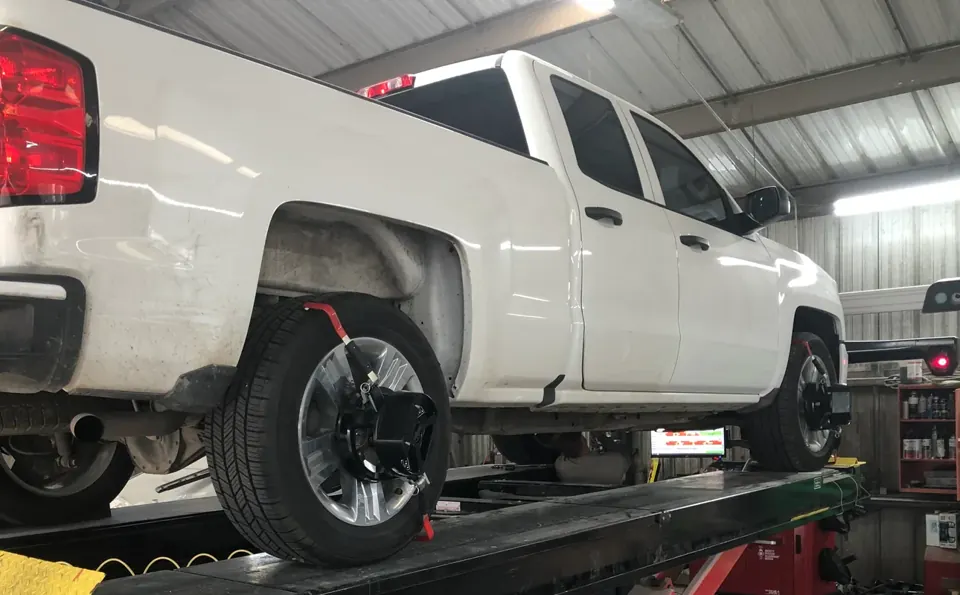
Owner-supplied archive photograph showing a wheel-alignment setup. Display values and the completed alignment result are not presented as evidence; alignment and structural measurement remain separate questions.
Can an alignment report prove the frame is undamaged?
Alignment measures wheel geometry. Structural measuring evaluates vehicle reference dimensions. An out-of-range alignment can result from damaged suspension parts or mounting structure, and the reading alone may not locate the cause.
The inspection should establish whether components and reference points are suitable before adjustment. Ask how the cause was identified and which measurements support it. Completing an alignment does not independently certify that the entire structure is within specification.
How This Fits Into the Repair Plan
Ask which wheel-geometry and structural-reference questions the plan addresses. Keep each measurement’s purpose and repair stage clear alongside the relevant component findings.
Related Repair Guidance
Know which geometry question the report answers
Wheel alignment and structural measurement address related but different questions. Ask what the actual report establishes for the vehicle. A wheel-angle result should not automatically be treated as a complete dimensional assessment of every body or frame reference area.
The steering and suspension components and their mounting locations can also need physical assessment. Ask which findings are confirmed and which remain provisional. An adjustment alone should not silently become proof that every collision-related component condition is resolved.
Describe the impact location and any changed wheel position, rubbing, pulling or closure behavior. These observations help identify relevant questions without measuring structure or diagnosing a component from appearance alone.
If driving or movement is uncertain, discuss appropriate transport before moving the vehicle. Do not perform a road test simply to see whether a geometry concern disappears. A short route to the shop does not answer the uncertainty.
Related reading: Suspension Mounting Point Damage After a Collision and Structural Repair and ADAS Reference Geometry.
Connect the supported operation to the findings
Ask what physical damage or reference-area question needs to be resolved before the relevant geometry operation. The supported plan should follow established findings and applicable information rather than treat alignment as a universal substitute for structural or suspension assessment.
If a component or mounting area is damaged, ask which actual part and method are proposed. Replacing an attached component and addressing the area that locates it are different operations. Keep those descriptions clear in the estimate.
Applicable vehicle information can also create relevant setup or assistance requirements. Ask which operation follows from the actual work. Alignment, scanning and calibration are different tasks, and one successful result is not universal proof of every other requirement.
If access or measurement changes the plan, request the dated revision and finding. Ask whether it changes the component, structural operation, alignment, prerequisite or verification. Keep the explanation with the estimate so the decision can be reviewed beyond the total.
Review separate results according to their purposes
At pickup, ask which structural, component and alignment operations were completed and which relevant records are available. Vehicle identity and repair stage should be clear enough to distinguish initial findings from completed verification.
Ask what each result establishes and whether a limitation remains. A report with many values can still need explanation of its relevant coverage. A finished exterior or straight-looking wheel is useful context without being the entire dimensional record.
If a later pulling, rubbing, warning or closure concern appears, record the conditions and timing and contact Boudreaux’s before continued testing or adjustments. The actual record helps distinguish mechanical, structural and assistance questions in the next assessment.
Where insurance is involved, separate the technical proposal from the actual claim decision. Approval or payment does not identify the permitted structural method or replace the applicable geometry requirements. Clarify unresolved authorization before changed work proceeds.
Questions About Wheel Alignment vs Structural Damage
Ask what each measurement established
If both operations appear on the estimate, request their separate purpose and relevant results. If structural damage is suspected, clarify how it will be assessed. Keep the records together so the repair explanation connects findings with actual corrective work.
Technical Reference
I-CAR: wheel alignment while damage remains. The actual vehicle requirements govern the work; this reference does not establish business certification or a specific repair result.