
BOUDREAUX’S COLLISION · REPAIR EDUCATION
Replacement Module Setup and Configuration
A replacement module may need vehicle-specific setup, configuration or programming before it functions as intended. The correct part and the correct installation procedure are separate requirements. Connecting the electrical plug is not always the final step.
Illustration: Replacement Module Setup and Configuration
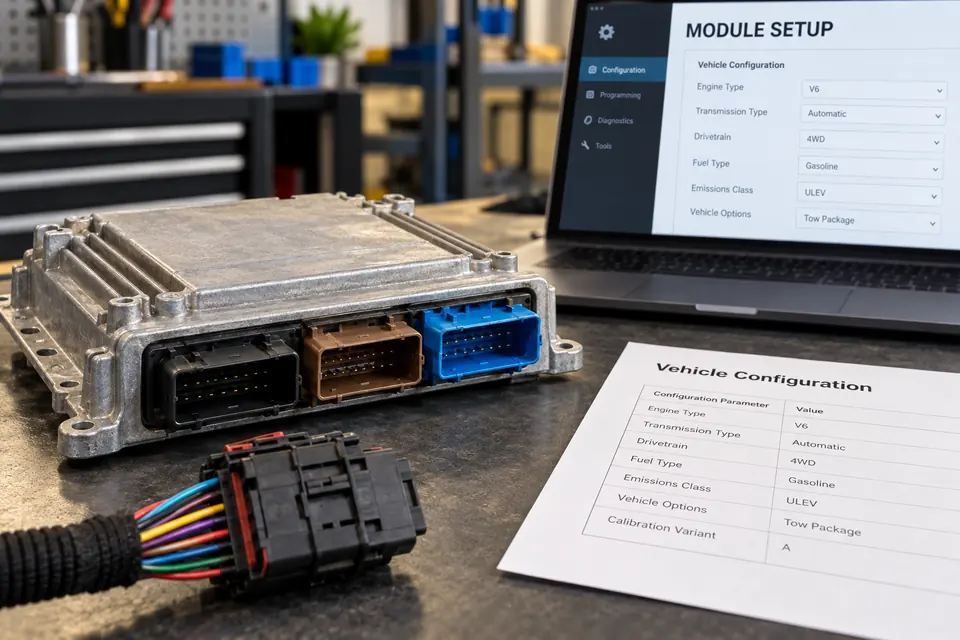
Generated educational illustration: replacement module configuration. Not an actual customer repair, diagnostic result, staff member or Boudreaux’s facility.
Match the replacement to the vehicle and the required setup
Ask the team to identify the replaced module by its function and the part specified in the repair plan. Two housings can look alike while serving different equipment configurations. The vehicle identification and manufacturer information are more useful than matching a marketplace photograph. Have the suitability of a proposed part confirmed before treating installation as the next step.
Manufacturer terminology matters. I-CAR’s Nissan/INFINITI example describes certain camera and radar replacement procedures that call programming “configuration” and distinguish it from subsequent aiming. This is a concrete example of separate operations, not a universal rule for every Nissan sensor. Ask which removal, replacement or other event triggers the actual requirement on your vehicle.
If the damaged original module cannot communicate, ask how that condition affects the setup plan. The provider needs to follow the applicable information route rather than assume missing original data makes every replacement impossible. Before pickup, distinguish part installed, setup completed and required related checks completed. A pending setup or unresolved communication fault belongs in the current update, with its next step clearly identified.
Correct installation can include electronic setup
A replacement module may need to be matched to the vehicle’s configuration or initialized under the applicable instructions. Physical installation is one step; enabling the intended operation can involve additional work. The requirements vary by module and vehicle.
The repair plan should identify the replacement part and any required setup rather than assuming a universal plug-in process. Part selection and compatibility also matter before setup begins.
Configuration is not a substitute for diagnosis
If the original problem involves damaged wiring or an unresolved communication issue, configuring a replacement module does not automatically resolve it. The repairer needs an established basis for replacement and a plan for any related conditions.
A component may also require calibration or other checks after setup. Those operations need to be identified separately when applicable. A successful configuration message should not be used as proof that every related physical or functional requirement has been satisfied.
Useful handoff questions
Ask which setup operations were required, whether they completed successfully and whether any further checks remain. If an outside provider performed part of the work, the final records should still identify the operation and result.
If a warning or function concern appears after delivery, report the exact message and conditions to the shop. Avoid changing settings or disconnecting components to troubleshoot an unfamiliar replacement module. The repairer needs to evaluate the vehicle in a documented condition.
Further repair information
I-CAR: topic-specific diagnostic and setup context. Current manufacturer information for the exact vehicle determines the required operation.
Related Guidance
Identify the component before discussing its setup
Start with the actual replacement component and vehicle configuration. Ask which part is being replaced, what finding supports replacement and how the team identifies the correct version. Similar appearance does not establish suitability. A replacement proposal should be connected to the vehicle and assessment rather than assume every module with a matching connector has the same function.
If you find a possible part online, send its identification for review before buying or shipping it. The listing may not establish compatibility, condition or any restrictions relevant to setup. The shop should explain what it can accept for the repair. An owner-supplied component can introduce coordination questions without changing the requirement to research the applicable installation process.
Ask what happens after physical installation. The relevant instructions may call for one or more setup operations, while other checks address the original symptom or associated systems. A successful connection and a completed vehicle-specific procedure are different facts. Keep the distinction clear when asking whether the component is finished.
Track dependencies instead of treating setup as a reset button
Suppose diagnosis identifies a damaged module and a concern in the surrounding wiring. Installing and configuring the module does not automatically describe the wiring correction. Ask which finding is resolved by each operation and which checks remain. This keeps a software success message from being used as the entire explanation of a repair involving physical damage.
If setup cannot be completed, ask what the team knows and what it is evaluating next. Do not assume the new component is defective or that the repairer merely needs to repeat the procedure. Part identity, preparation and other findings can require review under the applicable instructions. The owner needs the status and next decision rather than a guess at a technical cause.
At pickup, ask whether the required setup completed, what verification applies and whether any limitation remains. Keep available specialist records with the main invoice where outside coordination occurred. If a warning returns, report its wording and conditions. Avoid disconnecting the module or changing unfamiliar settings to make a message disappear; that can alter the condition the team needs to review.
Questions before and after module replacement
Example: installation complete, setup still pending
Consider a hypothetical update saying the replacement module is installed but a required setup appointment remains. That update describes progress, not final completion. Ask which provider handles the remaining operation, whether its arrangement is confirmed and what verification follows. The owner can plan around those milestones without choosing a software procedure or assuming the new component is ready for every intended function.
If a later update reports that setup could not complete, request the current finding and next assessment step. Avoid assuming the part is defective or instructing the team to substitute another component immediately. Keep the actual part identification, attempted operation and available result with the revised scope. At eventual delivery, ask for an explanation connecting those stages to the completed work. This example describes a possible coordination sequence, not a claim about a particular module, vehicle or Boudreaux’s repair.