
BOUDREAUX’S COLLISION · REPAIR EDUCATION
Vehicle Anchoring During Structural Repair
Anchoring supports controlled structural measuring or correction by securing the vehicle in the required setup. The attachment locations and setup must suit the vehicle and equipment. Incorrect support can affect readings or load unintended areas.
Illustration: Vehicle Anchoring During Structural Repair
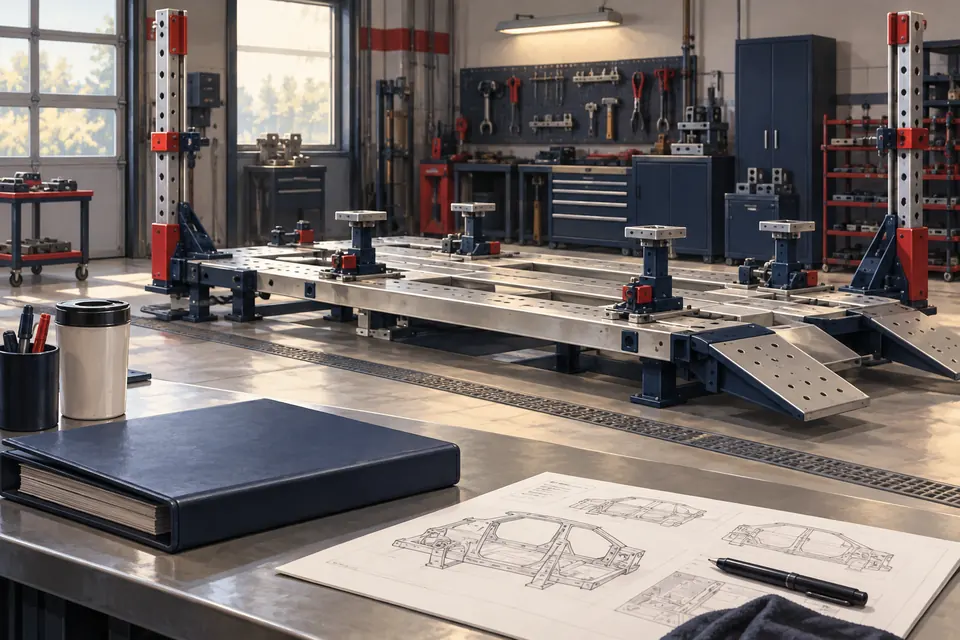
Generated educational illustration: vehicle specific holding setup review. Not an actual customer repair, diagnostic result, staff member or Boudreaux’s facility.
What to Clarify for Your Vehicle
Ask which setup is appropriate for the identified repair operation and whether the procedure restricts attachment points. This explanation does not mean every damaged structure can be corrected by pulling. Repair versus replacement remains a separate decision based on material, damage and manufacturer information.
Holding the vehicle and measuring it are different tasks
Anchoring or fixturing supports the repair setup; measurement provides information about condition and change. Seeing a vehicle on a bench does not tell an owner which areas were measured, what correction is proposed or whether every required check is complete.
The applicable setup depends on the vehicle and repair information. Ask the shop how the holding arrangement relates to the proposed work instead of assuming one general bench setup fits every construction or damage pattern.
This is a planning distinction, not an instruction for selecting anchor locations or applying repair forces. Those decisions belong to trained personnel using the relevant equipment and vehicle-specific information.
What an owner can usefully ask about the setup
Ask which operation requires the vehicle to be held in the proposed arrangement and how dimensional changes will be monitored. The explanation should connect the setup, confirmed findings and repair method. An equipment brand name by itself does not describe that sequence.
For example, the fact that a vehicle is secured for a structural operation does not imply that an adjoining damaged component can be straightened rather than replaced. Repairability remains a separate vehicle-specific decision.
If the estimate includes setup and measuring as distinct operations, ask what task each represents. Comparing the descriptions helps avoid treating every equipment-related line as the same work.
Follow the setup through to the repair record
- What operation requires the proposed holding arrangement?
- Which vehicle-specific setup requirements apply?
- What dimensions are being monitored?
- Which repairability decision is separate from setup?
- What post-repair record documents the relevant result?
Keep the shop’s explanation with the structural repair plan. The useful handoff identifies the work performed and relevant verification; it does not rely on a picture of a vehicle on equipment as proof that every aspect of the repair is complete.
Related Guidance
Review the setup-related work without choosing a method yourself
An estimate can identify setup or holding work separately from the operation on the damaged component. Ask the repairer what each line describes and which vehicle-specific requirement or assessment supports it. When comparing proposals, check whether both include the same inspection stage and operation. A lower total that omits setup is not automatically a lower price for the same completed scope.
At delivery, ask about the relevant measurement and repair records rather than seeking a photograph as the only evidence. A bench picture may illustrate a stage without describing every joining, corrosion-protection or final check required for the repair. If a later fit or control concern appears, report its location and timing to the shop. Do not attempt to replicate clamping or movement from an image; structural holding and repair are not owner testing procedures.