
Illustration: Door Glass Damage After a Collision
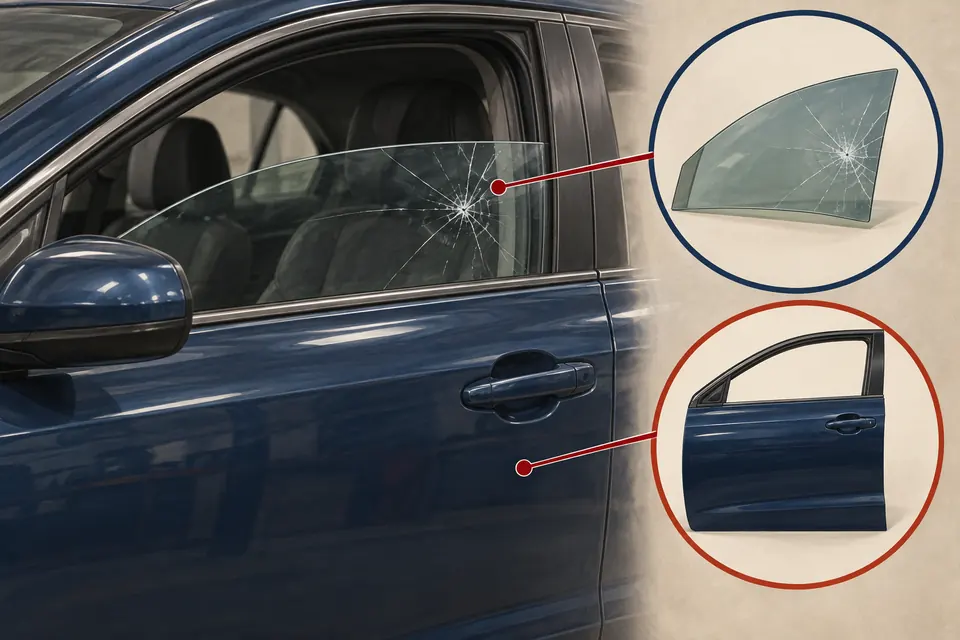
Generated educational illustration: door glass and window operation context. Not an actual customer repair, diagnostic result, staff member or Boudreaux’s facility.
What else can be damaged when door glass breaks?
Door-glass damage can involve the glass, regulator, guides, seals, wiring or the door structure. Replacing the broken pane alone may not correct damaged mounts or operating problems.
Avoid operating damaged glass or reaching into broken fragments. Tell the shop whether the door was displaced or the window stopped working. Ask how the glass and door condition will be inspected and how the selected location handles the required work.
How This Fits Into the Repair Plan
Keep the pane, operating mechanism, door and opening questions distinct. Describe the affected function without forcing damaged glass and confirm how the chosen team will coordinate the work.
Related Repair Guidance
Distinguish the glass from the door and its fitted equipment
Door glass, the door assembly and the surrounding body opening are different assessment questions. Ask which component and operation the estimate identifies. Broken or displaced glass should not be treated as the complete description of every affected door attachment or function.
Describe new window, lock or closure behavior and when it began. Mention earlier issues or repairs if known. The history helps assessment without establishing the exact cause or proving that every change comes from one damaged part.
Keep people away from loose glass and unstable damaged areas. Do not force a binding window or reach into the door to obtain a better estimate image. Take safe exterior photographs and explain what cannot be accessed.
If the closure or driving condition is uncertain, discuss appropriate transport before moving the vehicle. A temporary covering or a successful lock command does not independently establish that the damaged door area is suitable for normal use.
Related reading: Door Collision Repair: More Than the Outer Skin and Vehicle Intake Before Collision Repair.
Understand glass work and related door operations separately
Ask how the actual glass configuration and applicable installation requirements are identified. A familiar door name or similar-looking part does not establish compatibility for every vehicle and fitted arrangement.
If the regulator, guide, attachment or another fitted component is affected, ask which finding and operation address it. A glass replacement line should not silently become proof that every window-function concern is resolved.
The door shell and opening can need separate assessment where relevant. Ask what is confirmed and what requires authorized access or measurement. A window that moves is useful information without being a complete body or attachment result.
Related access, protection, trim and functional checks can affect the complete installed scope. Ask which items are included and which remain provisional. The main glass part price alone may not describe all the supported work.
Keep the window and closure result understandable
If additional findings change the proposal, request the dated revision and reason. Ask whether it concerns the glass, fitted equipment, door, opening or relevant checks. Keep those descriptions clear so the scope can be reviewed beyond the total.
At pickup, discuss normal window and door operation relevant to the completed work. Ask which operations and checks were completed and what instructions or records are available. A successful visible function should not obscure another unresolved closure, warning or moisture concern.
For a later issue, record the side, timing and circumstances and contact Boudreaux’s before forcing the window, altering trim or applying another product. The actual repair record can help distinguish glass, fitted-equipment and opening questions in the next assessment.
Where insurance is involved, separate technical scope from the insurer’s actual review and responsibility. Clarify the proposed work and authorization rather than assuming every door-area concern is included in one broad claim line.