
BOUDREAUX’S COLLISION · REPAIR EDUCATION
Repair Handoff Documents at Pickup
A pickup conversation should clarify the work performed, relevant care instructions and any unresolved item. Repair records, diagnostic reports or other documents may explain separate operations. Which records apply depends on the actual job.
Illustration: Repair Handoff Documents at Pickup
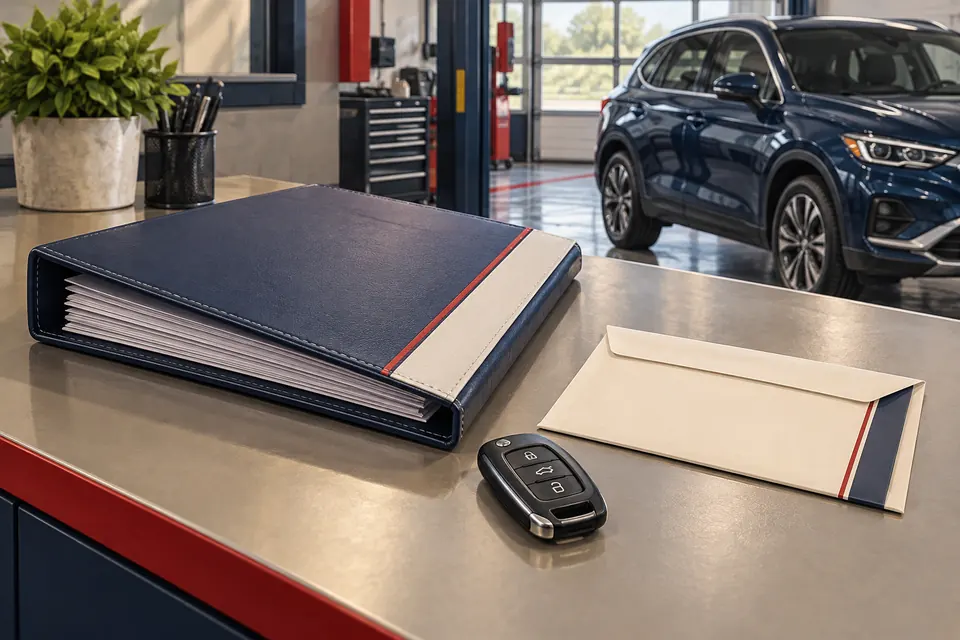
Generated educational illustration: pickup documents and care context. Not an actual customer repair, diagnostic result, staff member or Boudreaux’s facility.
What to Clarify for Your Vehicle
Ask for clarification before relying on unfamiliar labels. Keep the final documents with earlier estimates and authorization records. A general education page cannot specify a universal document package or establish a warranty that the business has not confirmed.
The handoff should explain the completed scope
The final invoice identifies the work and charges. Relevant supporting records may include diagnostic, calibration, alignment or other results, depending on the job. Ask which documents are available rather than assuming every repair produces the same reports.
Aftercare instructions are also part of a useful handoff, particularly for refinished areas or installed glass. Keep those instructions accessible so you can follow them after leaving.
Resolve open points before the conversation ends
Ask whether the final scope differs from the last estimate and whether any finding remains unresolved. Clarify any follow-up arrangement, expected balance and return of keys or belongings. A generic completed notation should not conceal an open concern.
Save the shop’s contact information with the documents. If a later concern arises, identify the repaired area, delivery date and symptom. A clear handoff record helps the shop understand the issue without reconstructing the entire repair from memory.
Example: a later service needs the repair details
A technician evaluating a later concern asks which component was replaced and whether related setup was performed. The final invoice and available completion reports are more useful than a payment receipt alone. Keep them in a single accessible repair folder.
At pickup, ask which records the shop provides for the operations actually performed. Do not assume every job needs the same collection of reports. Ask for written aftercare guidance where refinishing or glass work makes it relevant.
If an issue remains open, keep its status and follow-up arrangement with the final scope. A clear handoff prevents a later reader from interpreting the absence of a warning or the vehicle’s delivery as independent proof that every possible procedure was completed.
Related Guidance
Use the final work record as the starting point
At pickup, ask which document describes the operations actually completed. A preliminary estimate records a proposal at a particular assessment stage; it may not include later findings or changes. The final invoice and the shop’s explanation should make the completed scope understandable.
Ask about any unfamiliar part or operation while the repairer can discuss the vehicle and record together. If a line differs from the proposal you previously reviewed, ask what changed and where that decision was recorded. Keep the original documents rather than altering an earlier version to resemble the final work.
Separate a repair explanation from a claim-payment explanation. The shop describes its operations and actual collection arrangement, while the insurer addresses its response and policy matters. A clear handoff does not treat a payment statement as the entire repair record.
Keep the instructions that apply after collection
Ask for relevant care or release guidance associated with the work performed. A glass installation, a refinishing operation and a replaced component can involve different instructions. Do not assume a generic waiting period or a rule from a previous vehicle applies to the current repair.
Where measurement, diagnostic or calibration records are supplied, ask the repairer what they describe and which completed operation they concern. A planning note about an intended check is different from an explanation of work actually performed. Keep the records labeled by purpose rather than treating every report as a universal safety certificate.
If anything remains unresolved, ask for a clear next step and contact arrangement. Do not assume a collection message settles a concern that has not been explained. Record the question separately so it remains visible after the vehicle leaves the facility.
Make the collection arrangement clear to the person receiving the vehicle
Confirm the facility, pickup time and relevant handoff details before the trip. If another person will collect the vehicle, ask the shop what arrangements apply and make sure the applicable instructions reach that person. A projected completion date is not itself a confirmed collection appointment.
Keep the final invoice, receipts, supplied instructions and relevant check explanations together. If a later concern appears, identify the symptom, date and completed work rather than relying on a remembered initial estimate. Contact the repairer before arranging another trip where vehicle condition is uncertain.
Boudreaux’s New Orleans and Luling locations receive and release vehicles separately. Identify the facility that handled your repair when requesting records or arranging follow-up. A well-organized handoff gives you a practical reference for what was performed and how to raise a specific question afterward.