
BOUDREAUX’S COLLISION · REPAIR EDUCATION
Toe Adjustment and Damaged Steering Components
Toe concerns the relative direction of the wheels. Adjustment may be part of an alignment, but it does not repair a bent or damaged steering component. A vehicle with collision-related symptoms needs an appropriate condition assessment first.
Illustration: Toe Adjustment and Damaged Steering Components
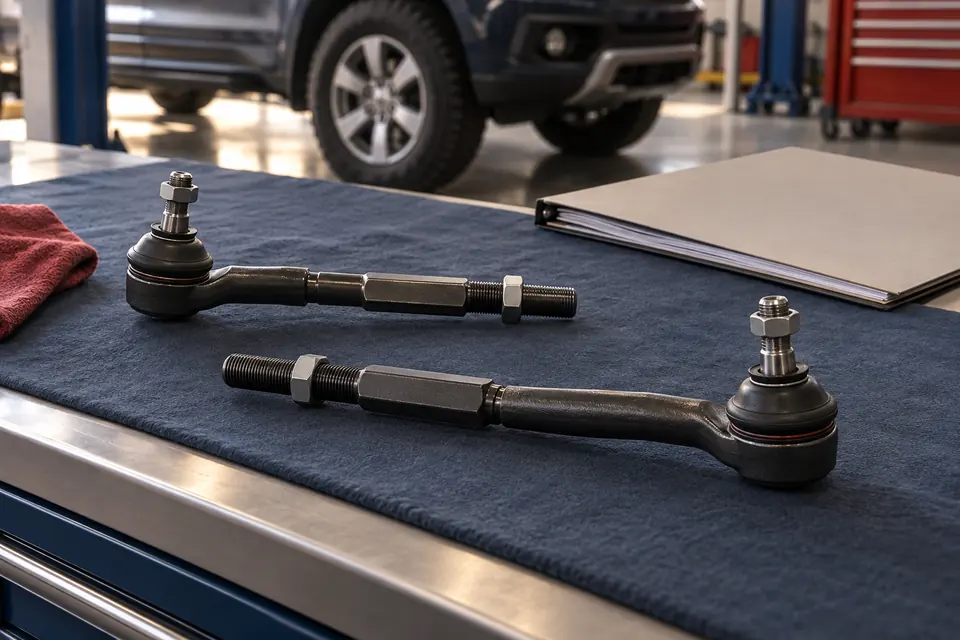
Generated educational illustration: toe and steering component scope. Not an actual customer repair, diagnostic result, staff member or Boudreaux’s facility.
What to Clarify for Your Vehicle
Ask whether steering attachments and components were inspected before adjustment and whether other procedures apply. A centered steering wheel is useful feedback but does not independently verify every physical or electronic requirement. Avoid driving to test an uncertain damaged vehicle.
Toe adjustment addresses a defined measurement
Toe describes the direction the wheels point relative to the vehicle’s travel direction when viewed from above. It is different from camber and caster. An available toe adjustment can correct a setting, but cannot be assumed to repair damaged steering parts.
After a wheel impact, the repairer should assess relevant components and mounting conditions before treating adjustment as the complete answer. A damaged component may still allow some readings to be brought into range.
Ask why the adjustment was needed
If the estimate includes steering-part replacement and alignment, ask how the operations relate and which final checks apply. Do not judge whether a part needs replacement solely by whether the steering wheel can be centered.
Report unusual steering effort, looseness or a changed response without testing the vehicle’s limits. If safe operation is uncertain, discuss transport instead of driving it to demonstrate the symptom. Keep the alignment results and explanation with the repair documents.
Example: the wheel is centered but a component is damaged
A steering wheel can be made to look centered while another finding remains unresolved. If inspection identifies a damaged steering component, the repair decision needs to address that condition rather than treat centering as proof of a complete repair. A visual position and a component’s condition answer different questions.
The repairer should identify the affected part, the basis for repair or replacement and the measurements or checks needed afterward. If sensor-related work also applies, that electronic operation has its own purpose. It is not interchangeable with repairing a physical part.
Ask which operation resolves each finding. At delivery, report an unexpected steering response, noise or warning with its circumstances. Do not test extreme steering maneuvers on an uncertain vehicle. A clear final scope lets later readers understand whether the job involved adjustment, component replacement, electronic work or a combination, instead of relying on a broad notation that the steering was straightened.
Further repair information
I-CAR: physical findings before alignment
General background and manufacturer examples do not replace current applicable information for the actual vehicle and operation.
Related Guidance
Read component replacement and alignment as different tasks
If the estimate lists both steering-part work and alignment, ask the purpose of each operation. Physical replacement addresses a particular finding, while alignment evaluates or adjusts specified geometry as applicable. Related electronic procedures can have another purpose. The plan should explain the combination instead of use steering straightened as a summary for all work.
Ask what supports the replacement or repair decision and what check follows. A toe setting that can be changed does not automatically rule out damaged parts. Conversely, a steering symptom does not automatically require a particular replacement. The actual findings and vehicle information should guide the proposal.
At pickup, keep the relevant scope and available results together. Report a remaining symptom with its circumstances and ask for the next assessment. Avoid adjusting parts yourself to improve the wheel position before review. That changes the condition and does not establish the suitable corrective method.