
Illustration: Why Calibration Requirements Vary by Vehicle
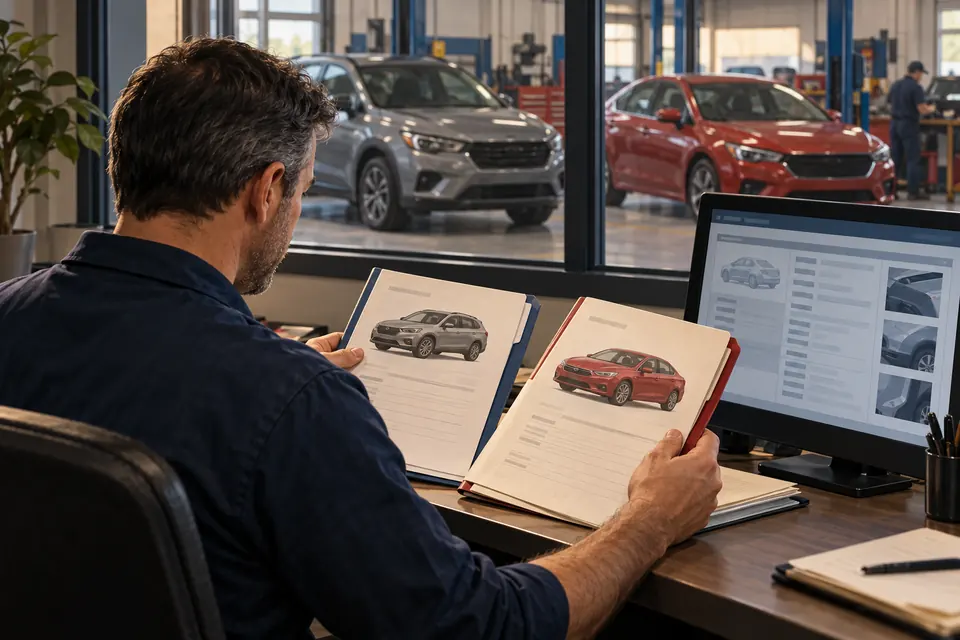
Generated educational illustration: vehicle specific equipment research. Not an actual customer repair, diagnostic result, staff member or Boudreaux’s facility.
Does the same repair trigger calibration on every car?
Calibration requirements depend on the model, installed system and operation performed. Two similar-looking vehicles can use different sensors or procedures.
Removal, replacement, mounting damage or changes to geometry can have different consequences between systems. The current vehicle information controls the method and prerequisites. Ask which procedure was selected using your vehicle details rather than relying on a general rule for every bumper or windshield.
How This Fits Into the Repair Plan
Identify the vehicle configuration and actual operation before selecting the requirement. Keep changes to the system, method or prerequisites with the dated estimate.
Related Repair Guidance
Identify the actual vehicle configuration
Calibration requirements depend on the identified vehicle and fitted system. A broad make or model name may not establish every relevant configuration. Ask what information the shop uses to identify the actual components and applicable requirements.
Share known changes to glass, wheels, suspension, body components or fitted equipment. State what you know without assuming a modification caused the concern. The relevant history helps the assessment and requirements review.
A feature with the same everyday name on another vehicle may use different components or instructions. Do not transfer a method solely because both vehicles have lane assistance, radar or a similar display. Ask which fitted-system information supports the operation for yours.
The actual repair event matters too. Replacement, removal, mounting work or another specified operation can create a requirement where the applicable information says so. A generic claim that a vehicle has ADAS does not identify every task in the scope.
Related reading: OEM Position Statements vs Repair Procedures and Why the VIN Matters in Collision Repair.
Use applicable information rather than a universal method
Ask which vehicle-specific instruction supports the proposed method and prerequisites. Static, dynamic and other related setup descriptions should be connected to the actual system. Convenience or a method used on another model does not make them interchangeable.
The information needs to fit the actual work. A general position statement or search summary can help identify a topic without being the complete procedure for performing the operation. Ask how the detailed instruction and relevant findings determine the supported scope.
Scanning is different from calibration. A no-code report does not independently establish that the requirements review is complete or that every setup task was performed. Clarify which result supports each operation.
If identification or research changes the proposal, request the dated revision and the applicable reason. Ask whether it changes the component, method, prerequisite or verification. Keep the technical explanation with the estimate rather than treating the new total as the entire answer.
Compare requirements using the same vehicle and work
Two estimates should be compared against the same identified configuration and triggering operation. Otherwise, different method labels may describe different assumptions rather than equivalent work. Ask the estimator to explain those differences before comparing totals alone.
If a required operation is performed or coordinated separately, ask how its relevant result is connected to the final scope. Keep vehicle identity and purpose clear for the supplied record. A generic completion label may need explanation where several fitted systems are involved.
At pickup, ask which applicable requirements were completed and whether any limitation remains. A normal dashboard, a scan report and a calibration result can answer different questions. Understand each according to its actual purpose.
For a later concern, record the feature, message, conditions and timing and contact Boudreaux’s before resets or improvised tests. The actual vehicle and record support the next assessment rather than a universal online rule.
Questions About Why Calibration Requirements Vary by Vehicle
Technical Reference
I-CAR: calibration terminology and methods. Manufacturer requirements for the exact vehicle control the repair method. A reference link does not imply Boudreaux’s certification or affiliation.