
BOUDREAUX’S COLLISION · REPAIR EDUCATION
Subframe Position and Suspension Geometry
A subframe can locate suspension or other components relative to the body. Impact damage or disturbed attachments may require vehicle-specific evaluation. An alignment printout does not replace inspection of the subframe and its mounts.
Illustration: Subframe Position and Suspension Geometry
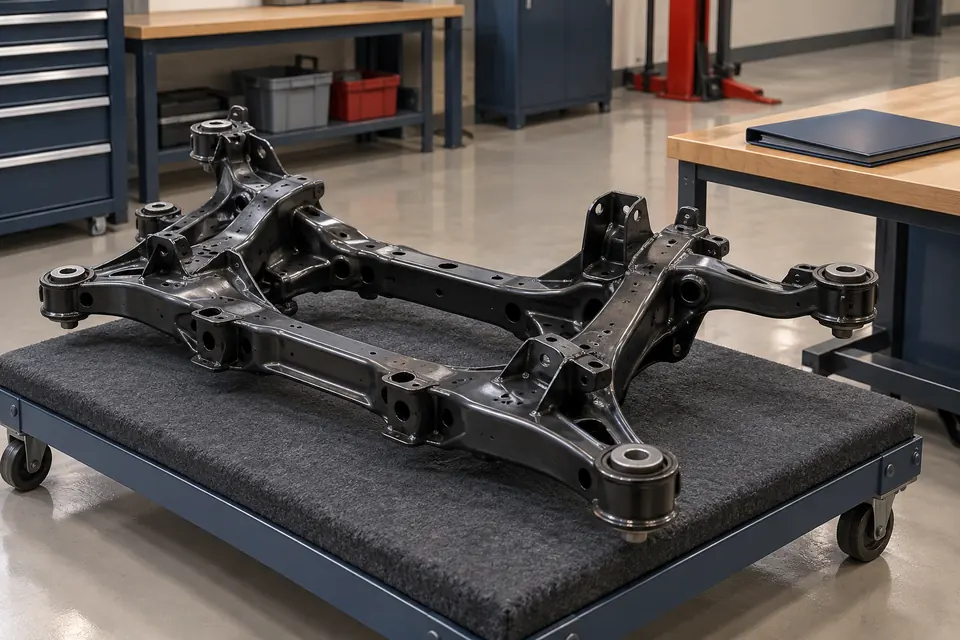
Generated educational illustration: subframe mounting scope context. Not an actual customer repair, diagnostic result, staff member or Boudreaux’s facility.
What to Clarify for Your Vehicle
Ask whether the mounting relationships were checked and which installation or measurement requirements apply. Component replacement, fastener requirements and structural findings may be separate parts of the plan. Educational information does not establish that the same operation is appropriate for every vehicle.
A subframe supports important mounting relationships
A subframe or cradle can carry suspension, steering or other assemblies, depending on the vehicle. Its position and condition can affect the relationships that alignment measures. A shifted assembly and a damaged component are different findings requiring assessment.
Structural or mounting concerns should not be reduced to an alignment adjustment alone. The applicable procedures determine inspection, positioning, attachment and any replacement requirements.
Clarify what was measured and corrected
Ask whether the concern involves the subframe itself, its attachments or the surrounding mounting structure. The scope should identify the actual work rather than relying on a broad phrase such as frame adjustment.
If alignment and structural measurements are both used, request their separate purpose and relevant results. Keep those records with the final scope. An acceptable wheel alignment should not be presented as independent proof that every structural reference point was checked.
Example: alignment changes after a shifted assembly
Consider a repair in which inspection identifies a concern involving the subframe’s position or attachment. The alignment readings are part of the assessment, but the repairer also needs to explain the physical condition and applicable corrective procedure. Adjustment alone does not describe all of that work.
The scope should distinguish a positioning issue, a damaged component and a concern in the surrounding mount. Those findings can lead to different operations. If an attachment has a replacement requirement, it should be accounted for under the applicable instructions rather than assumed reusable because it looks intact.
Ask what was inspected or measured and which record supports the completed correction. Keep any structural and alignment results together while preserving their separate purpose. If a handling concern remains, report it to the shop rather than deciding the cradle moved again. A clear explanation connects the final readings with the actual physical repair and any relevant follow-up procedure.
Further repair information
I-CAR: structure and suspension condition before alignment
General background and manufacturer examples do not replace current applicable information for the actual vehicle and operation.
Related Guidance
Read geometry findings alongside the mounting inspection
Its position and attachments can influence the geometry of the components it supports. Following a collision, a repairer may need to assess the cradle itself, its mounting points and the surrounding structure as separate parts of the repair plan.
An alignment report shows measured wheel geometry under the conditions of that measurement. It does not independently establish that every attachment or structural reference point is undamaged. Ask whether the vehicle needed a mounting or structural assessment before adjustments were considered. The answer should connect the impact location to the vehicle’s design.
A shifted component and a damaged component are different findings. The appropriate operation could involve permitted repositioning, replacement or structural work, depending on what inspection shows. Avoid interpreting a phrase such as move the cradle as a complete repair explanation without knowing what was found and what the manufacturer allows.
Clarify the proposal before comparing costs
Ask the shop to identify the specific assembly and affected mounting area. Similar-looking estimate lines can describe very different work: inspection for damage, removal for access, position correction or replacement. The labor description should make that distinction clear. If another operation depends on the subframe work, ask about the planned sequence.
Fasteners and attachment methods are also vehicle-specific. Certain procedures may require replacement hardware or defined installation steps. Ask whether those requirements are included, rather than selecting a cheaper proposal because it omits related items. This is a question about the documented repair procedure, not a request for an owner to check or tighten bolts.
Where new damage appears during disassembly, ask for a revised scope that separates the confirmed finding from work still under evaluation. Photographs or measurement records can help explain why a subframe line was added to a supplement. An insurer’s first visible-damage estimate cannot answer a mounting question that had not yet been inspected.
Understand what completes the geometry work
At handoff, ask how the subframe or mounting issue was resolved and what applicable measurements or checks followed. If the plan includes wheel alignment, ask whether it was completed after the necessary mechanical or structural work. A report from an earlier stage may not describe the vehicle’s final repaired configuration.
For vehicles with driver assistance systems, ask whether the repair scope also triggered vehicle-specific calibration or related checks. Do not assume every subframe operation requires the same calibration, or that an alignment automatically completes it. The repairer should use the relevant manufacturer information for the vehicle and operations performed.
Keep the final invoice and the explanation of geometry-related work together. Tell Boudreaux’s New Orleans or Luling shop promptly if pulling, steering changes or other concerns remain after delivery. Confirm safe transport before returning a vehicle with an unresolved handling concern. Do not use repeated drives as a way to decide whether a structural or mounting finding matters.