
Illustration: Keeping Collision-Claim Communication Clear
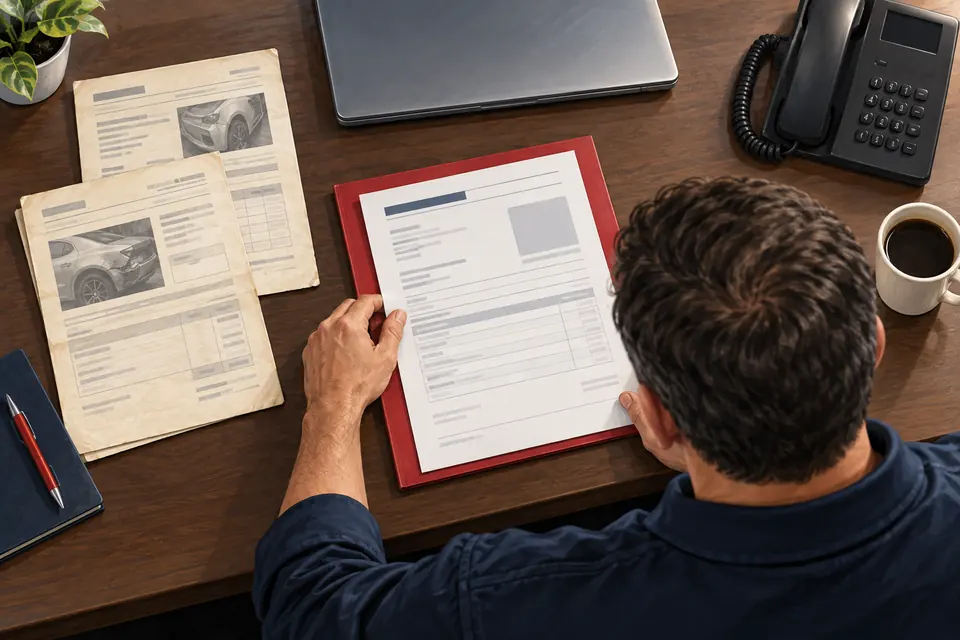
Generated educational illustration: claim update version and question. Not an actual customer repair, diagnostic result, staff member or Boudreaux’s facility.
What records should I keep during the claim?
A useful claim conversation separates documented damage, repair authorization and insurance payment. Keeping those subjects clear helps owners understand which decision is being discussed.
Save estimates, supplements and written updates. Ask for an explanation when the plan changes and identify who should respond to an outstanding item. Avoid interpreting a preliminary date, estimate or recommendation as a guarantee; request the next action and responsible contact.
How This Fits Into the Repair Plan
Name the current estimate version, specific question and responsible contact. Record the actual decision and next action so a broad progress label does not obscure an open item.
Related Repair Guidance
Ask the responsible party the actual question
The shop and insurer can be handling different decisions during a collision claim. Ask the shop about the supported technical scope and the insurer about its actual review or payment decision. A clear question is more useful than asking both parties whether everything is approved without identifying the issue.
Use the vehicle, claim identifier and current estimate version where relevant. State which component or operation you want explained. These details help connect the conversation to the actual proposal instead of a remembered total.
Separate observations from conclusions. Describe a warning, leak, changed gap or new behavior without assuming the cause. The assessment should establish the relevant findings and supported operation.
Keep unnecessary private information out of public reviews or posts. Ask how to provide relevant documents through the actual conversation. Clear communication does not require exposing the full claim record publicly.
Related reading: Claim Information a Body Shop Needs and Initial Insurance Estimates vs the Final Repair Plan.
Make scope changes traceable
When a proposal changes, request the dated revision and the reason. Ask which finding or requirement affects the component, method, related operations or verification. A new total alone may not explain the decision.
If a question remains provisional, identify what access, measurement or research resolves it and when an update is expected. Keep that status clear instead of turning an unresolved item into either guaranteed additional work or certainty that nothing is needed.
Claim review and technical authorization should not be silently treated as the same event. Ask which decision has been made, which responsibility remains open and what next action is needed. Clarify unresolved approval before a changed operation proceeds.
If parts or an arrangement change, keep the approved description and relevant explanation together. A revised source, supplied configuration or receiving destination can create different questions. Do not assume a short message automatically updates every responsible person.
Keep the record factual and useful
After a conversation, preserve the relevant written update where available and identify the next step. Keep dates and document versions clear. This makes later discussions easier to follow than a series of unexplained totals or broad progress labels.
If information is incorrect, contact the responsible party, identify the matter and state the correction clearly. Specify which details are current rather than creating duplicate requests that leave the actual plan uncertain.
Before arrival or pickup, confirm the actual shop arrangement separately. Claim communication does not establish safe driving, receiving acceptance or completion of every technical requirement. Discuss the vehicle condition and relevant checks with the team.
Boudreaux’s can discuss the actual vehicle and current scope. For a policy or claim-review concern, use the insurer and current Louisiana Department of Insurance resources as appropriate. This page does not decide an individual dispute or promise a universal response interval.
For current consumer information, use the Louisiana Department of Insurance auto resources.