
Illustration: Aluminum Collision Repair: Questions to Ask
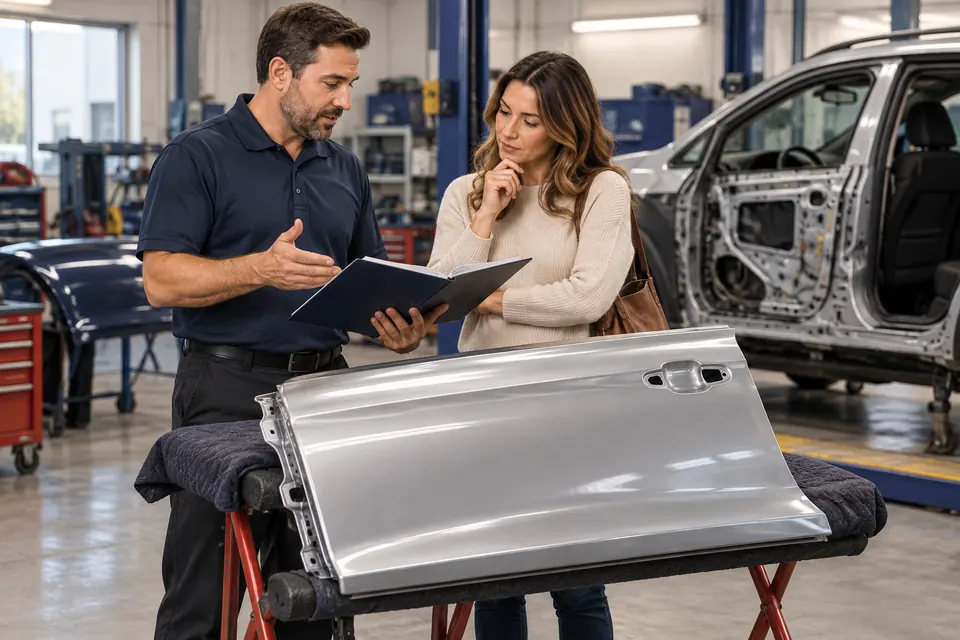
Generated educational illustration: aluminum component operation discussion. Not an actual customer repair, diagnostic result, staff member or Boudreaux’s facility.
Is every aluminum part repairable?
Aluminum collision repair depends on the alloy, part construction, damage and vehicle maker’s requirements. Outer-panel damage and structural aluminum damage are different repair problems.
Repair planning may require particular joining methods, equipment and contamination control. Ask whether the exact operation is supported at the chosen shop and which procedure applies. This educational page does not promise aluminum structural capability, certification or a repair method before the vehicle is reviewed.
How This Fits Into the Repair Plan
Identify the aluminum component and supported method, then confirm the actual performing or coordinating team. Compare the complete installation and protection scope rather than an equipment label.
Related Repair Guidance
Start with the component and applicable information
Boudreaux’s uses OEM parts for structural and suspension components. Identify the actual scope and clarify any separate claim-review or payment question.
An aluminum-repair question needs the actual component, vehicle and construction identified. Ask whether the discussion concerns an outer panel, reinforcement, attachment or another part. A broad statement that the vehicle contains aluminum does not establish the supported scope in every damaged area.
Describe the impact and known history, including earlier repairs or modifications. Share what you observed without assigning a repair method. Material category, component condition and applicable information need to be considered together rather than treating dent size or exterior appearance as a universal decision.
Ask which findings support repair or replacement. A method used on a different material or model is not automatically transferable to the identified aluminum component. The owner should be able to understand the decision without choosing a heating, straightening or joining technique from an online example.
Do not alter the area to test the material or repairability. Removing coatings, heating components or manipulating unfamiliar attachments can change the condition that needs assessment. Explain any access limitation and let the supported plan identify the appropriate inspection.
Related reading: Steel vs Aluminum Body Repair and Collision Welding and Vehicle-Specific Joining Methods.
Ask about the complete method and related operations
The applicable instruction should determine the joining arrangement for a proposed operation. Ask which method and related requirements fit the component. Availability of a particular tool does not, by itself, authorize substituting a familiar process for the specified work.
Preparation, attachments and disturbed protection are also scope questions. Ask how relevant requirements are represented for the identified area. A smooth exterior or new component cannot independently document every concealed interface, coating or related installation operation.
If a replacement is proposed, clarify the supplied configuration and what remains separate. A main part price is not the complete installed repair. Access, fitting, joining, protection, refinishing and relevant checks can change the scope and should be understood before totals are compared.
If identification or access changes the proposal, request the dated revision and reason. Ask whether the change concerns the component, permitted method, related operation or verification. Keep the current explanation with the estimate instead of assuming an early material label describes the final decision.
Review the actual capability and completed scope
Discuss the relevant operation with the chosen Boudreaux’s team. A general education guide is not an inventory of every tool or method at both locations. Ask which team will perform or coordinate the actual work and what supported arrangement applies to the vehicle.
Where insurance is involved, separate the technical requirements from claim review. Ask the shop about the supported operation and the insurer about its actual decision. Clarify unresolved authorization or payment questions before a changed proposal proceeds.
At pickup, ask which component-level work and relevant checks were completed and which records are available. Discuss visible fit and finish without treating appearance as proof of every concealed joining or protective requirement. Keep any applicable instructions and terms with the final scope.
For a later concern, record the area, conditions and timing and contact the repairing team before alterations. The aluminum category alone does not identify the cause of a symptom. The actual vehicle and repair record support a more useful assessment.
Questions About Aluminum Collision Repair: Questions to Ask
Technical Reference
I-CAR: body construction and material repair guidelines. Manufacturer requirements for the exact vehicle control the repair method. A reference link does not imply Boudreaux’s certification or affiliation.