
Illustration: Side-Impact Collision Repair
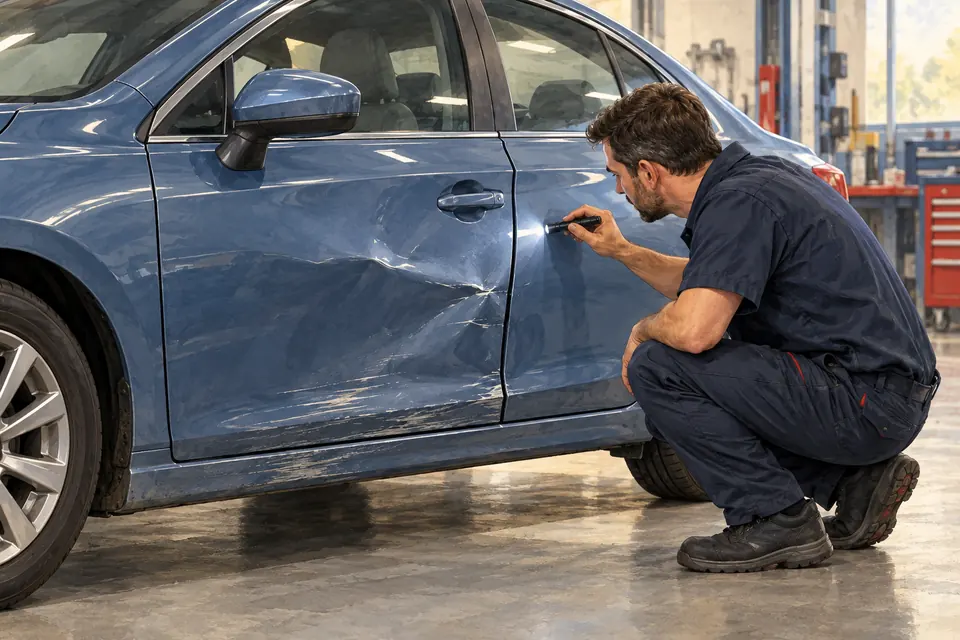
Generated educational illustration: side impact door rocker inspection. Not an actual customer repair, diagnostic result, staff member or Boudreaux’s facility.
IMMEDIATE NEXT STEPS
Before a side-area assessment
- Get to a safe location if you haven’t already.
- Do not assume the vehicle is safe to drive just because it moves — if you’re unsure, arrange towing or contact your shop before driving further.
- Photograph the visible damage from a few angles.
- Start an estimate online, or contact your shop directly.
WHAT YOU MAY SEE
Visible Signs
- Door, rocker, quarter-panel or wheel-area damage
- Broken glass, trim, mirrors or uneven door operation
- Airbag or warning-light activity after the impact
WHAT MAY BE HIDDEN
Not Always Obvious
- Inner door structures, intrusion beams and reinforcements
- Wiring, modules, sensors and occupant-detection systems
- Wheel, suspension or structural geometry
VEHICLE SYSTEMS POTENTIALLY INVOLVED
What Side-Impact Collision Repair Can Affect
HOW WE ASSESS IT
From What You Can See to What the Vehicle Can Prove
1
LOOK
Visible Damage
Document the obvious impact first.
2
ACCESS
Hidden Areas
Teardown can expose what installed parts conceal.
3
VERIFY
Measurements & Scans
Objective information confirms what appearance alone can’t.
INSURANCE & ESTIMATE GUIDANCE
Your Estimate May Change After Inspection
An initial estimate reflects what’s visible when it’s written. Disassembly can reveal additional documented damage that changes the repair plan.
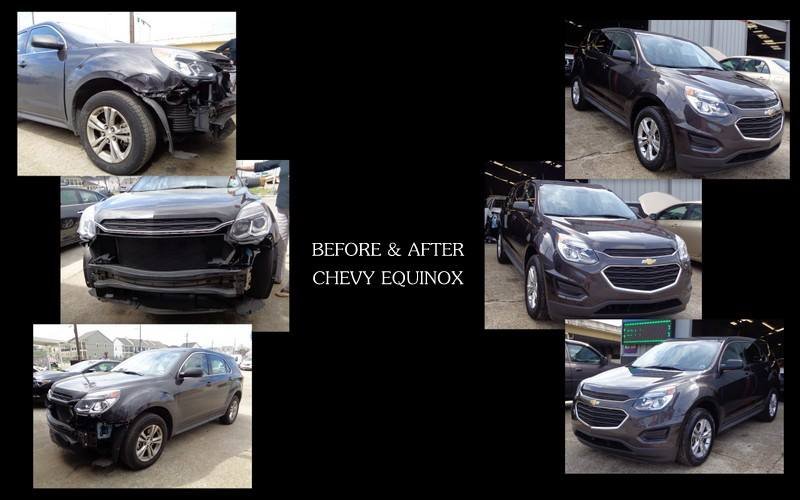
Original side-area repair photographs
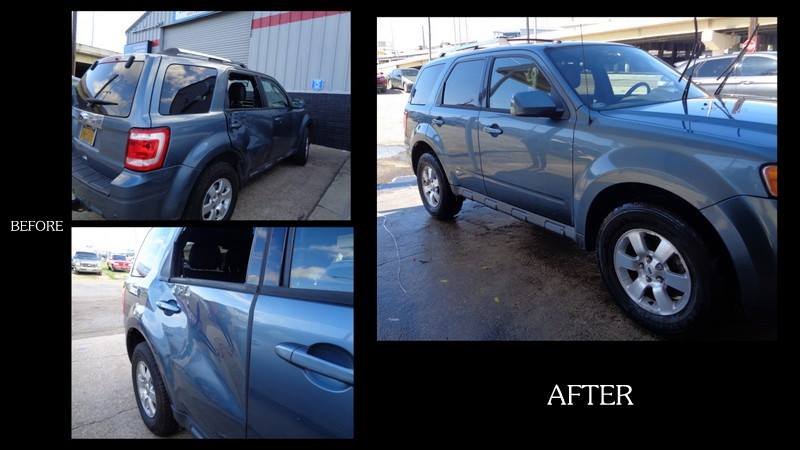
Original Boudreaux’s SUV comparison showing side-area damage and the completed exterior. These views do not identify every operation in the repair.
A side-area photograph is the starting record
A side impact can present damage across an opening, outer panel or adjoining area. Identify the vehicle and describe the impact, then ask which components have been assessed and which questions remain. The width of a visible dent does not establish the complete underlying scope.
Tell the shop about changes in an opening, glass operation, a warning or another symptom you noticed. Include timing and any similar earlier issue. Do not force a door or opening to demonstrate the concern or assume the outer skin identifies every affected part.
A rocker, pillar, door assembly and exterior panel can have different roles and repair requirements. Ask the estimator to identify the actual component in the explanation. Ordinary use of the word side damage can otherwise make several separate concerns sound like one operation.
Provide known prior repairs and modifications in the affected area and share dated records. If the history is uncertain, say so. An accurate account is more useful than assuming all existing parts and finishes are original.
Use access and relevant evidence to explain the scope
Ask what inspection question needs additional access and what authorization applies. Removed trim or components can reveal areas that an exterior picture did not show. The finding should be documented and explained before it is treated as a confirmed part of the plan.
For a hypothetical door-area impact, the outer damage and a changed opening behavior may require separate assessment. The shop should identify the findings supporting the proposed operations instead of assuming proximity alone establishes the same cause.
If structural work is proposed, ask which component, material and applicable method support it. An opening looking straight afterward is visual information; it does not independently explain every reference dimension or attachment condition.
Where wiring, restraint-related or sensing concerns are relevant, ask how the applicable inspection or diagnostic requirement is addressed. Do not interpret one scan or an absence of a warning as proof of every physical condition in the damaged area.
Keep the revised estimate and the explanation of new findings together by date. Ask whether the change affects parts, access, another operation or the next verification milestone. A revised total alone does not supply a complete schedule.
Connect the finished appearance with the repair record
Boudreaux’s original SUV comparison shows side-area damage and the completed exterior. It provides genuine visible context. It does not document every operation between the photographs or establish that your vehicle needs the same method.
At pickup, refer to the opening or operating concern you reported and ask how it was investigated. Discuss the relevant fit, finish and affected-function checks along with any separate technical records supplied.
Clarify unresolved questions and follow-up before relying on an unexplained result. Keep the final plan, verification and notes together with dates. The completed exterior and the documented operations provide different parts of the explanation.
If you notice a new concern later, identify its location and timing and contact the repairing shop. Ask about appropriate handling when vehicle operation is affected. Avoid altering the area or recreating an unsafe condition to produce a demonstration.
Contact the New Orleans or Luling location handling the vehicle for receiving and repair arrangements. A service-area name is not another branch, and an online photo request does not approve disassembly or confirm drop-off. The selected team can explain the actual next step.
FREQUENTLY ASKED QUESTIONS