
Illustration: Repairable vs Total Loss: Different Questions
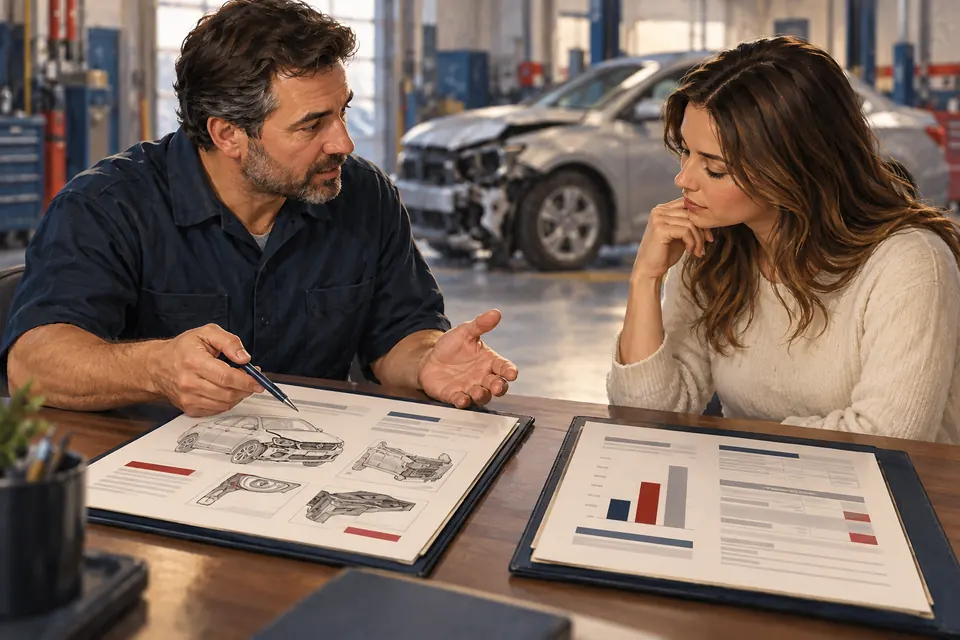
Generated educational illustration: technical scope and valuation review. Not an actual customer repair, diagnostic result, staff member or Boudreaux’s facility.
Does structural damage always make a vehicle a total loss?
Technical repairability concerns whether the vehicle can be repaired under applicable requirements. A total-loss decision can involve the insurer’s valuation and economic assessment, which is a separate question.
A vehicle’s age, value, damage and additional findings can affect the discussion. Ask for the repair estimate and valuation information being used. Do not assume that “frame damage” always means total loss or that a vehicle being physically repairable guarantees the insurer will fund repair.
How This Fits Into the Repair Plan
Ask which findings support the technical proposal and which information supports the insurer’s valuation decision. Keep the current documents and any unresolved disposition or authorization question clear.
Related Repair Guidance
Technical repairability and a claim classification are different decisions
A supported repairability assessment concerns the actual vehicle, damaged components and applicable repair information. A total-loss decision in a claim involves a different review under the relevant valuation and rules. Ask which decision is being discussed rather than treating the two labels as interchangeable.
Visible appearance alone does not establish either conclusion. A dramatic exterior image and a small visible mark can both leave concealed or valuation questions unresolved. Ask what findings and information support the actual proposal or claim decision.
The repair plan should identify components and permitted operations. A general statement that a vehicle can be fixed is not the complete technical scope, and a claim classification does not independently authorize a prohibited repair method.
This guide does not calculate an individual settlement or publish a universal rule from a photograph. Ask the insurer about its actual decision and the shop about the supported technical findings for the identified vehicle.
Related reading: Frame Damage vs Total Loss and Initial Insurance Estimates vs the Final Repair Plan.
Ask for the information behind the actual decision
If the discussion concerns valuation, ask which vehicle identity, condition and relevant information the insurer used and what decision it made. If a detail is incorrect, identify the matter and explain the correction clearly. Keep the current written information with the claim record.
If the discussion concerns technical scope, ask which damage, material and applicable procedure information support repair or replacement. Keep unresolved access or measurement questions provisional until the findings are established.
If new information changes either proposal, request the dated revision and reason. A changed technical scope and a changed valuation review can have different purposes. Do not combine them into one unexplained new total.
Where ownership, title or vehicle disposition questions arise, ask the responsible insurer and relevant authority about the actual arrangement and requirements. This page does not promise automatic retention rights, a universal title result or a fixed settlement timeline.
Clarify the next vehicle and authorization step
Before moving or authorizing work on the vehicle, ask what current arrangement applies and which question remains open. Receiving acceptance, technical work and claim review should be understandable separately. A classification label alone does not establish the transport plan.
If work or assessment has already been agreed, clarify the relevant stage, documents and applicable terms before changing the arrangement. Do not assume a claim decision erases every prior agreement or completed operation.
Use current Louisiana Department of Insurance resources for consumer claim information and the insurer’s actual explanation for the matter. Keep relevant communication factual and versioned. The official resources provide background without deciding this vehicle’s individual outcome.
Boudreaux’s can discuss the actual technical assessment and receiving question. Use the vehicle identity, current document and specific decision when asking for clarification. This is more useful than asking whether the entire accident is major or minor without identifying the issue.
Use the Louisiana Department of Insurance auto resources for current consumer information.