
BOUDREAUX’S COLLISION · REPAIR EDUCATION
Documenting Symptoms Without Self-Diagnosis
Owners can help by describing what changed, where it occurs and the conditions involved. A symptom such as vibration or noise is useful information but does not identify a single damaged part. Guessing a diagnosis can narrow the conversation prematurely.
Illustration: Documenting Symptoms Without Self-Diagnosis
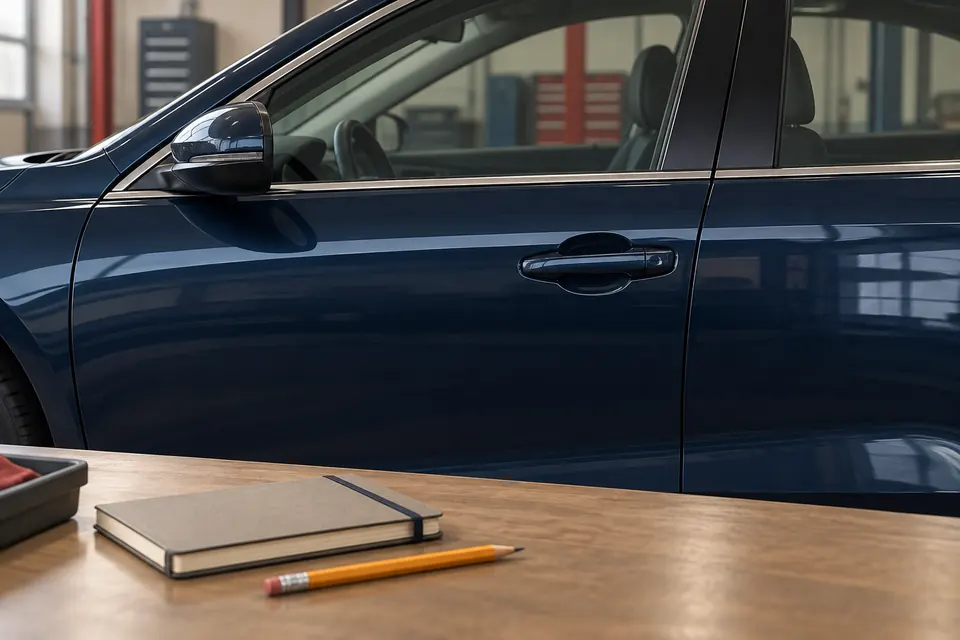
Generated educational illustration: symptom observation before diagnosis. Not an actual customer repair, diagnostic result, staff member or Boudreaux’s facility.
What to Clarify for Your Vehicle
Record the symptom safely and share it with the shop. Do not drive or activate a system solely to reproduce a concern when condition is uncertain. Ask which assessment will establish the cause and whether transport is appropriate.
Describe what you observed
A symptom description identifies what changed, when it happens and when it began. New noise, vibration, pulling, a warning message or a changed component position can all help guide inspection. None proves a specific diagnosis by itself.
Use ordinary language and concrete circumstances. For example, a noise when opening the damaged door is more useful than a general statement that the entire car sounds wrong.
Preserve evidence without recreating danger
Record the circumstances from memory and use safely captured photographs where helpful. Do not perform aggressive maneuvers, repeatedly operate a damaged part or drive an uncertain vehicle solely to reproduce a symptom.
Tell the shop whether the condition existed before the impact and whether it has changed since. Ask how it will be assessed and how the finding will be documented. Accurate observations let the repairer investigate instead of being anchored to an unsupported owner diagnosis.
Example: describing a noise without naming a failed part
After an impact, an owner hears a new noise when opening a door. Reporting the operation and timing gives the shop a useful starting point. Saying that the hinge must be broken is a diagnosis that the observation does not establish.
Describe whether the noise is new, where it seems to occur and whether the door’s movement or fit changed. Do not repeatedly force the door to demonstrate it. A safely recorded observation can support inspection without changing the condition.
Ask what the assessment found and which corrective work follows. If the cause remains uncertain until access is available, keep that limitation clear. This approach separates a real symptom from a guessed explanation and makes the eventual repair record easier to understand.
Related Guidance
Record what happened rather than what you think failed
A useful symptom description gives the repairer an observation: a new noise, a warning message, an opening that will not close or a change in steering noticed after the event. Naming a failed component before assessment can narrow the discussion prematurely. You do not need to diagnose the vehicle to make a useful repair request.
Include timing and circumstances you actually experienced. Say whether the symptom appeared immediately, during necessary movement or later while parked. If it existed before the collision, explain that history and any change. If the timing is uncertain, make the uncertainty clear rather than choosing a date that sounds more definite.
Keep the observation separate from the transport decision. A vehicle may move while still needing assessment. Tell the receiving shop about a concern before arranging another trip, and do not interpret an intake conversation or online photograph as proof that driving is safe.
Use a short description the repairer can investigate
Start with the affected area and then describe the symptom in ordinary language. For example, identify which door no longer closes or which wheel took the impact. Add the exact warning wording if you can record it safely. A statement that something changed is useful; a long list of guessed broken parts is usually less clear.
Describe frequency honestly. Once, several times and continuously are different observations. If a symptom is intermittent, note the conditions already experienced without trying to recreate it. Do not drive at different speeds, make sharp turns, brake hard or operate a damaged mechanism to produce stronger evidence.
A safe photograph or existing record may support the description, but it does not replace physical or diagnostic assessment. Ask which further information the repairer needs and what remains uncertain. The resulting plan should connect the proposed operation to an assessed finding or applicable vehicle requirement.
Keep the original observation with the follow-up record
Retain your intake description alongside the current repair plan. After assessment, ask how the reported concern was addressed and whether any related issue remains pending. A cleared warning, a replaced visible part and a resolved symptom are different statements; ask the repairer to explain the completed work rather than assume they are equivalent.
If a concern appears after delivery, identify when it returned or first appeared and what you actually observed. Do not rewrite the original account to fit a later diagnosis. Contact the repairer and ask about the appropriate next assessment or transport arrangement.
For Boudreaux’s New Orleans or Luling, identify the selected shop and the vehicle’s current stage. Use a reachable contact method and keep the question focused on the specific concern. This helps the receiving team investigate while keeping the assessment, repair authorization and safe movement decisions distinct.