
BOUDREAUX’S COLLISION · REPAIR EDUCATION
Weld-Through Primer vs Final Corrosion Protection
Weld-through primer and finished corrosion protection serve different stages of a repair. The allowed product and application depend on the joining procedure. A primer used at a weld flange does not automatically replace seam sealer, cavity protection or coating restoration elsewhere.
Illustration: Weld-Through Primer vs Final Corrosion Protection
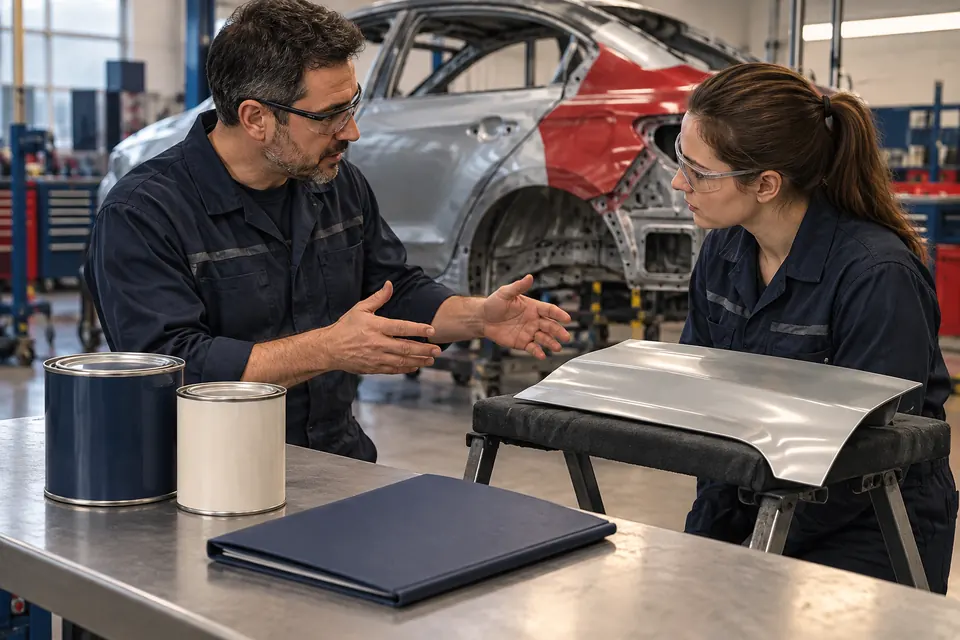
Generated educational illustration: joining coating and finished protection. Not an actual customer repair, diagnostic result, staff member or Boudreaux’s facility.
What to Clarify for Your Vehicle
Ask which protection materials are specified before joining and after the repair. The plan should address exposed surfaces, enclosed areas and disturbed factory protection separately. Product compatibility and manufacturer instructions matter; applying one coating everywhere is not a universal corrosion-protection method.
A preparation coating is not the complete protection plan
Weld-through primer and final corrosion protection describe different stages. A product used in an applicable joining preparation does not, by itself, explain how the finished repaired area is protected. Ask which location and purpose each material serves.
Vehicle-maker requirements can differ by construction, material and operation. The correct conversation identifies the affected joint and current procedure, rather than assuming that one product belongs on every repair. This guide does not prescribe a product or application method.
The relevant estimate may include several materials or operations because they address different surfaces and stages. Compare their purposes before treating every corrosion-related line as the same item.
Why concealed surfaces deserve an explanation
The outside finish is the easiest surface for an owner to see. It does not show every repaired seam, backside or enclosed area. Ask how the plan accounts for the locations affected by access and repair, including those that may become concealed again during assembly.
An illustrative question is “What protects this repaired area after joining?” It is more useful than asking whether any primer was used somewhere on the vehicle. The answer should connect the product or operation to the location and requirement.
I-CAR treats corrosion protection as a process with checks during repair. The owner’s role is to understand the scope, not to inspect a concealed joint by taking the vehicle apart.
How to read the material lines in context
- Identify the joining area or surface each line concerns.
- Ask whether the line describes preparation or finished protection.
- Clarify which current vehicle or product requirement applies.
- Ask what relevant locations need attention before assembly.
- Keep the explanation with the repair scope.
A repaired panel looking smooth does not independently document the concealed protection work. If that work is part of your repair, ask for a plain-language explanation of what was addressed and at which stage, without assuming every process uses the same materials.
Further repair information
I-CAR: weld-through primer guidelines
I-CAR: corrosion-protection sequence
General background and product examples do not replace the applicable requirements for the actual vehicle and operation.
Related Guidance
Understand what can be documented before the area is closed
Some protective work occurs where it will not remain visible after reassembly. Ask how the repairer explains the relevant treatment in the record and whether a useful photograph or description is available. A photograph can illustrate an accessible stage, but it does not independently establish product compatibility, complete coverage or every application requirement. The repair explanation should relate to the identified area and procedure.
At delivery, keep the final scope and any care instructions together. Do not scrape coatings, remove trim or open a repaired joint to inspect hidden protection yourself. If you notice a later finish, water or corrosion concern, describe its location and timing to the shop rather than choosing a cause from the primer name. A completed exterior finish can be one part of the result without describing every concealed protective operation beneath it.