
Illustration: Pillar Damage After a Side Impact
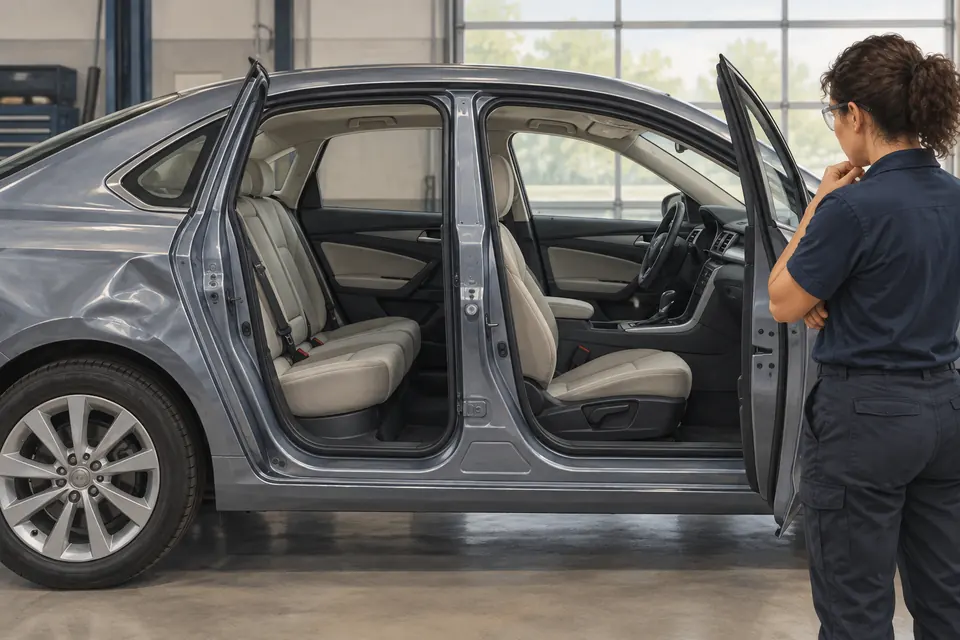
Generated educational illustration: pillar opening inspection context. Not an actual customer repair, diagnostic result, staff member or Boudreaux’s facility.
Can a damaged pillar always be straightened?
Pillars support the body openings and can contain high-strength reinforcements, hinges, latches or restraint-system components. A pillar repair decision requires the correct construction and material information.
A side impact can change door-opening geometry even when the outer panel is the most obvious damage. Straightening, heat and sectioning limits vary. Ask how the shop evaluates the opening, reinforcement layers and required joining method instead of assuming every pillar can be pulled back into place.
How This Fits Into the Repair Plan
Name the pillar, layer and adjoining opening. Connect repairability, glass or restraint-related questions to the actual construction and applicable information before settling the component-level scope.
Related Repair Guidance
Identify the pillar and the affected layers
Boudreaux’s uses OEM parts for structural and suspension components. Clarify the actual structural or suspension lines and any separate insurer review or payment responsibility.
A pillar description needs a location and component identity. Ask which pillar and which layer are involved rather than using side damage as the entire explanation. An outer panel, reinforcement and adjoining opening can occupy the same area while needing different assessment.
Describe the side-impact location and any changed door or glass-opening behavior. Mention warning messages or fitted-equipment concerns that appeared afterward. These observations help direct inspection without establishing that one particular pillar component is damaged.
A door that closes and a window that moves provide useful information, but neither is a complete assessment of pillar structure. Ask which findings are confirmed and what access or measurement remains necessary. Visible gaps alone cannot document every concealed layer.
Tell the shop about earlier pillar-area repairs, corrosion or modifications. Distinguish known history from uncertainty. Do not remove trim or touch unfamiliar restraint-related equipment to obtain an estimate image; the shop can explain the authorized access needed for the actual vehicle.
If glass or its installation area is affected alongside the pillar, ask which separate preparation, installation and release requirements apply. Pillar fit and glass installation are related parts of the plan, but a painted pillar surface does not establish that every glass-related operation is complete. Keep the relevant component descriptions and checks together in the final scope.
Related reading: Door Collision Repair: More Than the Outer Skin and Roof Collision Damage and Repair Planning.
Clarify the proposed pillar operation
Ask which material, damage findings and applicable vehicle-specific information support repair or replacement. A general statement that pillars are repairable does not identify the permitted method for your component, and an example from another vehicle does not establish permission for yours.
Where partial replacement is discussed, ask whether the proposed method is sectioning or replacement at factory seams. An instruction for an outer pillar area should not be assumed to apply to the reinforcement. The supported component, method and location should be identifiable in the plan.
Related access can involve adjoining panels, glass or interior components depending on the vehicle and scope. Ask which operations are included and which remain provisional. A main pillar line is not automatically a complete explanation of every affected item in the opening.
Protection, attachments and relevant checks also need a place in the scope. Ask which applicable requirements govern the completed operation. A smooth painted exterior cannot independently document every concealed joining or protective treatment.
Review adjoining requirements and final records
If restraint-related or other fitted-system components are affected, ask which applicable inspection, replacement or verification requirements follow from the actual vehicle and event. Do not assume that the absence of a warning resolves all of these questions. Keep them separate from exterior-panel fit.
When additional access changes the plan, request the dated revision and the finding behind it. Ask whether the change concerns the pillar layer, adjoining opening, replacement method or fitted equipment. Clarify any effect on authorization, parts, checks and timing.
At pickup, ask how the final scope identifies the completed pillar and adjoining work and which relevant records are available. Discuss any unresolved closure, glass, warning, moisture or finish concern. A finished image can show appearance without explaining every concealed operation.
If a later symptom develops, record its location and circumstances and contact Boudreaux’s before adjusting attachments or removing trim. A binding door and an electronic message are different observations. The actual repair record helps the shop discuss the appropriate next assessment.
Questions About Pillar Damage After a Side Impact
Technical Reference
I-CAR Repairability Technical Support. Manufacturer requirements for the exact vehicle control the repair method. A reference link does not imply Boudreaux’s certification or affiliation.