
Illustration: What to Do After a Car Accident
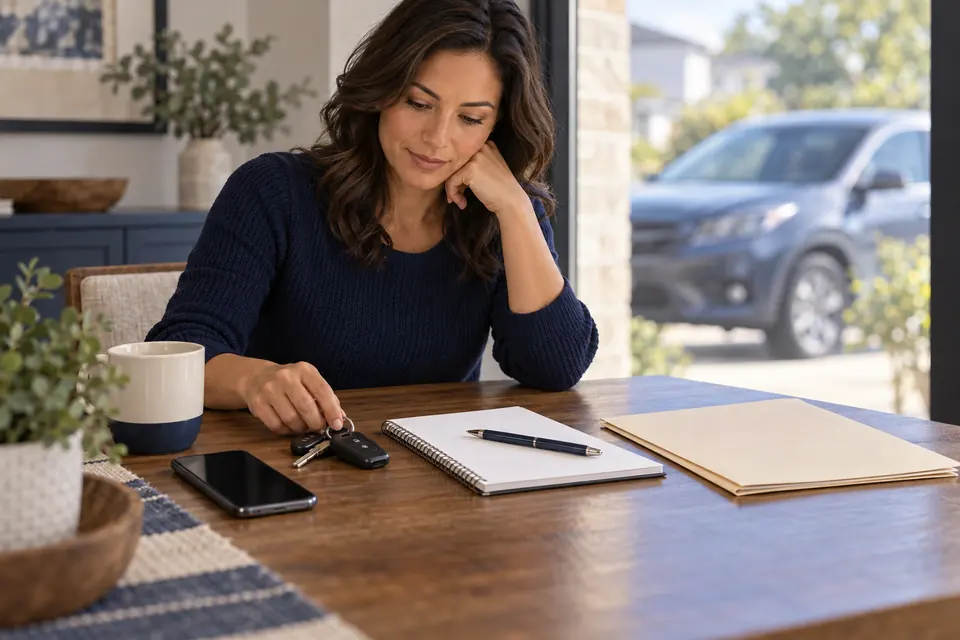
Generated educational illustration: after collision safe information folder. Not an actual customer repair, diagnostic result, staff member or Boudreaux’s facility.
What should I do first after an accident?
Start with immediate safety and emergency assistance when needed. Once it is safe, document the incident, exchange relevant information and decide how the vehicle will reach an inspection or repair facility.
Do not assume a vehicle is safe because it starts. Leaks, tire or wheel damage, loose parts and steering concerns warrant evaluation before driving. Keep claim and transport documents together, choose your preferred shop and confirm the next step. Photos begin the assessment but do not settle hidden damage or the final repair scope.
How This Fits Into the Repair Plan
Once immediate safety is addressed, confirm the selected shop, vehicle condition and receiving arrangement. Keep the event, transport and claim identifiers with the current next step rather than treating one acknowledgment as complete repair authorization.
Related Repair Guidance
Separate emergency help from the repair conversation
If an emergency requires immediate police, fire or ambulance assistance, call 911 and follow the call-taker’s instructions. A repair shop, website form or estimate request is not the emergency-response route. Deal with the immediate situation before trying to document damage or arrange a repair conversation.
Do not enter traffic, reach beneath an unstable vehicle or force damaged components to take photographs. A useful record should be made only from a safe position. Explain unavailable access later rather than risking another injury or incident for an estimate image.
A small exterior mark does not independently establish that the vehicle is suitable to drive. Describe warnings, leaks, rubbing, displaced wheels, closure concerns or changed behavior to the relevant team. If condition is uncertain, discuss appropriate transport instead of driving to test the concern.
Keep observations separate from a guessed diagnosis. The impact area and what changed help the assessment, while the actual component condition and supported repair method need relevant inspection and vehicle information.
Related reading: When to Tow After an Accident and Collision Estimate Photo Guide.
Gather information that helps the next step
Keep relevant vehicle identity, contact details and the basic event information clear. If a report or claim identifier is available, preserve it for the actual conversation. This guide does not replace instructions from responders or the requirements for an individual claim or report.
Safe overall photographs can show the impact location and relationship between components; closer views can show visible detail. Neither establishes every concealed finding. Ask which questions require in-person assessment, authorized access, measurement or requirements research.
Avoid publishing full VINs, claim identifiers or private documents in public reviews or social comments. Ask the shop or insurer how to provide necessary information for the relevant step. Clear repair information does not require unnecessary public exposure.
Mention earlier repairs, modifications or concerns where known. Distinguish the history from new observations and state uncertainty honestly. A finish that looks original or a remembered speed does not independently establish the complete damage scope.
Confirm the receiving and assessment arrangement
Choose New Orleans or Luling explicitly and contact that team about the next step. Confirm the purpose, acceptance and arrival instructions before bringing or dispatching the vehicle. A route link or form submission does not authorize an unattended drop-off or establish an appointment.
If transport is needed, provide the driver the chosen shop name, exact address and confirmed instructions. Tell the receiving team about movement concerns such as a vehicle that cannot roll, steer or securely close. A destination name does not establish every transport arrangement or charge.
If insurance is involved, separate claim identification and review from technical scope and repair authorization. Ask the insurer about its actual decision and the shop about the supported assessment. A claim number or preliminary estimate does not establish every operation or payment responsibility.
Keep the current dated estimate and agreed next step together after the conversation. Boudreaux’s can discuss the actual vehicle and supported plan. Ask what remains provisional and which action resolves it rather than treating the first visible assessment as a complete diagnosis.
If circumstances change before arrival, contact the receiving team and identify the original request. State the current vehicle condition and confirm any revised arrangement. A new map link or duplicate submission does not automatically update every responsible person or transfer acceptance between the two shops.
If several documents or contacts are involved, identify which matter and current estimate each belongs to. Keep the event information, vehicle identity and repair question consistent. A clear next-step conversation is more useful than forwarding every private document or treating one acknowledgment as confirmation of emergency help, receiving acceptance and complete repair authorization.
For emergency-response information, see the official 911 calling guidance.