
From the Boudreaux’s archive
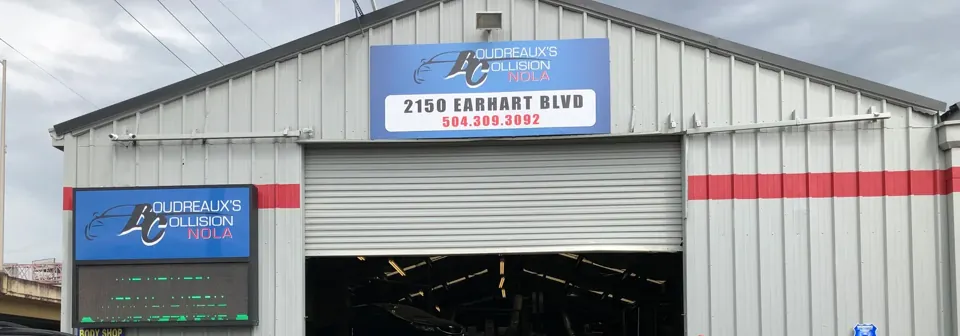
Owner-supplied archive view of the New Orleans frontage at 2150 Earhart Boulevard. Confirm your estimate-visit arrangement with the selected shop; this historical view does not establish current availability.
Is an in-person estimate always the final price?
An in-person estimate lets the shop examine visible damage and ask about the impact. Some conditions still cannot be confirmed until parts are removed or other checks become possible.
Bring vehicle and claim information, existing estimates and relevant photos. Ask what the visit can establish, what remains provisional and how later findings are documented. An estimate visit is different from authorization to perform every repair or a confirmed drop-off date.
How This Fits Into the Repair Plan
Use the visit to establish visible findings and identify what remains provisional. Confirm any further assessment, authorization and next update before treating an initial estimate as the final scope.
Related Repair Guidance
Explain the purpose of the visit
An in-person estimate visit starts with a useful account of the vehicle and concern. Tell the chosen shop whether you need an initial assessment, an explanation of an insurer’s estimate or a discussion of a changed repair proposal. These requests can involve different next steps.
Share the year, make, model, impact area and any warning, leak, closure or driving concern. Describe what you observed rather than assigning an unconfirmed diagnosis. Mention earlier repairs or conditions that may matter to the affected area.
Confirm the visit arrangement with the team before traveling. An online request or route link does not establish an appointment or permission to leave the vehicle. Ask what information to bring and how the actual assessment will be arranged.
If the vehicle’s condition is uncertain, discuss appropriate transport before moving it. Do not drive simply to demonstrate a symptom or because the map shows a short route. The receiving conversation should include any rolling, steering or closure concern.
Related reading: What to Bring to a Collision Estimate and Understanding Collision Estimates.
Understand what the visible assessment can establish
The initial view may identify some damage while leaving concealed questions open. Ask which findings are confirmed and what requires further authorized access, measurement or vehicle-specific research. A preliminary estimate should keep uncertainty visible rather than promise a complete scope from appearance alone.
Ask the estimator to name the affected components and explain the proposed operations. A broad area label can hide different panel, attachment or fitted-system questions. The useful conversation connects each relevant line to a finding or requirement.
A repairability decision can depend on the actual component, material, damage and applicable information. Ask what supports repair or replacement rather than applying a method from a similar-looking vehicle. A photograph of another repair is not permission for the same operation on yours.
If additional assessment is proposed, clarify the purpose and authorization before assuming it is included in the initial visit. Ask what question it resolves and when an update is expected. Confirm the actual assessment arrangement, timing and applicable terms directly with the chosen team.
Leave with an understandable next step
Ask which version of the estimate is current, what remains provisional and who will discuss any changed scope. Keep the dated document with the relevant explanation. A total alone does not identify every operation or unresolved question.
If an insurer’s estimate is being compared, check whether the documents include the same components, method and related work. Ask the shop about technical scope and the insurer about its actual claim decision. Do not assume similar totals establish identical repair plans.
An assessment conversation is separate from repair authorization and an arranged drop-off. Clarify the agreed next step before leaving: further information, another assessment, a revised proposal or a receiving plan. A website submission should not be treated as permission to begin work.
Boudreaux’s New Orleans and Luling teams can discuss the actual vehicle and relevant estimate. Use the chosen shop, component and document date when following up. These details make the conversation clearer than a general request to explain the entire accident.