
BOUDREAUX’S COLLISION · REPAIR EDUCATION
Diagnostic Scanning vs Software Programming
Scanning retrieves or interacts with diagnostic information; programming changes specified software or configuration through a required process. A replacement component can require setup beyond reading codes. These tasks should not be collapsed into one generic electronic-service label.
Illustration: Diagnostic Scanning vs Software Programming
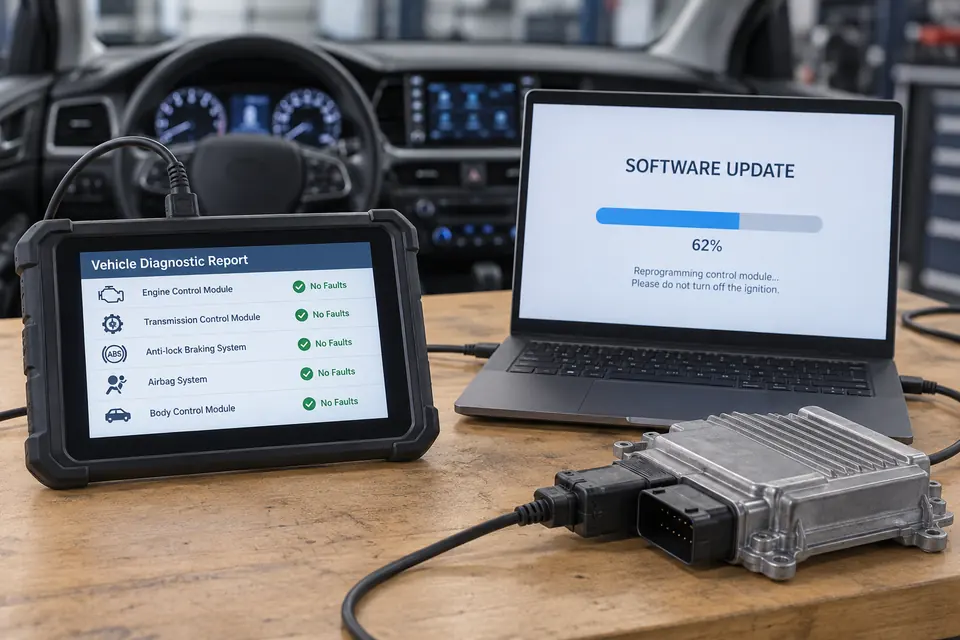
Generated educational illustration: scan versus software programming. Not an actual customer repair, diagnostic result, staff member or Boudreaux’s facility.
Compare the operation, its trigger and its completion record
Read an electronic-work entry as three questions: what operation is proposed, why this vehicle needs it, and what documents its result? A pre-repair scan may capture faults. Diagnostic testing investigates an identified concern. Programming or configuration addresses specified software or vehicle data. An aiming or calibration requirement addresses a different task. The applicable procedure determines the terms and sequence.
For example, I-CAR describes some Ford/Lincoln replacement-module procedures that use configuration from the original module, with a different information route when that data cannot be recovered. That example explains why programming can be distinct work; it is not a requirement for every Ford component or another manufacturer’s vehicle. Ask for the exact module and vehicle procedure rather than a generic “computer reset.”
At completion, match the record to the operation. A scan printout documents a diagnostic check; it does not, by itself, show that a listed programming operation succeeded. Ask how any required setup and subsequent verification are recorded. If a prerequisite prevents completion, the update should identify the pending step so you can understand the timetable and current status.
Reading information and changing software are different
A diagnostic scan retrieves information from vehicle systems. Software programming changes software or data under a defined procedure. One operation does not automatically include the other, and a scan charge should not be interpreted as evidence that a module was programmed.
Programming can have preparation and completion requirements beyond a basic scan. The applicable vehicle and equipment instructions determine what is needed. It should be performed because the repair requires it, rather than used as a general cure for every warning.
Replacement may require additional operations
A replacement module may need programming, configuration, initialization or other setup, depending on the vehicle and component. Those terms should be clarified in the scope rather than treated as interchangeable. Calibration can be another separate requirement.
For example, installing a component physically does not necessarily make it ready for operation. The repair record should identify which required setup steps were completed and what evidence supports the result.
Reading the estimate and completion record
Ask which operation is planned, what triggered it and whether it is included in the current authorization. If a software-related operation is added after diagnosis, request an explanation of the finding that made it necessary.
At delivery, keep relevant programming or setup documentation alongside scanning and calibration records. A generic statement that the electronics were checked leaves important distinctions unanswered. Clear descriptions make later service easier and help avoid assuming work was completed solely because the part was installed.
Further repair information
I-CAR: topic-specific diagnostic and setup context. Current manufacturer information for the exact vehicle determines the required operation.
Related Guidance
Read the electronic work as separate operations
Ask the estimator to describe each electronic operation in ordinary language. Reading diagnostic information, investigating a symptom, changing specified software, configuring a component and performing a required calibration are not interchangeable descriptions. They may appear together in a repair, but the document should explain their purposes rather than combine them under a vague electronics charge.
Consider a damaged component that is physically replaced. A diagnostic check may help assess the concern before replacement, while the applicable instructions may require a separate setup afterward. Reading the codes successfully does not show that the later setup occurred. Conversely, completing a software operation does not explain whether a damaged connector or mounting concern was corrected.
Ask what triggered each item in the proposal. The answer may concern an inspection finding, a replacement operation or a manufacturer requirement. Do not select a programming request merely because a warning is present. The team should establish the actual basis for the work and identify what remains uncertain before treating an operation as the solution.
Ask who handles the work and how the result is recorded
Confirm the arrangement for your vehicle at the selected shop. An operation may require coordination with a specialist or another provider, and that needs to be understood in the timetable. A tool displayed in a workshop is not a capability list for every model and software task. Ask about the specific operation instead of assuming all electronic work is available in one place.
If additional diagnosis changes the proposal, keep the dated revision and explanation. Ask whether the new operation is awaiting authorization or already completed under an existing agreed scope. A part order, a planned specialist visit and a successful operation are different milestones. The update should tell you which state applies rather than leave you to infer completion.
At delivery, request an explanation of the relevant results and any remaining warning or limitation. Keep the available records with the final invoice. If another provider performed a stage, ask how its result is incorporated into the handoff. Clear records make future service easier because they identify what was done rather than simply state that a computer was connected.
Questions about electronic repair operations
Example: three different entries concerning one component
A hypothetical estimate lists a diagnostic check, component replacement and a setup operation. The owner sees three entries mentioning the same system and wonders whether they are duplicates. The next question is what each entry does: one may document the assessment, another the physical replacement and another the required operation after installation. The team should explain the actual scope rather than dismiss the question or combine the entries under an unclear label.
If the assessment later shows the component does not need replacement, ask how the proposal changes and which operations remain justified. Do not assume the original list must be completed unchanged. Keep the revised document and explanation so the final invoice can be understood against the work actually authorized. The example illustrates how to read a proposal; it does not establish the requirements or charges for your vehicle.