
Illustration: Why Similar Vehicles Can Need Different Repairs
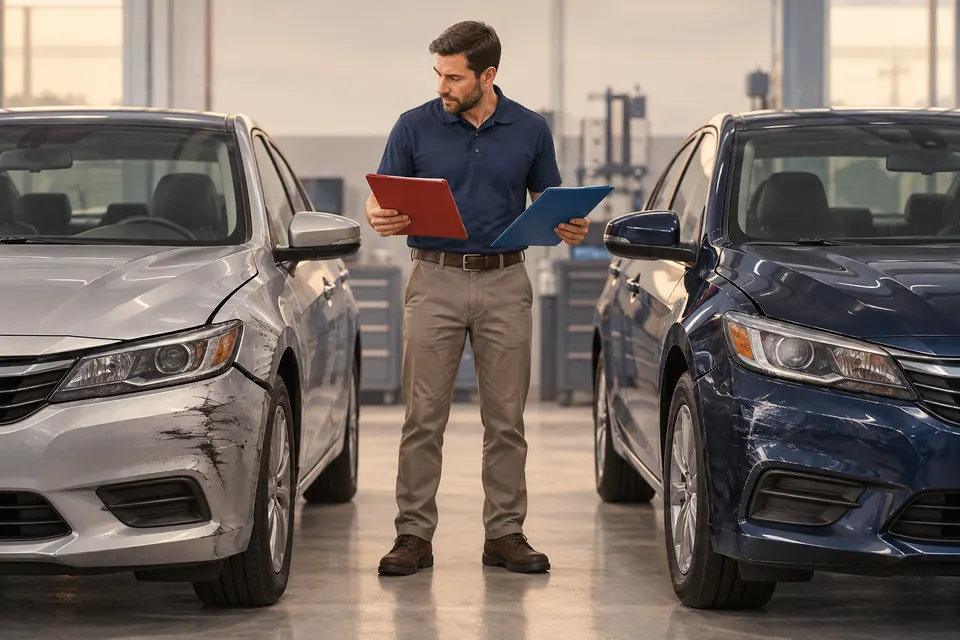
Generated educational illustration: similar vehicles different assessment. Not an actual customer repair, diagnostic result, staff member or Boudreaux’s facility.
Why did another vehicle’s repair cost less?
Vehicles that look similar can differ in model year, equipment, materials and repair procedures. Two apparently similar impacts can therefore require different operations.
Sensor packages, panel construction, prior repairs and hidden damage can change the plan. Comparing only the exterior dent or total price can conceal those differences. Ask how the VIN, inspection and applicable procedures explain the work proposed for your vehicle.
How This Fits Into the Repair Plan
Compare identified vehicles, configurations, findings and complete operations at the same assessment stage. Use another repair to frame a question instead of copying its method or expected total.
Related Repair Guidance
Similar appearance does not establish identical construction
Two vehicles can share a familiar model name or have dents that look alike while presenting different repair questions. Identify the actual vehicle, component and fitted configuration before assuming that one method applies to both.
Material and construction can affect the supported operation. Ask what vehicle-specific information and established findings determine repair or replacement of the identified component. Exterior shape is not a universal repairability rule.
Fitted equipment and mounting arrangements can also differ. A panel-area operation may create relevant questions about a camera, sensor or another component on one vehicle that are different on another. Ask which actual system and requirement belong to your scope rather than copying a generic equipment list.
Known modifications and earlier repairs matter to the current vehicle. Share what you know and distinguish uncertainty from facts. An original identification record does not independently establish the present condition of every component.
Related reading: Why the VIN Matters in Collision Repair and OEM Position Statements vs Repair Procedures.
Compare findings and operations rather than photographs alone
The impact location, concealed findings and related attachments can change the plan even when the visible marks appear similar. Ask what the assessment establishes and which questions remain provisional until access, measurement or research.
A part source and supplied configuration are another comparison. Similar main-part names may describe different included pieces or installed work. Ask about compatibility, attachments, protection, finish and relevant checks before comparing totals as if the scopes were identical.
Applicable information can determine different methods or prerequisites. A repair on another vehicle is context, not permission for the same sectioning, joining or setup operation on yours. Ask which actual instruction supports the proposed method.
A diagnostic report can also have a different purpose or coverage between vehicles. Scanning, physical assessment and calibration are separate questions. A shared clear-report label does not establish that identical systems and requirements were assessed.
Make an estimate comparison useful
Identify the vehicle and document version for each proposal. Compare the components, methods, related operations and provisional assumptions. A total alone may conceal a difference in work rather than a different price for the same operation.
If further findings change the scope, request the dated revision and explanation. Ask whether the change concerns the component, permitted method, related system or completion check. Keep that reason with the estimate so the comparison follows the actual supported plan.
Where insurance is involved, separate technical scope from claim review and valuation. Ask the shop about the supported operation and the insurer about its actual decision. A different claim response does not independently diagnose either vehicle.
At handover, ask how the completed work corresponds to the final proposal and which relevant records are available. Boudreaux’s can discuss the actual vehicle rather than promise that every similar-looking collision follows an identical repair.