
Illustration: Why Vehicle-Specific Repair Procedures Matter
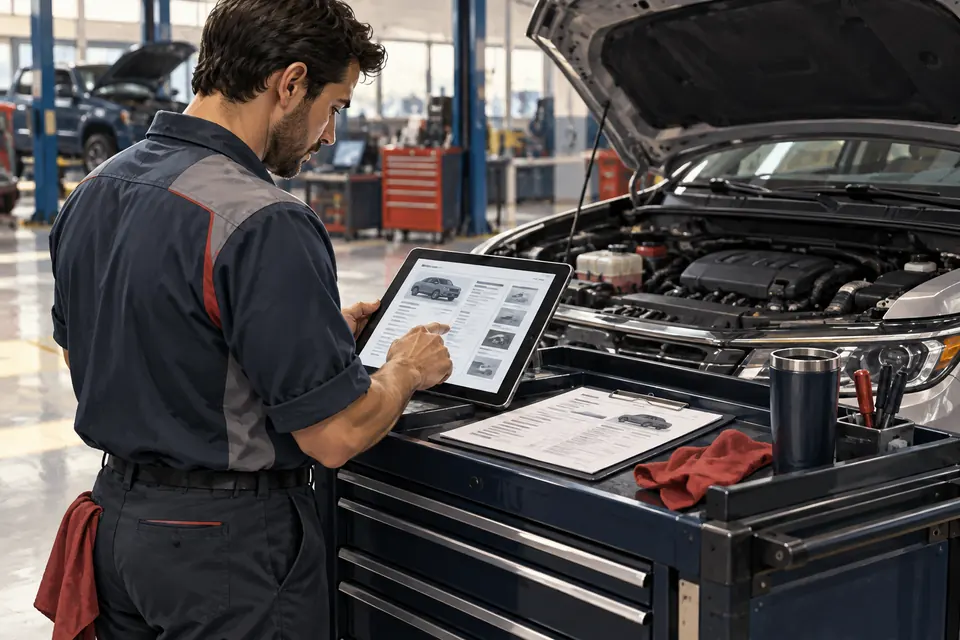
Generated educational illustration: vehicle specific repair information research. Not an actual customer repair, diagnostic result, staff member or Boudreaux’s facility.
Why can the same-looking damage require different procedures?
Manufacturer repair information identifies the methods, materials, attachments and checks for the exact vehicle. A technique appropriate for one model may not be permitted on another.
Model year, construction and installed systems can change the procedure. Ask which current information supports sectioning, joining, one-time-use parts, scanning or calibration in the plan. Using manufacturer information is different from holding an OEM certification; neither should be inferred from a general claim about repair quality.
How This Fits Into the Repair Plan
For a changed estimate line, ask what vehicle information or requirement applies, which operation it supports and whether related parts or checks change. Keep the dated explanation with the current plan so later decisions use the same scope.
Related Repair Guidance
Identify the vehicle before comparing repair advice
A useful repair-procedure discussion begins with the vehicle identity. Provide the year, make, model and VIN, along with known equipment changes or previous repairs. If you are discussing a particular component, identify its location and the current estimate line. These details help keep a technical explanation tied to your own repair.
A familiar model name or similar-looking panel is not enough to establish that two vehicles share a permitted repair method. Generations, configurations and installed systems can differ. When someone offers an example from another vehicle, ask what makes that example applicable to yours before treating it as a recommendation.
Keep procedure questions separate from part-source questions. Identifying a replacement part does not describe every operation required to install it. Ask how the repair information addresses the attachments, surrounding work and checks relevant to that part. That gives you a better understanding of the scope than a part label alone.
You do not need to become a technician to ask these questions. Your goal is to understand which information supports the proposal and what decisions you are being asked to make. A concise explanation of the relevant requirement is often more useful to an owner than an unexplained stack of technical pages.
Connect the requirement to the estimate line
When an operation is unfamiliar, ask why it appears in the repair plan and which part of the vehicle-specific information makes it relevant. The explanation should identify the component or system involved, the work that triggers the operation and what the operation is intended to establish or restore.
For a hypothetical example, a plan may include an attachment item that is easy to overlook in an exterior photograph. Ask whether it is part of the installation requirements for the component being replaced. This example does not establish that every attachment on every vehicle must be replaced; the actual information for the component controls the discussion.
Similarly, ask about any proposed joining or partial replacement method in terms of the identified component. A general statement that a method is common does not explain whether it is permitted at that location on this vehicle. If further research is needed, ask which decision remains open and when the shop expects to have an answer.
Distinguish a broad manufacturer position statement from a detailed repair procedure. They can provide different kinds of information. Ask which source supports the specific operation under discussion and whether additional instructions are needed to carry it out. Keep the answer connected to the current estimate rather than assuming one statement describes the entire job.
Keep procedure questions practical throughout the repair
Ask whether the current plan has unresolved procedure questions before relying on a schedule. Research can affect the permitted method, parts list or checks that follow the work. If a finding changes the plan, request a dated revision and a brief explanation of the changed requirement.
If an insurer questions an operation, ask the shop what supporting information has been submitted and what remains under review. The existence of a procedure and the status of payment review are separate facts. Discuss the next decision without assuming that submission guarantees acceptance or that an estimate alone establishes the full technical scope.
When reviewing final documentation, ask how the completed work and any supplied verification records relate to the repair plan. You can request clarification about a specific operation without asking the shop to certify every unrelated system on the vehicle.
Using manufacturer repair information is also different from holding a manufacturer certification. Ask about credentials directly if they matter to your choice, and rely on confirmed information. This page does not claim an unverified Boudreaux’s certification or identical specialist capabilities at both locations. Contact New Orleans or Luling to confirm the proposed operation and arrangements for your vehicle.
Questions About Why Vehicle-Specific Repair Procedures Matter
Technical Reference
I-CAR Repairability Technical Support. Manufacturer requirements for the exact vehicle control the repair method. A reference link does not imply Boudreaux’s certification or affiliation.