
From the Boudreaux’s archive
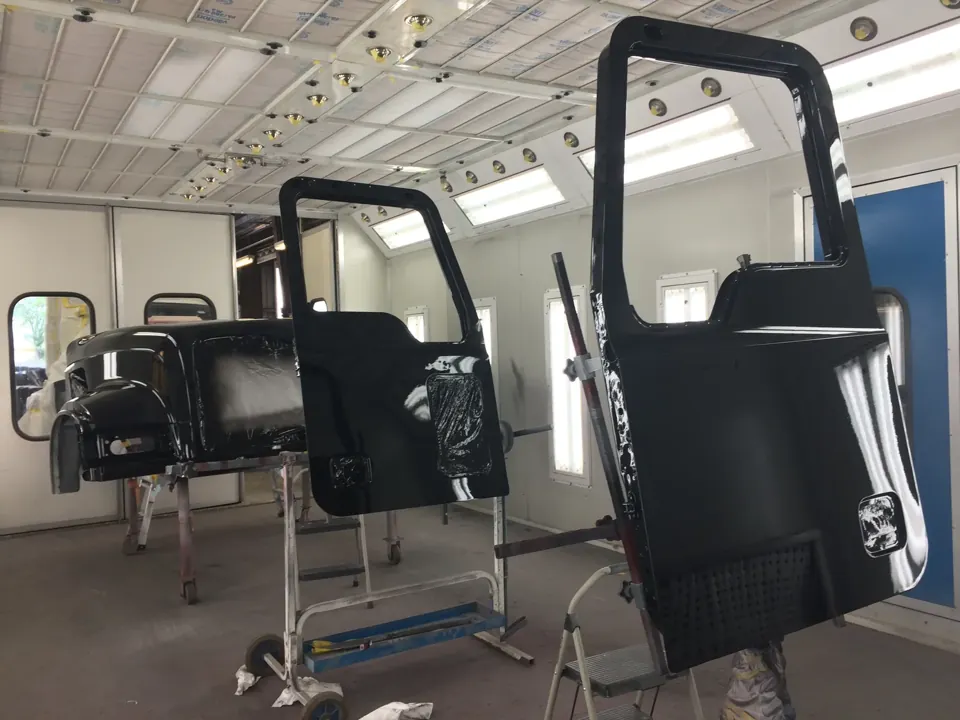
Owner-supplied archive view of detached door components and adjoining panels. It illustrates component-level access, without documenting concealed door equipment, surrounding geometry or completed operating checks.
Can a door skin be repaired without replacing the whole door?
Door repair may involve the outer skin, inner structure, intrusion protection, hinges, latch, glass and wiring. A scraped skin and a displaced door are different repair problems.
Side impacts can also affect the pillar or rocker that supports the door. Fit, opening, closing, glass travel and electrical functions should be considered alongside the finish. A door gap that looks acceptable does not prove that every structural or restraint-system concern has been resolved.
How This Fits Into the Repair Plan
Name the skin, shell, surrounding opening and relevant fitted equipment. Explain closing, locking and glass symptoms separately so component work and the required follow-up can be tracked.
Related Repair Guidance
Describe the door and the surrounding opening
Door damage may involve the outer skin, the door shell, fitted equipment and the body opening around it. Ask the estimator to distinguish these areas. A dented skin and a shifted opening are different questions even when the photograph shows them together.
Describe new difficulty with opening, closing, locking or window operation. Mention whether the concern existed before the impact and whether it happens every time. Do not repeatedly slam or force a binding door; the observation can be shared without trying to diagnose it yourself.
The hinge and latch sides give useful location information. Tell the shop which side was struck and where any gap or rubbing changed. A door that closes does not independently establish the condition of concealed components or the surrounding structure.
If glass is broken or the door cannot be securely closed, discuss safe transport before arrival. Keep people away from loose glass and unstable parts. A temporary covering or a successful lock command does not establish that the damaged opening is ready for normal vehicle use.
Related reading: Side-Impact Collision Repair and Pillar Damage After a Side Impact.
Clarify skin work, shell work and fitted equipment
A skin-repair proposal is different from skin replacement or complete door replacement. Ask which actual part is involved and which findings support that choice. Outer appearance alone cannot establish the condition of the shell or an impact-related concealed component.
The shop should identify the applicable information for the vehicle and proposed work. An instruction for a different door construction should not be transferred merely because the damage looks similar. If an intrusion-related component is damaged, ask for its specific assessment rather than assuming exterior dent repair restores it.
A door may contain glass, a regulator, wiring, locks, handles, speakers or other fitted equipment. The relevant items depend on the vehicle. Ask what needs removal, inspection, transfer or verification in your plan, and whether any damaged component requires its own operation.
Protection, sealing and refinishing are also scope questions. Ask how disturbed seams and relevant surfaces are addressed under the applicable requirements. A smooth exterior finish is useful to review, but it cannot document every concealed attachment or treatment.
Review operation without overlooking new concerns
If access changes the scope, request the dated revised estimate and the newly established finding. Ask whether it changes the skin operation, door assembly, opening work, fitted equipment or completion checks. Keep the explanation with the repair record so later questions follow the actual work.
At handover, discuss the normal door, lock and window operation relevant to the completed work. Ask which concerns were resolved and which records are supplied. Raise any remaining rubbing, unusual noise, warning or water concern with the shop rather than assuming it is an unavoidable result of repair.
For a later issue, note the side, conditions and timing. A window problem during rain and a new closing resistance are different observations. Contact Boudreaux’s before altering seals, adjusting attachments or applying lubricant to unfamiliar components; the useful next step is assessment of the actual concern.