
BOUDREAUX’S COLLISION · REPAIR EDUCATION
Collision vs Mechanical Diagnostics
Collision diagnostics investigate systems that may have been affected by an impact or repair. Mechanical diagnostics investigate the cause of a vehicle problem that may be unrelated to the collision. Symptoms and codes alone do not establish the connection.
Illustration: Collision vs Mechanical Diagnostics
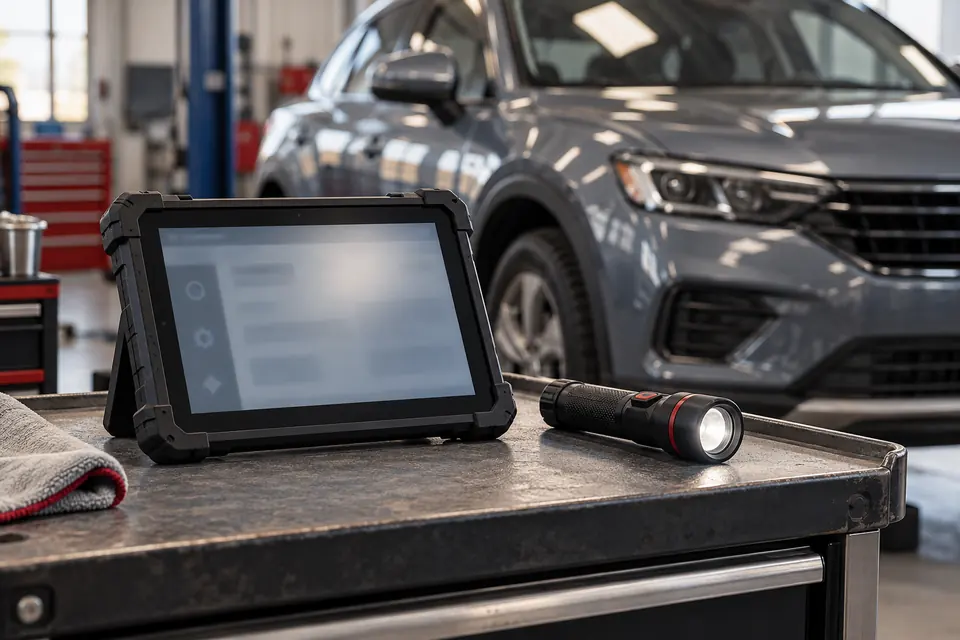
Generated educational illustration: electronic physical assessment context. Not an actual customer repair, diagnostic result, staff member or Boudreaux’s facility.
Does a diagnostic code prove the collision caused a fault?
Collision diagnostics investigate systems that may have been affected by an impact or repair. Mechanical diagnostics investigate the cause of a vehicle problem that may be unrelated to the collision. Symptoms and codes alone do not establish the connection.
A useful diagnosis considers the impact area, prior symptoms, physical inspection and vehicle test procedures. The aim is to identify a cause before replacing parts. Tell the shop what changed after the accident and what was already present; that history helps separate collision-related and unrelated conditions.
How This Fits Into the Repair Plan
Define the symptom and its history before interpreting the report. Separate electronic findings, physical assessment and the evidence connecting a condition to the collision.
Related Repair Guidance
Define the question before interpreting a result
A collision can lead to visible body damage, mechanical concerns and electronic findings, but these are not interchangeable descriptions. Ask which symptom or requirement the diagnostic operation is intended to address. A scan report and an inspection of a damaged mechanical part provide different kinds of information.
Describe the vehicle’s behavior before and after the event. A new vibration, steering change, leak or warning helps define the question. If a condition existed earlier, say so. A fault found during collision assessment should not automatically be described as caused by the collision without supporting findings.
Vehicle identity and fitted equipment matter to the applicable information. Share the year, make, model and relevant history, with the VIN where the team needs it through the actual repair conversation. A broad vehicle-family name is not always enough to identify the correct diagnostic requirements.
Do not drive an uncertain vehicle to recreate a symptom or clear warnings before asking for assessment. Preserve what you observed and discuss appropriate transport. The owner’s useful role is a clear history, not an improvised diagnostic test on damaged equipment.
Related reading: Post-Repair Diagnostic Verification and Diagnostic Trouble Codes After a Collision.
Separate scanning from investigation and other operations
Scanning can identify electronic information available from the systems reached by the tool. Diagnosis uses the relevant findings, symptoms and applicable information to investigate the concern. The presence of a code does not by itself establish which physical part must be replaced.
A mechanical inspection can be required for a symptom even when no relevant code appears. Ask what the scan establishes and which other assessment remains needed. An absence of reported faults should not be treated as a blanket result for all mechanical, structural and electronic questions.
Programming, setup, initialization and calibration are also separate from simply reading codes. Ask which operation is proposed and what requirement supports it for the actual vehicle and work. A line described only as diagnostic service may need clarification if it combines different tasks.
If a finding changes the repair plan, ask how it connects to the affected component and scope. Distinguish investigation of the concern from the operation proposed to correct it. Keep unresolved questions visible until the supporting information is established.
Use records that explain both the finding and its limits
Ask which relevant report or explanation is available and what it shows. The vehicle identity, system, stage of repair and observed concern provide important context. A printed code list without an explanation may leave you unsure how it relates to the proposed work.
Where an earlier or unrelated concern is found, ask how it is distinguished from collision-related operations and what next step is proposed. Clarify authorization and any claim-review question before assuming every item belongs in one approved scope.
At pickup, ask what diagnostic and mechanical work was completed and which relevant checks followed it. A successful scan is not automatically a record of every physical inspection or vehicle-specific calibration requirement. Each result should be understood in relation to its purpose.
For a later symptom, record the conditions and timing and contact the repairing shop. Do not repeatedly erase messages or continue driving to collect more evidence. Boudreaux’s can review the actual repair record and discuss the appropriate assessment for the new concern.
Questions About Collision vs Mechanical Diagnostics
Technical Reference
I-CAR: strategy-based diagnostics in collision repair. Manufacturer requirements for the exact vehicle control the repair method. A reference link does not imply Boudreaux’s certification or affiliation.