
From the Boudreaux’s archive
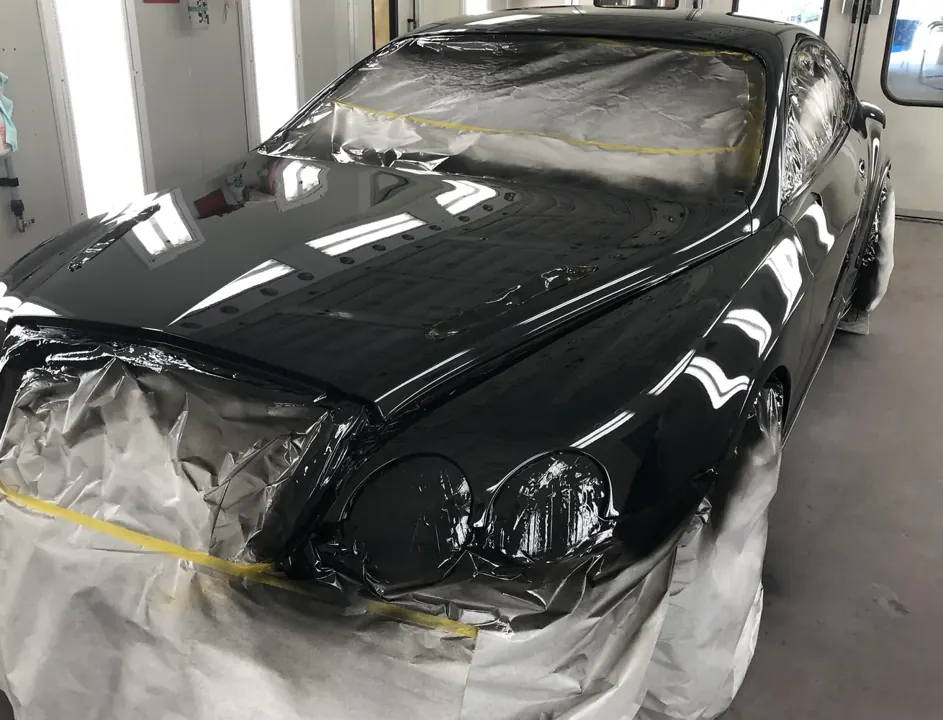
Owner-supplied archive photograph viewed obliquely across the hood and adjoining panels. It illustrates viewing-position context without establishing metallic or pearl composition, a color-match result or a required blend.
Why does a color match change with viewing angle?
Effect finishes can change brightness or hue when viewed from different angles. A repaired area should be evaluated with that behavior in mind, not only from directly in front of it.
A color may look close head-on but differ along the side of the vehicle. Formula selection and application both influence the effect. Ask how angle-dependent appearance is assessed and whether a blend is needed for the proposed repair.
How This Fits Into the Repair Plan
Identify the same surfaces from relevant positions and light. Keep the observation, color/variant assessment and supported blending or clearcoat scope clear in the conversation.
Related Repair Guidance
Compare the same surfaces from useful positions
An angle-dependent paint concern needs a description of the viewing position as well as the panel. Tell the shop whether the difference appears straight on, from the side or while moving around the vehicle. This helps distinguish an observation from a broad claim that every view is different.
Metallic or pearl appearance can require a more careful comparison than a single photograph. Ask how the actual finish is assessed from relevant positions. The purpose is to understand the vehicle’s appearance rather than to promise that one screen image represents every viewing condition.
Panel shape and reflections can affect what a viewer notices. Identify which adjoining surfaces are being compared and the lighting at the time. A different curved surface is not automatically an identical visual comparison to a flat area beside it.
Share known previous paintwork or coating history on the compared panels. A paint code does not document that history. The shop needs the actual vehicle information and finish condition when discussing whether a difference relates to the proposed repair.
Related reading: Metallic Paint Matching and Flake Appearance and Lighting and Automotive Paint Matching.
Keep angle, color identity and refinish operations separate
Ask how the relevant color or variant is selected for the actual vehicle and what comparison supports it. A code supplies useful identification information, but it is not a complete explanation of angle-dependent appearance or every available matching option.
A sample and the vehicle need to be considered in appropriate conditions. Ask what the comparison establishes rather than judging a formula by its name alone. The owner does not need to choose a spraying technique or product adjustment to ask for an understandable explanation.
If blending or additional panel work is proposed, clarify the affected surfaces and layers. Color matching and clearcoat application are different operations. An angled-view concern does not independently establish the preparation or coverage required for the supported plan.
Do not polish or coat an unfamiliar finish to try to change the viewing effect before discussing it with the shop. The actual condition and finish system should determine the next step. An improvised product can change the surface without resolving the original question.
Report an angle-dependent concern clearly
At handover, identify the viewing position and panels that show the concern. Discuss it with the shop on the actual vehicle rather than relying only on a cropped photograph. Ask which finish operations were completed and which relevant care instructions apply.
For a later observation, record the light, position and panel, and whether the effect is repeatable. A safe overall image can show the relationship between surfaces. Keep a closer view as supporting context without using a filter that changes the appearance.
Ask for the applicable follow-up terms if needed. Clarify the actual repair terms and relevant comparison conditions. The useful conversation follows the actual finish and observed condition rather than a universal claim about metallic or pearl paint.
If a revised operation is proposed, keep the finding, dated scope and instructions together. Boudreaux’s can discuss the actual vehicle and comparison. Clear viewing details make that discussion more useful than choosing a technical remedy from a photograph of another repair.
Questions About Viewing Angle and Metallic or Pearl Paint
Technical Reference
PPG: creating a sprayout card. Confirm the applicable vehicle and product-system guidance with the repairing team. This reference does not identify Boudreaux’s paint brand, warranty or a universal care interval.