
From the measuring-equipment archive
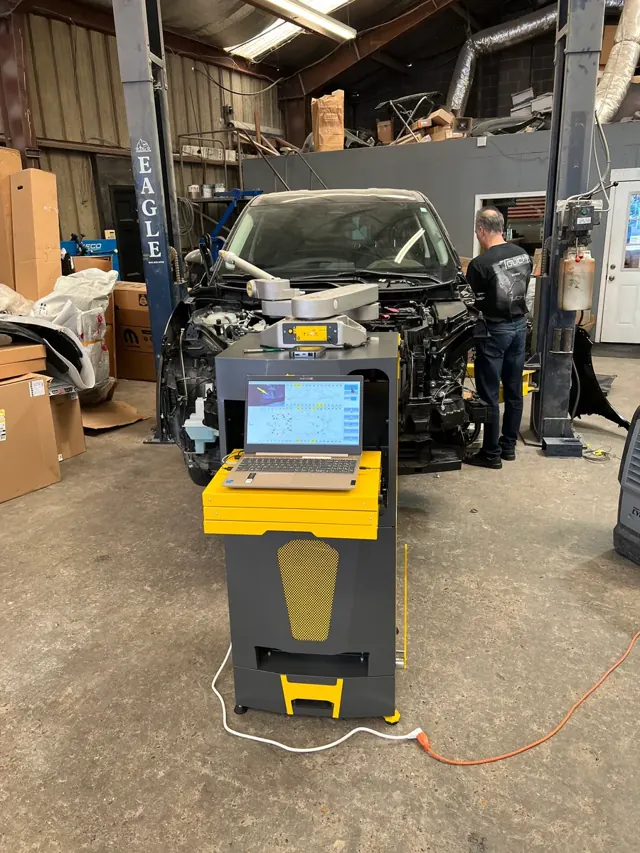
Owner-supplied archive photo showing measuring equipment beside a partially disassembled vehicle. It provides equipment context, not a dimensional finding, verified sensor position or completed calibration record.
Can structural damage affect a sensor that is not visibly broken?
Structural damage can affect the relationships between sensor mounts, vehicle centerline and other reference points. Repairing outer panels alone may not resolve those changes.
Structural measuring, alignment and calibration address different questions. The correct sequence depends on the vehicle and damage. Ask how the mounting structure is verified before a sensor procedure is performed and which manufacturer requirements apply.
How This Fits Into the Repair Plan
Keep structural measurement, wheel geometry and assistance setup as distinct results. Ask which affected reference area and requirement connect them in the actual repair plan.
Related Repair Guidance
Keep the reference-area question separate from the sensor result
Structural repair can involve geometry relevant to the vehicle and fitted systems. Ask which affected areas and reference information matter to the proposed work. A sensor that appears intact does not independently establish the condition of the structure or mounting area that locates it.
Describe the impact, changed gaps or closure behavior and any assistance warning. These are observations that can guide inspection without measuring structural position or diagnosing a camera or radar unit.
Ask which relevant measurement supports the structural plan and what the result establishes. Wheel alignment, body or frame reference geometry and an electronic scan answer different questions. One should not be expanded into proof of every other area without an explanation.
Share known earlier repairs or modifications in the relevant area. Distinguish facts from uncertainty about history. The assessment needs the actual vehicle information rather than a generic assumption based on a similar exterior shape.
Related reading: Frame Rail Damage: Measuring Before Repair Decisions and Suspension Mounting Point Damage After a Collision.
Connect structural work to applicable assistance requirements
Ask how the vehicle-specific information addresses the planned structural operation and any affected sensor or mounting location. The requirement should be linked to the actual work rather than a blanket claim that every structural repair has the same calibration scope.
Boudreaux’s uses OEM parts for structural and suspension components. Discuss the relevant estimate lines and any separate coverage question for the actual proposal. Physical condition, supported structural correction and assistance setup are different parts of the plan. Ask what must be completed before the relevant operation and which evidence supports each stage. A successful calibration should not be treated as permission to leave a physical question unresolved.
Scanning is also distinct from calibration. A clear report can provide relevant electronic information without documenting every geometry prerequisite or aiming operation. Clarify the purpose of each line and record in the scope.
If access or measurement changes the structural proposal, request the dated revision and finding. Ask whether it changes a component, reference-area operation, assistance requirement or verification. Keep those distinctions clear so the scope remains understandable.
Review the completed geometry and assistance work
At handover, ask which relevant structural and assistance operations were completed and which records are available. An exterior photograph can show appearance, but it is not a complete dimensional or setup record.
Ask what each measurement or operation result establishes and whether a limitation remains. A document should be connected to the vehicle and stage of work so an initial assessment is not mistaken for completed verification.
If a later warning, handling or closure concern appears, record the circumstances and contact Boudreaux’s before resets or improvised adjustments. The actual repair record can help distinguish physical geometry and assistance-system questions in the next assessment.
Where insurance is involved, clarify technical scope with the shop and the claim decision with the insurer. Approval or payment does not identify the permitted structural method or replace the applicable assistance requirements.
Questions About Structural Repair and ADAS Reference Geometry
Technical Reference
I-CAR: calibration prerequisites. Manufacturer requirements for the exact vehicle control the repair method. A reference link does not imply Boudreaux’s certification or affiliation.