
BOUDREAUX’S COLLISION · REPAIR EDUCATION
Superseded Part Numbers in Collision Repair
A superseded part number means the manufacturer or supplier has replaced an earlier catalog number with another. The change may involve identification, availability or a revised part. Supersession does not mean every substitute offered for the vehicle is interchangeable.
Illustration: Superseded Part Numbers in Collision Repair
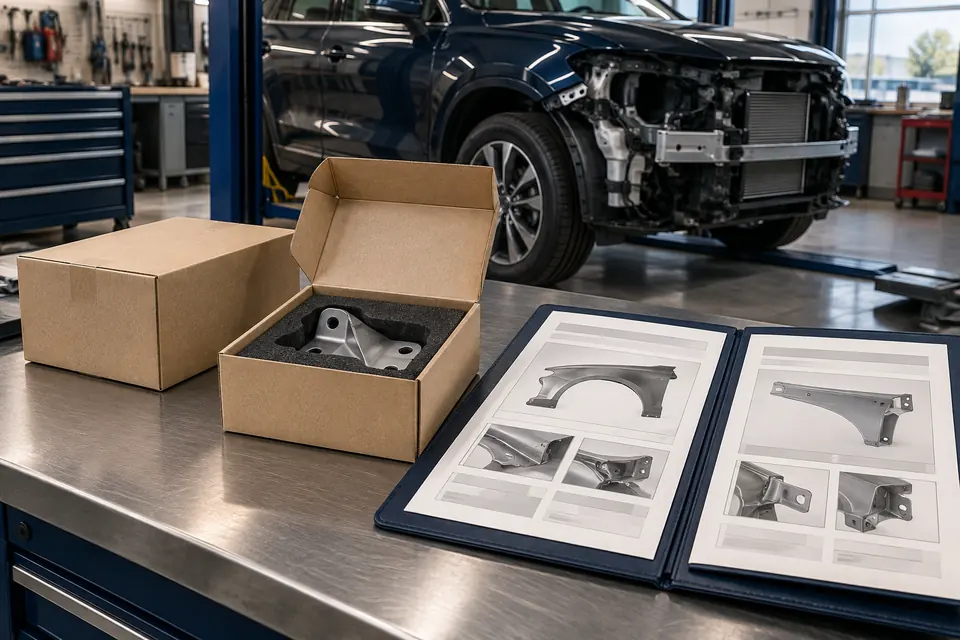
Generated educational illustration: service part reference update. Not an actual customer repair, diagnostic result, staff member or Boudreaux’s facility.
What to Clarify for Your Vehicle
Ask how compatibility was verified and whether associated fasteners, attachments or instructions also changed. Keep the source and the specified number documented. An estimate describing a replacement generally should not be interpreted as proof that an unrelated part number is equivalent.
A supersession is a catalog change, not a damage finding
A superseded number indicates that the catalog directs an earlier part reference to a later one. It does not by itself establish why a vehicle was damaged, which surrounding components need work or whether the newer number represents an identical standalone piece.
Ask the shop or supplier to clarify the applicable replacement and any included-component difference. The relevant comparison is tied to the actual vehicle and current catalog information. A number changing is not automatic evidence of a quality problem.
When comparing estimate versions, distinguish a catalog identification update from a newly discovered repair operation. Those are different reasons for a document to change.
Why an updated description can affect an estimate
A revised catalog reference may change how an assembly is described or supplied. An owner should understand whether the update concerns only identification or whether it affects included pieces, availability or the proposed installation scope.
Imagine an estimate first using an older part reference and later showing the current replacement. A useful explanation states what changed and why the replacement applies. It is more informative than treating the new number as an unexplained increase in the job.
Keep both versions and any supplier clarification relevant to the change. That preserves the reason for the update without assuming that every difference represents additional collision damage.
Questions about a superseded part
- Which original number is being replaced?
- What current catalog reference applies to this vehicle?
- Does the supplied assembly include different components?
- Does the update affect availability or another repair stage?
- Is any price or operation change separate from the number change?
A catalog update should be discussed specifically. It is not a substitute for physical inspection, fit checking or explaining another affected component. The repair plan should still connect each operation to its own basis.
Related Guidance
Keep availability and installation readiness separate from the new number
A catalog replacement reference does not establish that the part is in stock, delivered or accepted for installation. Ask which availability statement is confirmed and whether another inspection or fit review remains after arrival. Identification, sourcing and completion are different stages. Avoid treating a new number as a promised solution to every parts delay.
If the arrangement changes, retain the dated description and updated schedule with the estimate. Ask what the next useful checkpoint will confirm: source availability, shipment, arrival condition or readiness for the repair operation. At delivery, keep the final part description with the relevant work record. If a later fit or function concern appears, report the observation and let the provider review the actual assembly. The existence of a supersession is context for the record, not an owner’s diagnosis of the concern.