
BOUDREAUX’S COLLISION · REPAIR EDUCATION
Understanding Estimate Labor Categories
Estimate systems can separate body, refinish, mechanical or other labor categories. These labels help describe different operations but do not explain every detail of the work. Similar-looking line items can involve different access or procedure requirements.
From the Boudreaux’s archive
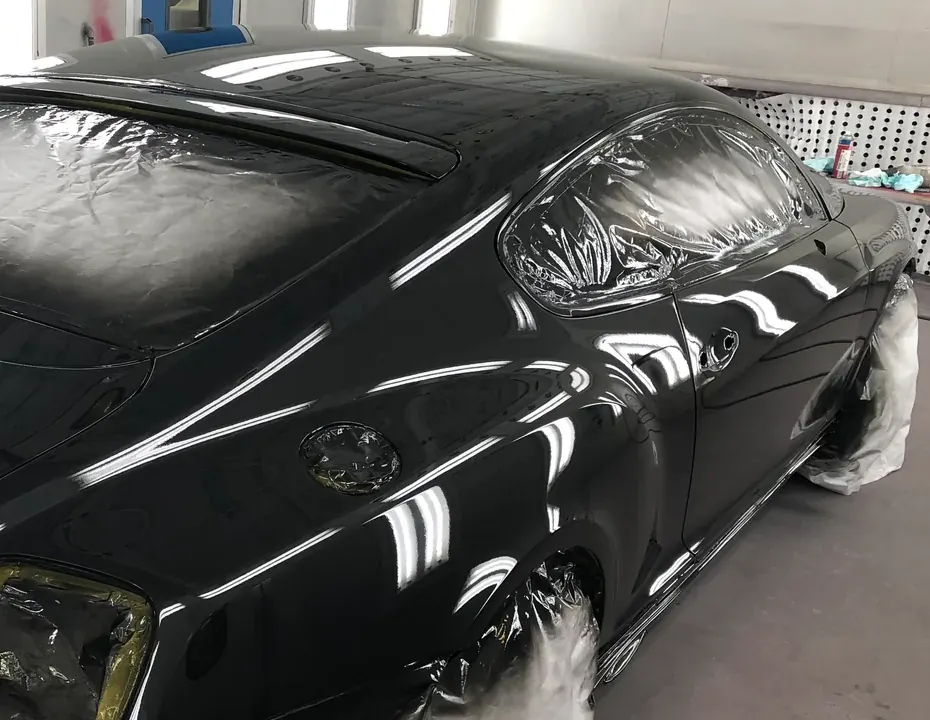
Owner-supplied paint-project archive detail showing masking and exterior access context. It helps distinguish kinds of work, not actual labor hours, included estimate operations, a universal removal method or a completed match.
What to Clarify for Your Vehicle
Ask which operation a line describes and whether related work is included or separate. Compare the actual scope rather than only the category name or total hours. Payment arrangements and technical requirements can require different explanations.
Labor categories identify different kinds of work
An estimate may separate body, refinishing, mechanical or other labor. These descriptions help organize operations; they are not interchangeable measures of the same task. Removing a part for access can also be different from replacing it because it is damaged.
Comparing only the total hours can hide scope differences. Two proposals may contain different operations, included items or assumptions even when their totals are similar.
Read the operation beside the category
Ask what each unfamiliar operation does and why it is needed. If a line appears twice, ask whether the tasks differ or whether an overlap needs clarification. Do not assume a duplicate based only on a similar label.
For a revised estimate, compare the operation descriptions and notes as well as the totals. Keep the current version with its authorization. A clear explanation should connect the listed labor to the vehicle’s repair rather than requiring the owner to decode every estimating abbreviation.
Example: similar totals with different labor descriptions
Two proposals show comparable labor totals, but one includes removal for access and another includes replacement of a damaged component. Those descriptions are not equivalent. Reading the categories and operations reveals a difference that the total alone conceals.
Ask why a part is being removed and whether it is intended for reuse or replacement under the repair plan. If refinishing is also listed, identify which surfaces and adjacent operations are included. Do not assume every line referring to the same panel is duplicate labor.
Keep the explanation with the current estimate. If a possible overlap is identified, request clarification rather than concluding from a familiar abbreviation. A meaningful comparison connects each task to the actual repair. It also distinguishes a difference in scope from a difference in the price charged for the same operation.
Related Guidance
A labor category tells you where to begin asking
Collision estimates may group work into body, refinishing, mechanical, structural or other labor categories. The labels help organize operations, but their use can depend on the estimating system and proposal. Ask the writer what a particular category covers on your estimate rather than assuming an identical label describes identical work everywhere.
Read the operation beside the category. Removing a part for access, repairing damage and installing a replacement are distinct tasks. The labor total cannot explain those differences on its own. A proposal with fewer hours may also contain fewer operations, different assumptions or an area not yet assessed.
When comparing estimates, start with the same vehicle, damage area and assessment stage. A photograph-based proposal and a post-disassembly repair plan may not have the same scope. Ask which operations account for the difference before using category totals to decide that one estimate is more complete or better priced.
Ask how related operations fit together
A single collision repair can involve work in several categories. For example, a body operation may require refinishing and removal of neighboring components. Ask how the estimate describes that sequence and which related tasks are included. A category heading is not proof that every necessary operation has been accounted for.
Some descriptions may include associated work while other required operations appear separately. Ask the estimator to explain an unclear line or any apparent overlap. Avoid treating two similar words as a duplicate charge without understanding what each operation covers. Conversely, a general bundle should be explained if you cannot identify the work it includes.
Changes to the scope can also change labor without adding a visible exterior part. Newly accessible damage, applicable repair requirements or additional access can affect the plan. Ask what finding or requirement supports the added operation. The explanation should connect the task to the vehicle rather than rely on a generic category name.
Use the category breakdown to review the actual scope
Ask for a plain-language explanation of the operations that most affect your repair decision. Identify any inspection still pending and whether the current estimate assumes repair or replacement of the affected part. A clear discussion is more useful than trying to diagnose the correct labor hours from a category total.
For an insurer question, refer to the same line, description and version the shop is using. Ask the claim contact to explain their response to that operation. A payment question should not be confused with a finding about how the vehicle needs to be repaired. Keep the relevant correspondence alongside the estimate.
At Boudreaux’s New Orleans or Luling handoff, review the completed-work invoice and ask about any operation you still do not understand. Keep the category breakdown as part of the repair record, but use the actual operation and vehicle finding as the reference if a concern or claim question arises later. Earlier category totals may describe a superseded scope.