
BOUDREAUX’S COLLISION · REPAIR EDUCATION
Vehicle Modifications and Collision Repair Planning
Aftermarket accessories or modifications can change access, equipment or the information needed for a repair. An altered suspension, camera location or body attachment should be identified rather than assumed to match factory configuration. Suitability requires vehicle-specific assessment.
From the Boudreaux’s archive
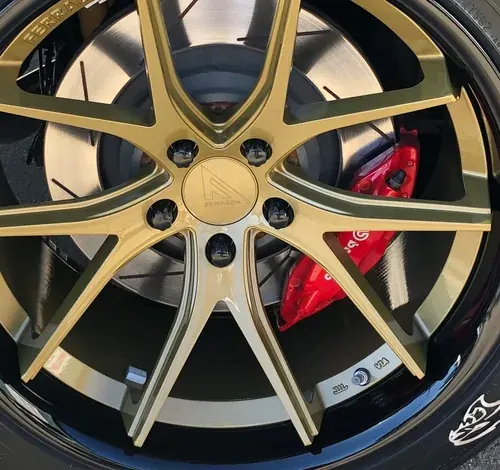
Owner-supplied archive wheel detail illustrates current-configuration questions. It does not establish original-versus-added equipment for another vehicle, exact wheel specifications, fitment, calibration suitability or a collision cause.
What to Clarify for Your Vehicle
Tell the shop what was changed and provide available installation records. Ask how the modification affects procedures or outside-service arrangements. General collision guidance does not confirm that every modified setup can be restored by a standard operation.
A modified vehicle needs its actual configuration identified
Aftermarket wheels, suspension changes, body accessories, lighting and electronic additions can affect repair planning. A vehicle identification number does not necessarily describe every component currently installed. Tell the shop what has changed.
Modifications can affect access, part compatibility or procedural prerequisites. They should be evaluated rather than assumed to cause the damage or ignored because they are not factory equipment.
Provide records where available
Share the product description, installer information or invoice for a relevant modification. If you do not know the details, say so. A photograph can help identify the installed component, but may not establish its specifications.
Ask whether the proposed repair involves restoring the existing configuration, using a different part or addressing an unresolved compatibility issue. Confirm any change before authorizing it. Keep the final description with the records so the repaired vehicle’s configuration remains understandable.
Example: an accessory affects repair access
A vehicle has an aftermarket accessory near the damaged area. The accessory may need removal for access, and its installation may not be described by standard vehicle information. Tell the shop before the estimate is finalized rather than assuming the technician will know its mounting method.
Provide the product or installer record if available. Ask whether the proposed scope includes removal, reinstallation or a change to the accessory. A repair to the original body component and restoration of the added equipment are separate questions.
Confirm any change before authorizing it and retain the final description. If a modification affects a procedural prerequisite, ask how that condition will be assessed. This makes the vehicle’s configuration explicit without claiming that every modification is unsafe or that every accessory can be restored under the same repair plan.
Related Guidance
Describe the vehicle as it is currently equipped
Collision planning starts with the actual vehicle, which may include equipment that differs from the original configuration. Tell the repairer about known suspension changes, added lighting, cameras, towing equipment, body accessories or other modifications near the damaged area. Include information you have about the parts and earlier installation.
Do not assume the repairer can identify every change from a VIN or exterior photograph. The VIN helps identify the original vehicle, while the current equipment still needs assessment. A clear description reduces the chance that a part or operation is proposed from an incomplete picture of the vehicle.
Describe the modification without diagnosing its effect. The fact that an accessory is present does not establish that it caused the damage or a new symptom. The repairer must evaluate the affected components and applicable requirements.
Ask how the changed configuration affects the proposal
A modification can create a question about access, fitment, attachments or system operation. Ask the shop which aspects need assessment and whether the proposed replacement or repair accounts for the current configuration. A part that suits the original design is not automatically the complete answer to an accessory-related installation question.
Where sensors or assistance systems are involved, ask which manufacturer information and applicable checks govern the repair. Do not assume a lift, changed wheel or added accessory permits a generic calibration method. Equally, do not infer that every modification triggers the same additional operation.
If the plan proposes restoring, removing or replacing added equipment, ask for a clear description of that scope and the decision needed from you. Keep that repair discussion separate from the insurer’s response to the actual claim and equipment proposal.
Keep the equipment record with the collision documents
Provide relevant installation receipts, part identification or earlier instructions when the repairer requests them. Preserve originals and send only the material needed through a confirmed channel. A general website form should not include unrelated account credentials or personal records because they happen to be stored with a receipt.
At handoff, ask how the affected equipment and its attachments were addressed and whether any function or fitment concern remains unresolved. Keep the final invoice and explanation of an equipment change with your vehicle records. Exterior appearance alone may not explain what was assessed or restored.
Boudreaux’s New Orleans and Luling intake arrangements are separate. Confirm the selected shop’s assessment of the collision-related concern and any specialist coordination needed for the actual vehicle. This guide does not establish installation or general modification services at both facilities. It helps you describe the equipment and ask precise questions about the repair plan.