
Vehicle Owner First
Insurance is part of many collision repairs, but the vehicle belongs to the customer. A useful repair conversation should explain what is known, what still needs to be inspected and why the repair plan may change as more information becomes available.
A Repair Plan Is More Than a Panel
Depending on the collision, the plan may involve body repair, structural work, refinishing, scanning, calibration, alignment, replacement parts, corrosion protection and reassembly. Those operations are connected; treating one visible panel in isolation can miss the larger repair picture.
Clear Next Steps
The best starting point depends on your situation. If the vehicle is safe to discuss and you want to provide details, start an estimate. If you need a location, directions, insurance guidance or accident help, use the matching path below.
Explore Boudreaux’s Collision
Repair Records and Feedback
See the available before-and-after repair photographs and Review and Feedback Information. Photographs illustrate the documented example; they are not a guarantee of the same scope, timing or result for a different vehicle. Contact the selected shop with a question about your own repair or a concern after pickup.
Choose the shop that will handle your vehicle
Visit New Orleans at 2150 Earhart Boulevard or Luling at 101 4th Street. Contact the selected shop to confirm intake and the arrangements for your vehicle. The repair comparisons and gallery show examples from the owner’s photograph collection.
At work in the shop
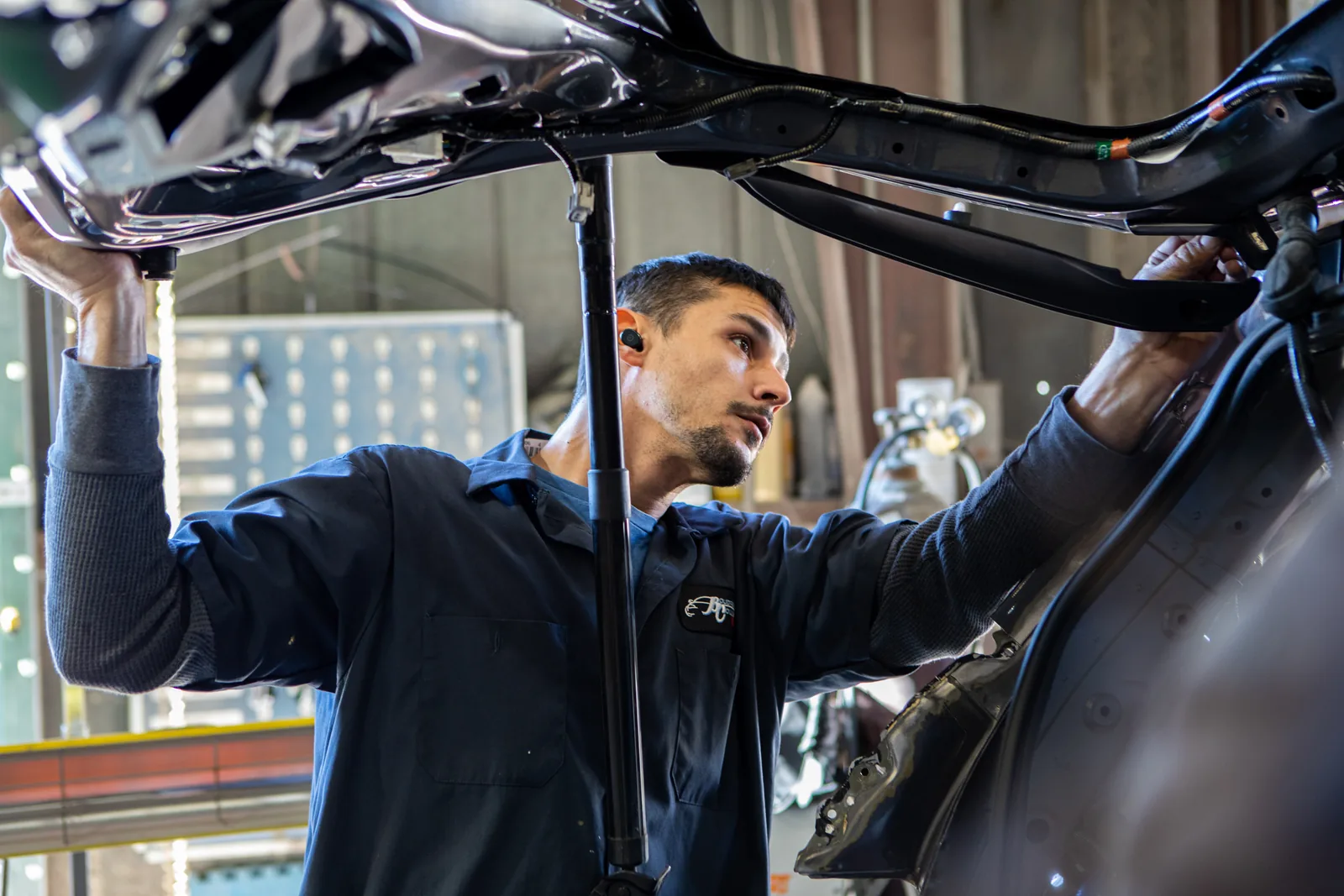
Owner-supplied photograph of a technician working beneath a raised vehicle.
Experience behind the repair conversation
Owner Rodney has described approximately 30 years of collision-repair experience, including work as a body technician and painter. He is also a U.S. Marine veteran. Those facts explain part of the business’s background; they do not replace the need to inspect each vehicle or to document the work appropriate to its damage. When you bring a vehicle in, the useful conversation connects that experience with the details of your own repair.
Rodney’s son Justin works in the business, and Destanie Dufrene manages both locations. Customers should contact the shop handling their vehicle for the relevant intake, status or approval discussion. The two shop addresses are New Orleans at 2150 Earhart Boulevard and Luling at 101 4th Street.
The goal of the website is to help you arrive with useful information and clear questions. You can compare the location pages, understand the repair process, review the available owner-supplied photographs and start an estimate request. A website cannot inspect hidden damage or make an insurer’s coverage decision. It can make the next conversation easier by explaining the distinction between an initial observation and a completed repair plan.
Repair planning by vehicle and location
The repair-planning process includes a pre-scan, measuring when relevant, teardown and repair planning, parts verification, applicable manufacturer instructions, a post-scan and final quality checks. These stages help organize the repair conversation. They do not mean every vehicle receives identical operations or that every specialized procedure is performed in-house at both shops.
Both locations provide collision and body repair with paint and refinishing. Structural equipment, Spanesi Touch 3D measuring and alignment capability have been confirmed for the New Orleans operation. Other location-specific arrangements should be discussed for the actual vehicle. Where a repair involves calibration, steering-angle procedures or related work, the vehicle and applicable instructions determine what is needed.
Boudreaux’s uses OEM structural and suspension parts under its stated parts policy. Other parts decisions and current written warranty terms should be reviewed directly with the selected shop. Ask the team to identify the proposed work, explain the reasons for it and clarify any unresolved approval or payment question before authorizing repair. A general statement about quality is not a substitute for those written details.
A practical way to start
If you want to share vehicle and damage details, use the estimate request. If you need help choosing the receiving shop or have a question about an existing repair, contact the relevant location. Include the vehicle year, make and model, the impact area and any changed behavior you have noticed. Bring an insurer’s estimate or claim number if available, without waiting to ask a basic question until every document is complete.
For a vehicle that may be unsafe to drive, discuss transport first. The owner has confirmed ownership of B’s Towing for accident and insurance-related work, while dedicated dispatch details and availability still require confirmation. Do not treat an online form as emergency dispatch or a booked pickup. Keeping the vehicle’s current location, transport paperwork and repair-intake information together can make that coordination easier.