
BOUDREAUX’S COLLISION · REPAIR EDUCATION
Parts Price Changes During Repair Planning
Parts prices and availability can change between an initial estimate and ordering. A changed price should be distinguished from a changed part or repair operation. Those differences can affect authorization and payment discussions in different ways.
Illustration: Parts Price Changes During Repair Planning
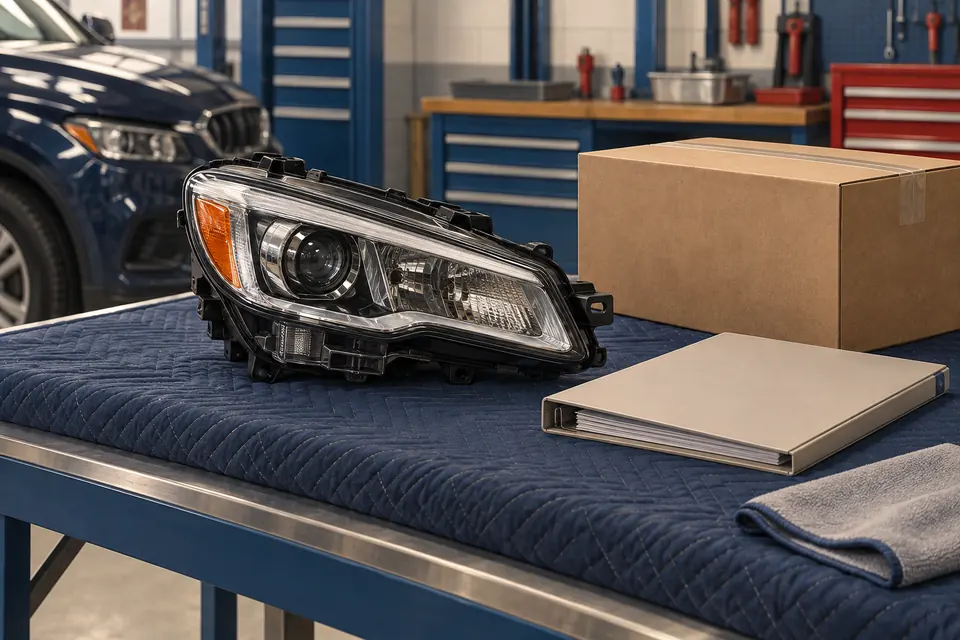
Generated educational illustration: part identification and price review. Not an actual customer repair, diagnostic result, staff member or Boudreaux’s facility.
What to Clarify for Your Vehicle
Ask whether the same specified part is involved and what pricing information is current. If a different source or part is proposed, clarify compatibility and approval separately. Do not interpret every price change as an expansion of physical damage.
Part identification and price are separate details
The repair plan needs the correct part for the vehicle and affected configuration. Pricing and availability can change during planning, and an initially listed item may require clarification. A price change alone does not explain whether the part specification also changed.
If a substitute is proposed, compare the actual description and applicable requirements rather than treating it as the same item solely because it fits the same area.
Ask what changed in the current proposal
Identify whether the revision involves price, supplier, part type, required attachments or a different specification. Ask how the proposed part was checked for the vehicle. A change to a radar-related cover, lamp or electronic component may involve more than appearance.
Confirm the revised scope and any owner decision needed before proceeding. Keep the final part description with the repair records. Avoid relying on a shopping screenshot as a complete comparison; it may not include the same configuration, attachments or repair operations.
Example: a replacement proposal changes before installation
A quoted part becomes unavailable and another option is proposed. Before comparing the price, identify whether the specification, part type or included attachments changed. A component with a similar description may not represent an equivalent repair scope.
Ask how the option was checked for the actual vehicle and whether it affects preparation or related operations. If the only change is price, the explanation should say so. If the part itself changes, retain the updated description and any owner decision needed.
Keep the final part information with the invoice. A shopping screenshot may be useful as a question, but it may omit fitment details or required work. This example shows why a price comparison needs a defined item. It does not promise availability, a particular supplier or that every alternative component is suitable.
Related Guidance
Identify whether the part changed or only its price
A revised parts line can reflect a change in price, a different part identification, a changed part category or a newly found damage item. These are different reasons for a revised total. Ask the estimator which change occurred instead of assuming that every increase means additional collision damage was discovered.
Compare the description, part identification when supplied, quantity and category across the versions. An original-equipment part, an aftermarket part and a recycled assembly should not be treated as identical solely because they serve a similar location. Ask the repairer to explain the proposed specification and its suitability for the vehicle.
An initial quote also does not establish that the listed part has been ordered, received or assessed for the planned installation. Keep price, availability and repair scope separate in the conversation. Ask which information is confirmed now and which may change before the final plan is settled.
Ask what the revised proposal means for your decision
When the parts proposal changes, ask why the new item or price is being used and whether related operations also change. A different assembly may include different associated pieces; an added component may follow a new inspection finding. The explanation should make clear whether you are reviewing a new scope or an updated cost for the same operation.
For payment questions, identify the current version and ask the insurer about their response to that exact parts proposal. Ask the shop how any unresolved amount affects the repair arrangement and what owner decision is required. Do not assume that a supplier quote or claim response automatically settles the final charge or authorization.
If a proposed alternative raises a vehicle requirement, ask the repairer to explain the applicable information before agreeing to a substitution. A cheaper or more available part is not, by itself, evidence that it satisfies the same specification. Keep the response with the estimate so the decision can be understood later.
Keep availability and completion timing distinct
Ask whether a part is quoted, ordered, received or awaiting another step. Arrival is a useful milestone, but it does not establish that installation and all related work are complete. A price update can occur without changing the arrival date, while a changed part proposal may affect both timing and scope.
If the timeline changes, ask which dependency is responsible and when the next update is expected. A part delay, an added assessment or another repair stage needs a different explanation. Avoid turning a projected pickup date into a guarantee based solely on an order confirmation.
At Boudreaux’s New Orleans or Luling handoff, review the final parts description and invoice, and ask about a difference you do not understand. Retain the current proposal and explanation of any substitution or price revision. If a later concern involves the installed component, the completed part record is more useful than a price from a superseded preliminary quote.