
From the Boudreaux’s archive
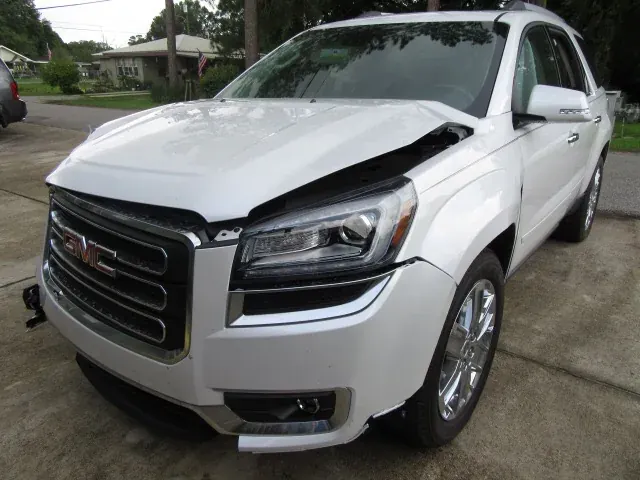
Owner-supplied GMC archive view showing visible hood and front-corner damage. Exterior appearance does not establish hinge, latch or retaining-hardware condition or secure closure.
Why does the hood latch need inspection after a crash?
Hood damage should be assessed with the hinges, latch, striker and front opening. A hood that appears closed may still have damaged retaining hardware or interference with other parts.
Outer skin damage and inner reinforcement damage can require different decisions. Aluminum and steel hoods do not necessarily use the same repair methods. Tell the shop if the hood moved, would not latch or contacted the windshield; do not force or test-drive a damaged closure.
How This Fits Into the Repair Plan
Identify the hood panel, hinges, latch, striker and adjoining opening separately. Keep unresolved secure-closure concerns explicit and ask what assessment and completion checks support each operation.
Related Repair Guidance
Treat secure closure as a separate question
A hood can have visible exterior damage while also needing inspection of its hinges, latch, striker or attachment areas. Ask the estimator to distinguish those components. A panel that appears reasonably straight does not establish that the closure system is functioning as intended after a collision.
Describe whether the hood opened unexpectedly, became difficult to release or changed position. If it will not securely close, do not drive the vehicle or improvise a tie-down as a substitute for assessment. Confirm an appropriate receiving and transport plan with the shop before moving the vehicle.
Photographs can show overall front damage and visible hood gaps from a safe position. They should not require standing in traffic, reaching into a damaged latch area or opening a hood that may move unpredictably. Tell the shop if safe access is unavailable rather than taking risks for an estimate photo.
The area beneath the hood is a separate inspection question. Report visible leaks, unusual smells, warning messages or parts contacting each other. Do not assume that an exterior hood repair addresses every cooling, electrical or adjoining front-end concern.
Related reading: Front-End Collision Repair and Radiator Core Support Damage After a Front-End Impact.
Understand the hood and attachment scope
The proposal may involve repairing the hood panel, replacing an assembly or addressing separate attachments. Ask which components are included and what findings support the method. A broad line saying “hood repair” should be clarified if you cannot tell whether latch or hinge concerns are included.
Material and construction affect the permitted operation. Ask which applicable vehicle information supports the choice rather than applying advice from another model. A hood with a similar shape is not necessarily constructed or attached the same way, and a generic repair photograph is not a procedure.
Parts identification matters when a replacement is proposed. Ask whether the description refers to the complete assembly or a different supplied configuration, and which associated pieces must be addressed. Clarify source, compatibility, availability and any approved change before work proceeds.
Refinishing and disturbed protection are additional parts of the scope. Ask how the relevant surfaces and adjoining work are handled. A replacement-part quote without its related operations is not directly comparable to a complete installed estimate.
Keep the closure concern visible in the record
If the initial estimate cannot settle an attachment or underlying-area question, ask what access, measurement or research will do so. Request the next update point. An unresolved latch concern should remain explicit instead of disappearing behind the more visible panel and paint work.
When new findings change the plan, keep the dated revision and the explanation together. Ask whether the change affects the hood, an attachment, adjoining structure, related operations or verification. Insurance review and repair authorization should be clarified separately where they are involved.
At pickup, ask what relevant closure and attachment checks were completed and discuss the normal operation demonstrated by the shop. Do not attempt a high-speed test to prove that the hood stays shut. A visual review and an explanation of completed checks are more useful than an improvised road experiment.
If opening, release or closure behavior later changes, stop using the vehicle if secure closure is uncertain and contact the repairing shop. Record when the concern appeared and any visible change from a safe position. Boudreaux’s can discuss the actual vehicle and arrange the appropriate next assessment.