REPAIR QUESTIONS

Collision Repair Questions, Answered

Start with the practical answers below, then follow the topic links for more detail about your vehicle, estimate or repair.

Common questions before you book

No. Photos can help begin the estimate conversation, but they cannot establish the condition of concealed components or certify roadworthiness. If safe operation is uncertain, contact the selected shop about inspection and appropriate transport.

Disassembly creates access to areas that an exterior inspection cannot fully assess. Newly confirmed damage, parts or required operations can change the scope. Ask what finding supports each revision and keep the current estimate and authorization records together.

They answer different questions. Confirm which scope you are authorizing and how charges will be handled. An insurance message should identify the estimate version or items it concerns; do not assume it settles every repair decision.

No. Scanning reads available system information. Physical inspection, diagnosis and required calibration are distinct tasks. Ask which checks apply to the actual damage and vehicle.

Provide the vehicle details, impact description, new symptoms and relevant prior repair history. Have any existing estimate or claim reference available. Share safely taken photographs through the agreed intake channel.

Use the location hub for each shop’s address and contact details, then confirm the intake arrangement directly. New Orleans is at 2150 Earhart Boulevard; Luling is at 101 4th Street. Confirm the exact destination before arranging transport.

Keep the final invoice, relevant diagnostic or calibration records when provided, and aftercare instructions. Ask whether any issue remains open and clarify the next step before leaving.

Bring the question that matches your repair stage

For a new request, provide the vehicle details, impact location and changes you noticed, then choose New Orleans or Luling. For a question about an estimate, reference the current document and unclear operation. For a repair already underway, ask which stage is complete and what dependency comes next. For a concern after pickup, describe the exact observation and when it appeared.

These FAQs give general context. The team’s assessment and applicable vehicle information establish the actual scope. Use Request an Estimate to start a new conversation, or Contact for questions about arrangements or completed work. Include a reachable contact method so the team can confirm the next step.

Practical questions about requests, records and follow-up

Yes. Describe the affected side or area and what you observed in ordinary language. Include wider and closer photographs when safe, along with the vehicle details and preferred shop. You do not need to diagnose the damage before requesting the next assessment step.

Relevant records can help the team understand the history and current request. Identify each document by date or stage, and explain whether earlier work was completed or only proposed. Send personal and claim information through the intended private channel rather than public comments.

No. Directions identify a destination but do not establish an appointment or receiving arrangement. Contact the selected shop to confirm intake, particularly for transport or after-hours needs. A form submission also needs a response before the visit is treated as confirmed.

Reference the vehicle and current repair, then ask which stage is complete and what remains before the next step. Clarify the approved contact and preferred response method. A focused question about findings, approvals or parts usually supports a clearer update than a general request for a guaranteed finish date.

Contact the shop with the specific condition, timing and relevant repair records. Share safe photographs when they help, but avoid altering the repaired area or creating a road test to collect evidence. Ask the team to confirm a follow-up assessment and explain the next step.

A closer look at this topic

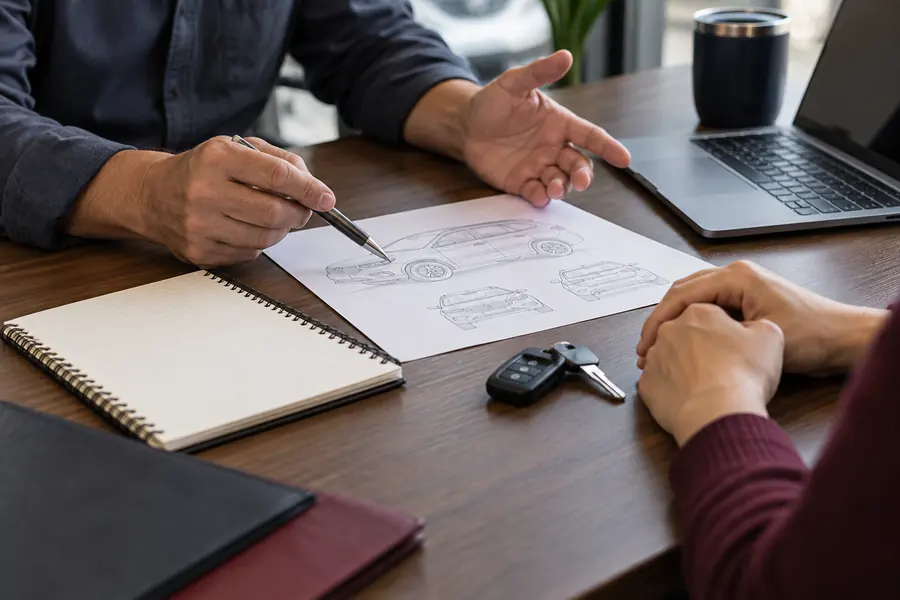
Illustration of Two adults' hands across a small desk with a blank question notebook, keys and vehicle outline sheet, conversational planning close-up.

Illustrative example — Collision Repair Questions.

Been in a collision?

Choose the shop that’s most convenient for you and start the process.