
BOUDREAUX’S COLLISION · REPAIR EDUCATION
Pre-Existing Faults in a Collision Repair Plan
A vehicle may have faults or symptoms that existed before the collision. Distinguishing them from collision-related findings requires history, inspection and appropriate diagnosis. A code first seen during intake is not automatically proof that the impact created the condition.
Illustration: Pre-Existing Faults in a Collision Repair Plan
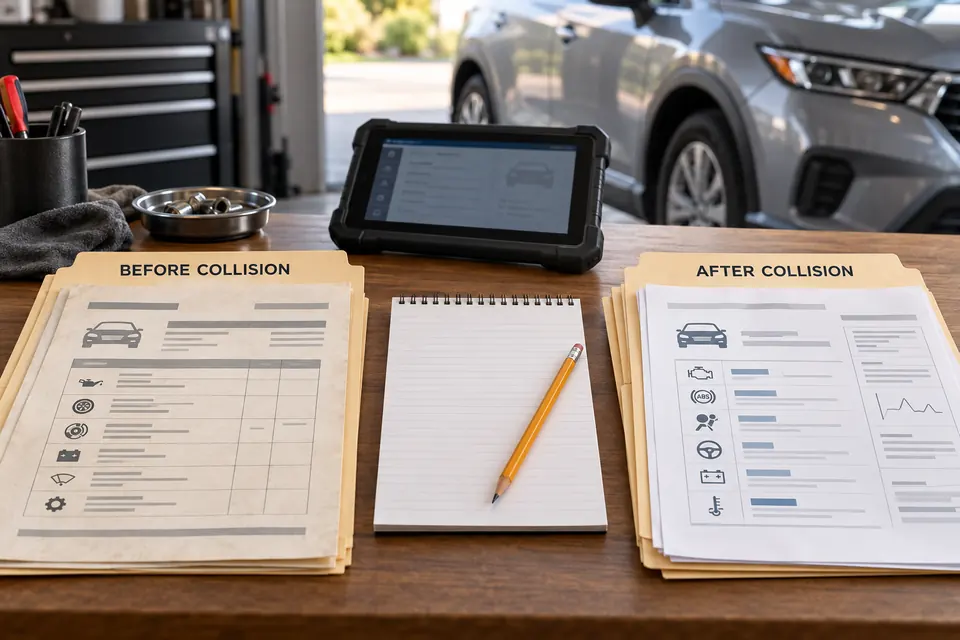
Generated educational illustration: pre existing fault history. Not an actual customer repair, diagnostic result, staff member or Boudreaux’s facility.
Organize earlier records without prejudging the new finding
Use two short lists: concerns known before the impact and observations first noticed afterward. For each item, record the symptom, approximate first occurrence, frequency and any relevant service record. Mark uncertainty explicitly. “Intermittent light noticed sometime last month” is useful history; inventing an exact date or a part diagnosis is not.
Keep an earlier recommendation separate from a completed repair. A recommendation to investigate a fault does not show what later testing found. Conversely, an invoice for completed work does not prove every related concern disappeared. Give the shop the available documents and describe what you observed after that earlier visit.
Then ask how the current finding is classified: supported as related, supported as unrelated, or still unresolved. Diagnostic event context, inspection and testing can inform that judgment, but the first scan on the repair file is not automatically the first occurrence. If an earlier condition affects a required repair step, ask which dependency must be resolved and what additional scope needs a decision. Keep that explanation separate from the claim representative’s payment discussion.
Existing concerns belong in the intake history
A collision repair can reveal faults that existed before the impact. That does not make them irrelevant, but it does mean their relationship to the collision requires assessment. The owner’s history and available records help the shop distinguish known concerns from newly observed ones.
Tell the shop about warning lights, intermittent symptoms, recent electrical work and unresolved service recommendations. A factual description is more useful than naming a suspected failed part without a diagnosis.
Repair scope and responsibility require separate decisions
Finding a fault does not automatically establish that it belongs in the collision repair or that an insurer will pay for it. Diagnosis, owner authorization and claim decisions are separate parts of the process. The shop should explain the finding and proposed work without silently treating approval as assumed.
For example, a warning that was present for weeks before the impact may still need attention before a related procedure can be completed. Its timing should be documented, and any additional work should be discussed clearly.
Keep the record specific
Write down when the symptom began, how often it occurs and any previous repair attempts. If you have a prior diagnostic report, share it with the shop. Avoid minimizing an existing problem because you think it could complicate the claim; incomplete history can make diagnosis harder.
Before authorizing additional work, ask what was found, what is proposed and how the charge will be handled. Keep that explanation with the collision estimate so later readers can understand which work addressed impact damage and which addressed another concern.
Further repair information
Related Guidance
Give the history without trying to protect a preferred explanation
Describe warnings and symptoms that existed before the impact, even when they were intermittent. Note the earliest occurrence you recall, any service visit and whether the concern was resolved or remained open. The information helps assessment. Hiding an earlier warning does not establish that a later scan finding was caused by the collision.
Keep completed repairs separate from recommendations you never authorized. An invoice showing a performed operation differs from a report suggesting further investigation. Label the documents and tell the shop what actually happened. If you do not have the earlier result, identify the gap instead of treating a remembered conversation as a verified repair record.
Describe new observations separately. A vehicle can have an earlier warning and a different symptom after the impact. The existence of a prior concern should not be used to dismiss every new observation, just as a collision should not automatically absorb every earlier fault. Give the team a chronology it can evaluate alongside the physical condition and diagnostic findings.
Understand the scope before approving extra work
Ask the repairer to distinguish confirmed findings from questions still requiring diagnosis. A code detected during intake describes information obtained at that stage; it does not by itself date the cause. If the team proposes additional investigation, ask its purpose and what decision it is intended to support. The next step should be understandable without the owner choosing a failed part.
Discuss authorization and payment separately from the technical explanation. An unrelated concern may require attention or affect another procedure, but that does not automatically settle its coverage. Ask the responsible claim representative about coverage and the shop about the proposed work. Keep the agreement clear before interpreting a claim submission as permission to proceed.
At delivery, request a status for any finding that was deliberately left outside the collision scope. Ask whether it remains unresolved and what follow-up is recommended. Keep that explanation with the final repair documents so a future reader can distinguish completed collision work from another concern. If you report a later symptom, include both the earlier history and what changed after delivery.
Questions about earlier faults and new findings
Example: one earlier warning and one new symptom
Suppose an owner remembers an occasional warning before the crash but notices a different steering concern afterward. Both observations belong in the history. The earlier warning should not be hidden to simplify the claim, and it should not automatically be used to explain away the new steering observation. Ask the team to record the separate timing and explain which findings require assessment. Keep any proposed work and authorization tied to the concern it addresses. This is a hypothetical example of useful symptom reporting, not a diagnosis or a coverage decision for your vehicle.