
BOUDREAUX’S COLLISION · REPAIR EDUCATION
Vehicle Crush Zones: What Gets Checked & Why
Deformation in an energy-management area raises component and material questions beyond exterior appearance. Ask how the affected area was identified and which vehicle-specific requirement supports the proposed work.
QUICK ANSWER
Why do crush zones matter to collision repair?
Vehicle structures include areas designed to manage collision forces through deformation. Repair decisions need the applicable component and material information; a deformed area cannot be evaluated solely by making the exterior look straight.
- Visible damage is documented first — panels, lamps, glass, wheels, leaks and warning lights.
- Hidden areas are checked once teardown allows access.
- Measurements and diagnostic information address different questions when relevant to the assessment.
- Your repair estimate reflects the findings, not just the first look.
HOW THE ASSESSMENT DEVELOPS
From What You Can See to What the Vehicle Can Prove
A collision assessment gets more specific as better information becomes available. These three stages keep the process easy to follow.
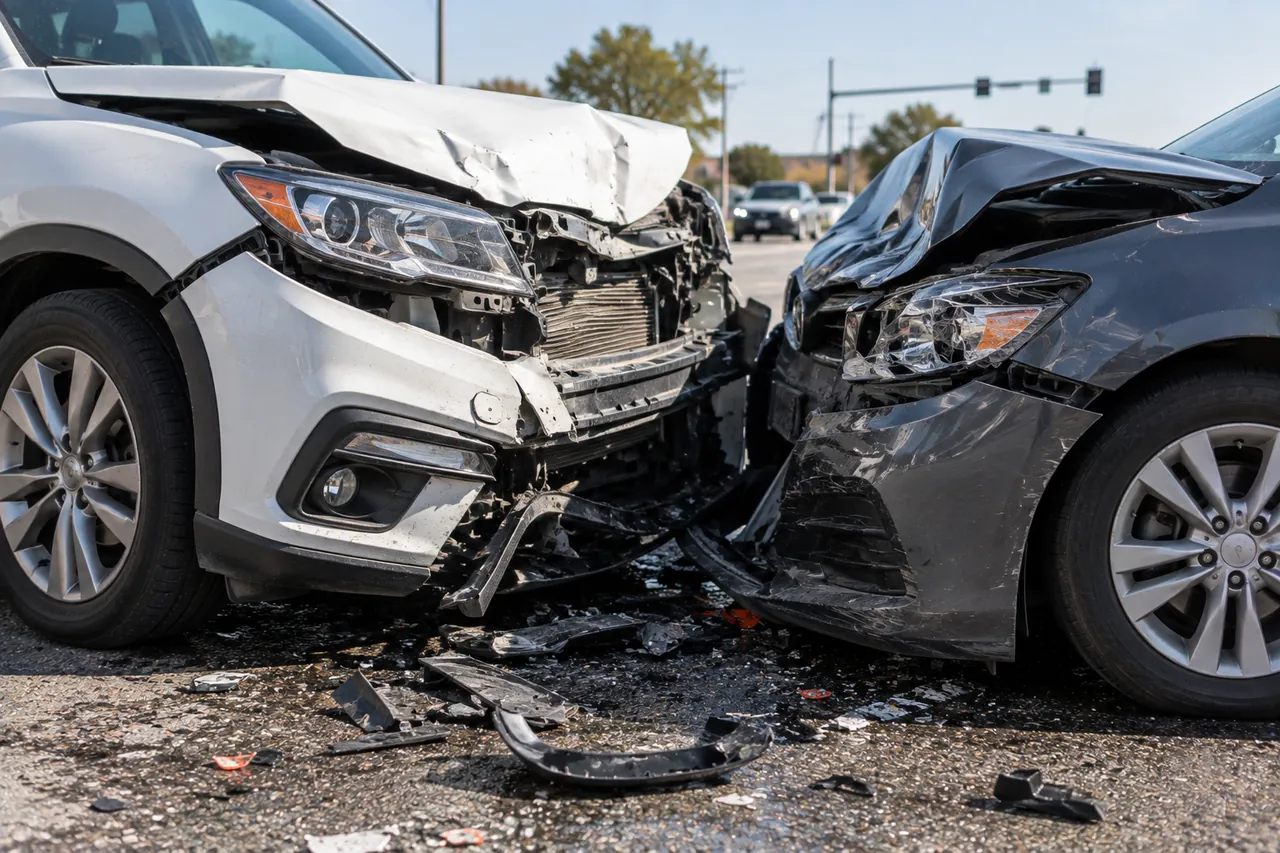
1
LOOK BEYOND THE SURFACE
Visible Damage
Document the obvious impact first: panels, lamps, bumper covers, glass, wheels, tires, leaks and warning indicators.
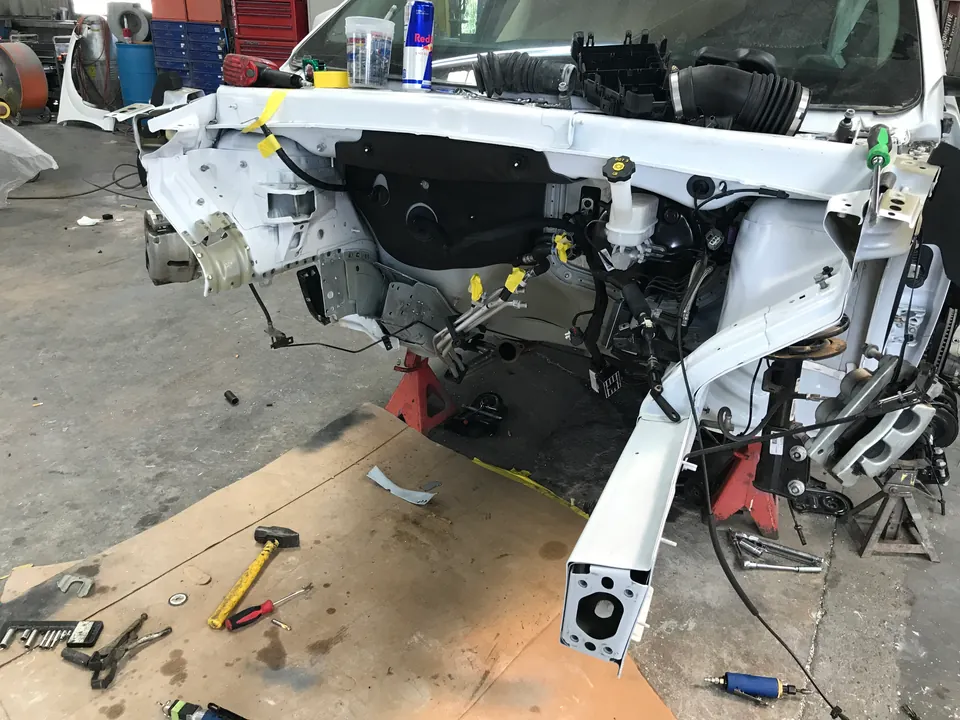
2
GAIN ACCESS
Hidden Areas
Teardown can expose reinforcement, mounts, wiring, adjacent panels and other conditions concealed by installed parts.
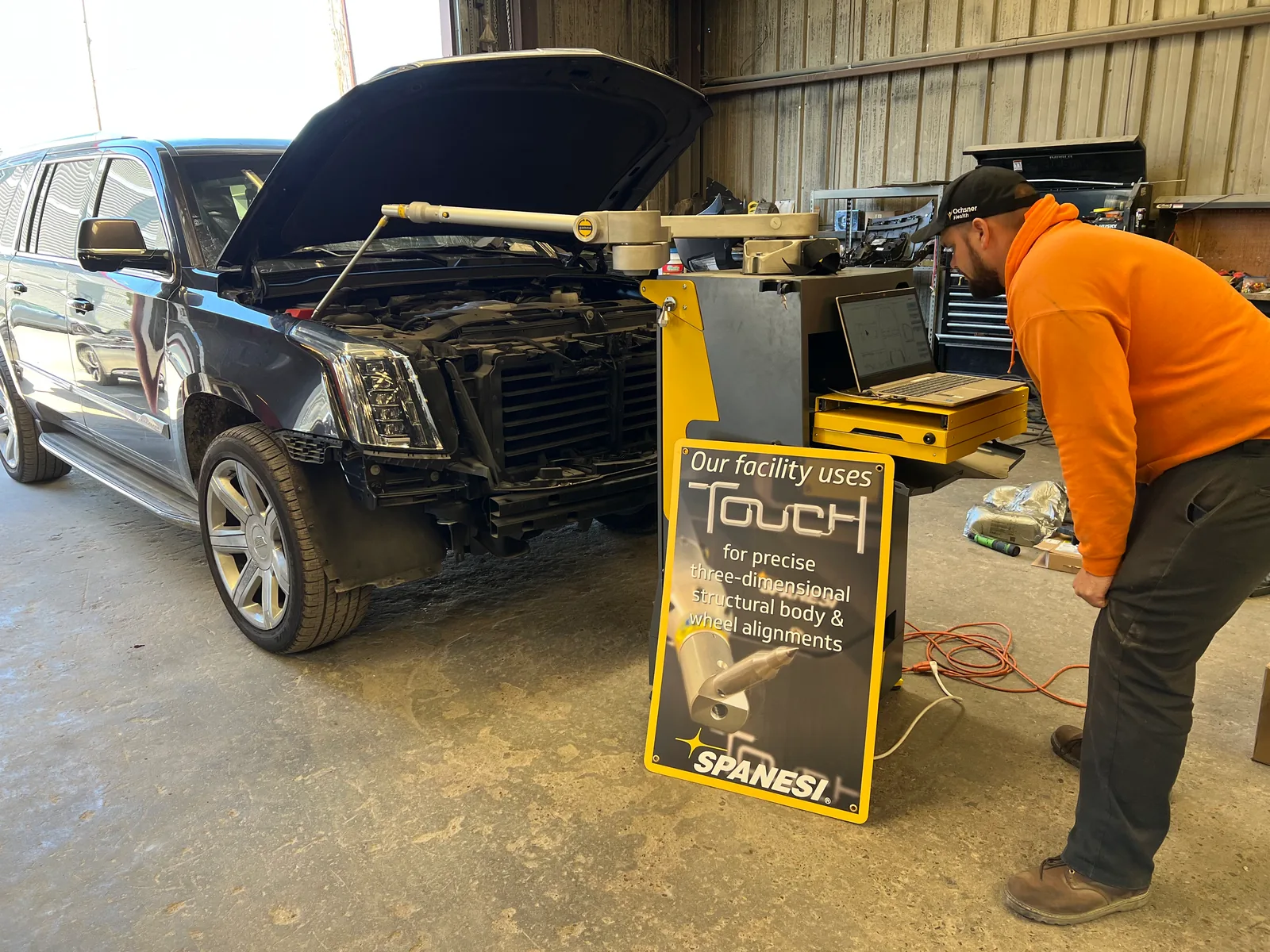
3
VERIFY
Objective Information
Measurements, diagnostic scans and OEM repair information answer questions that appearance alone cannot.
Illustration: Crush Zones
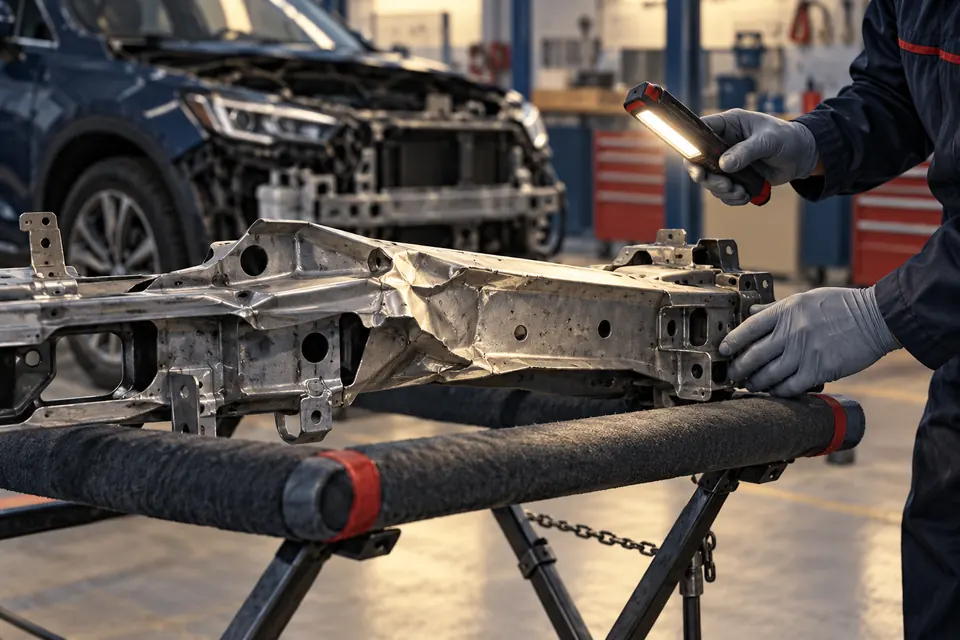
Generated educational illustration: deformed front component inspection. Not an actual customer repair, diagnostic result, staff member or Boudreaux’s facility.
TECHNICAL REALITY
Different Checks Answer Different Questions
Modern collision repair can involve several different kinds of information. They’re related to industry repair standards, but they are not interchangeable.
WHY IT MATTERS
What This Means for Your Vehicle
Assessment of a deformed area follows the component evidence. It does not assume hidden damage, and it does not assume the first photo tells the whole story.
A useful assessment should help answer:
- What collision damage is visible?
- Which areas need better access or closer inspection?
- Which questions need measurements or diagnostic information?
- What vehicle-specific repair information applies?
- What new findings change the repair plan and estimate?
Why the location of deformation matters
Vehicle structures include areas designed to manage impact forces through deformation. The shape and location of a damaged area therefore matter to the repair assessment. Making an exterior appear orderly is not the same as evaluating the affected energy-management structure.
Ask the shop to identify the actual component and whether the damaged area is an engineered crush zone. Do not assume every wrinkle anywhere on a vehicle has the same function, or that every component with a similar shape has the same permitted repair. Identification comes before the method discussion.
I-CAR’s published guidance says a deformed engineered crush zone is not a straightening repair and requires part replacement. Read the I-CAR crush-zone explanation and ask how the applicable component information supports the scope proposed for your vehicle. The replacement and joining details still require vehicle-specific information.
Tell the estimator about known prior repairs in the area and provide records you have. Those records can give the inspection context, but they do not replace the assessment of the current collision damage.
Look beyond the cover in the repair discussion
A bumper cover is a visible outer part of the bumper area. Components behind it can have different roles and repair requirements. A cover photograph does not establish the condition of the energy-management parts or attachments it conceals.
Ask which areas have been physically assessed and which require authorized access. This keeps the explanation anchored to the evidence available now. A suspected concern should be identified as a question to investigate rather than described as confirmed damage before inspection.
For a hypothetical bumper-area impact, the cover can provide the initial visible record while later access establishes a separate issue behind it. The next discussion should identify that component, explain the finding and connect it to the supported operation. It should not simply treat every part behind the cover as damaged.
Ask about adjoining components and attachments where they are relevant to the proposed work. A main replacement line may not describe every necessary associated operation. The estimator can explain those relationships without expecting you to infer them from an exterior picture.
Understand the plan without predicting a future collision
Request the current estimate and a clear explanation of the affected component, permitted operation and relevant checks. Keep any supplied photographs and records with their dates. If the scope changes after access, ask which finding changed the plan.
No archive photograph or general description of crush zones predicts the outcome of a future crash. Different impacts, vehicles and conditions can produce different outcomes. The useful owner question concerns the information supporting the actual repair, rather than a universal safety promise based on appearance.
Discuss authorization, parts status and the next update before relying on a delivery prediction. If an insurer is involved, distinguish the repair finding from the claim’s review and payment status. Submission of a revised scope is one milestone, not proof that every decision is complete.
Use the New Orleans or Luling location handling your vehicle to confirm the next arrangement. Ask about its present condition and transport when movement is uncertain. Education helps you frame the questions; the actual inspection and repair records establish the findings.
FREQUENTLY ASKED QUESTIONS