
COLLISION REPAIR
Structural & Frame Repair After a Collision
Structural collision damage is not always obvious from outside the vehicle. Modern vehicles may use unibody construction, traditional frame structures or combinations of engineered structural components designed around specific dimensions and repair procedures.
The goal is not simply to make a vehicle “look straight.” Repair planning should determine what was affected and what the manufacturer specifies for that vehicle.
Frame and Unibody Construction
“Frame damage” is a common phrase, but not every vehicle uses a separate traditional frame. Many passenger vehicles use unibody construction in which portions of the body structure are integral to the vehicle's strength and geometry.
Why Structural Measuring Matters
Visual inspection alone cannot establish every structural dimension. Measuring can help compare points on the vehicle with specifications used during repair planning.
More Than Body Panels
Depending on the impact, structural damage can interact with:
- panel fit
- suspension geometry
- wheel alignment
- sensor/camera positioning
- repair/replacement decisions
- welding/joining procedures
- refinishing/reassembly
Manufacturer Procedures
Vehicle-specific procedures can affect where a component may be repaired, where it must be replaced, how it may be sectioned or joined, and what additional operations are required.
Related Repair Guidance
Identify the Damaged Structure First
A structural discussion should name the actual component, not rely only on “frame damage.” A vehicle can use a separate frame, unibody construction or assemblies that combine several materials and layers. An outer panel may conceal a reinforcement, and two parts near the same dent can have different repair limits.
Ask which reference points, seams and mounting areas are affected. Panel gaps and closure operation can provide clues, but they do not establish every dimension or material condition. The purpose of inspection is to replace assumptions with documented findings before selecting straightening, sectioning or replacement.
What Measuring Adds to Visual Inspection
Measuring compares relevant reference points with dimensional information. It can help identify a displaced area, support the plan and provide information for later checks. The comparison should be tied to the vehicle and the points being assessed. A measurement report is more useful when the shop explains which repair question it answers.
Measuring is separate from checking every joint, material or electronic system. A vehicle can need additional inspection even after dimensions are addressed. Conversely, an exterior dent does not prove that all structural points moved. Ask what the measurements confirm and what remains outside their scope.
Material Limits, Sectioning and Replacement
High-strength steel, aluminum and mixed-material assemblies can have restrictions on heat, straightening and joining. A familiar method used on another vehicle may not be permitted here. The repair information establishes whether the affected part can be repaired and, if not, which replacement process applies.
Sectioning means making a specified cut-and-join repair; it is not permission to cut at any convenient point. Separating a service assembly at a factory seam is a different operation. Ask where the joint is allowed, which attachments are required and how protection disturbed by the work is restored.
Suspension, Openings and Sensor References
Structural relationships can affect door or hood openings, suspension mounts and sensor mounting areas. Replacing the visible panel may not correct an affected reference point. An alignment reading can show changed wheel geometry without identifying whether the cause is a damaged component or its supporting structure.
ADAS requirements also depend on the vehicle and operation. Structural measuring, alignment and calibration are different tasks, and their sequence may matter. Ask which measurements and prerequisite checks support the next operation. Do not interpret one clear report as proof that every affected area has been verified.
Discuss the New Orleans Resources
Spanesi Touch 3D measuring, structural equipment and alignment capability are available at the New Orleans operation. The vehicle and findings determine what is appropriate; equipment ownership does not establish that every structural repair is possible or that every vehicle needs the same process.
Call 504-309-3092 to discuss structural repair questions before arranging a visit or transport. Luling also provides collision/body repair and refinishing, but its specialized equipment inventory must not be inferred from New Orleans. Confirm the appropriate shop and receiving arrangement.
Go Deeper Into Your Repair Questions
More Answers in This Repair Topic
Measuring equipment in the owner’s archive
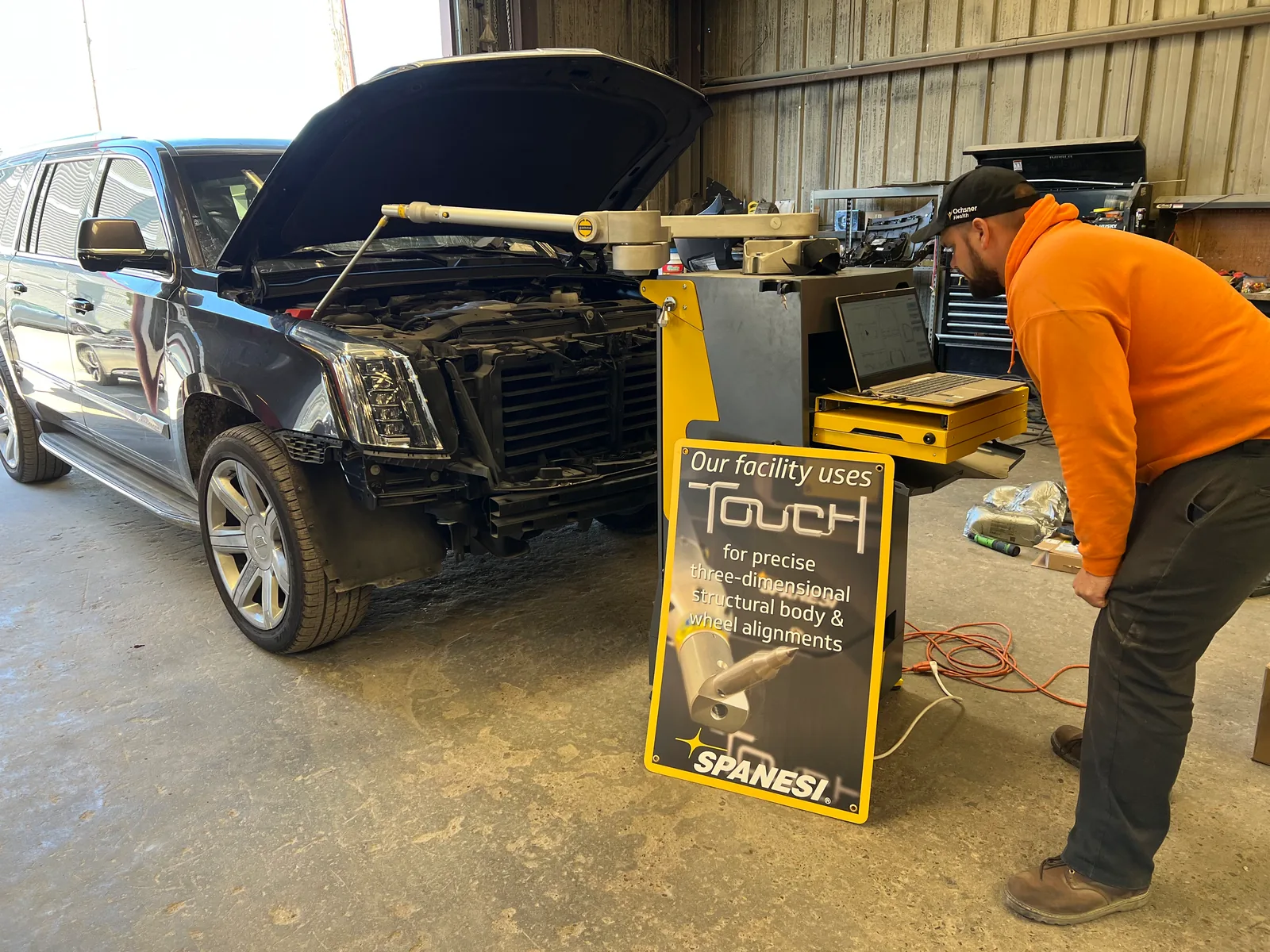
Owner-supplied archive photograph of Spanesi Touch measuring equipment beside a vehicle. The photograph shows the equipment context; it is not a dimensional report or proof of a particular repair result.