
BOUDREAUX’S COLLISION · REPAIR EDUCATION
Alignment Angles vs Collision Damage Diagnosis
Alignment equipment measures specified wheel-geometry values. Those readings can support assessment but do not independently identify every damaged part. A bent component, changed mounting point or setup concern can require physical inspection as well.
From the Boudreaux’s archive
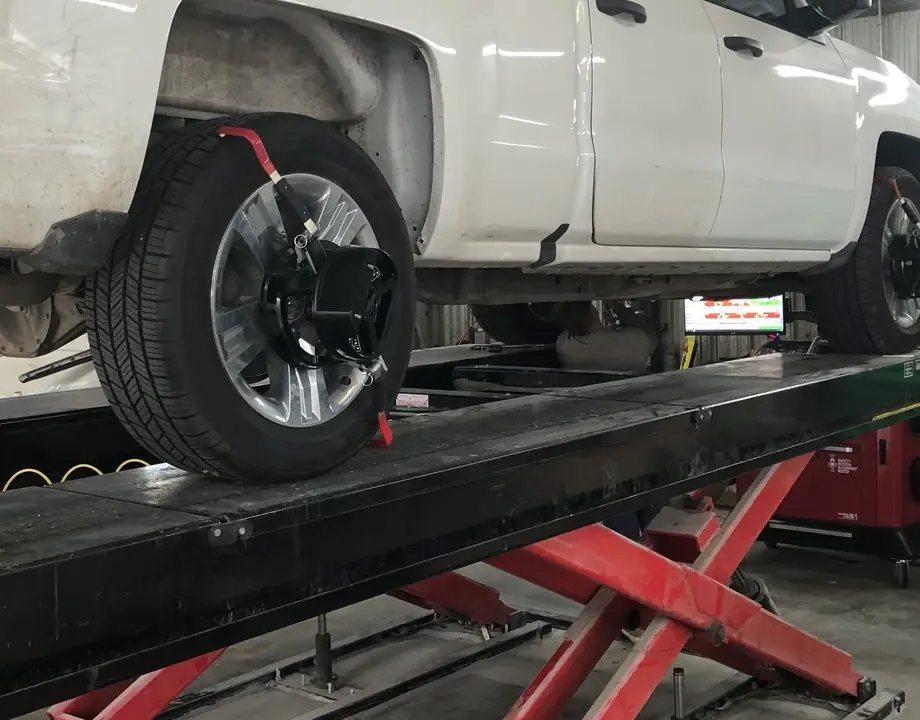
Owner-supplied archive detail showing wheel-mounted alignment equipment and a rack. It supplies wheel-measurement context, not usable readings, a structural measurement report, a repaired-damage finding or a completed result for another vehicle.
What to Clarify for Your Vehicle
Ask what explains a changed reading and whether the relevant components have been evaluated before adjustment. The aim is to address the cause rather than simply produce an acceptable number. Structural and ADAS requirements remain separate where applicable.
An alignment measures wheel geometry
An alignment report compares wheel-related measurements with vehicle specifications. Structural measurement assesses specified body or structural reference points. They answer different questions. An alignment finding can prompt further investigation, but is not a substitute for evaluating suspected structural damage.
After an impact, a bent component or changed mounting location may affect the readings. Adjusting an available setting does not necessarily establish that all physical damage has been resolved.
Read the results in the context of the repair
Ask what was inspected before adjustment and whether any readings or symptoms required further diagnosis. A color-coded report is useful, but the explanation should identify the condition and corrective work rather than relying only on green boxes.
Retain before-and-after results when available. If pulling, vibration or an off-center steering wheel remains, describe it to the shop. Do not assume that every such symptom comes from structural damage; the cause requires assessment.
Example: an acceptable adjustment with another finding still open
Suppose an alignment report shows an adjusted reading within range, while inspection has also identified a damaged mounting area. These are separate findings. The adjusted value should not be used to imply that the mounting damage was repaired or that structural reference points were measured.
The scope needs to connect each finding with its corrective operation. If structural measurement is required, its record should describe that assessment. If a component replacement explains the geometry change, identify that work rather than treating the alignment printout as the whole repair story.
For the owner, ask what the before-and-after readings established and what physical inspection accompanied them. Keep the relevant documents together. If the vehicle still pulls or the wheel remains off-center, report that observation without deciding its cause. This example does not say an in-range alignment is unimportant; it shows why a limited result cannot independently prove that a different inspection or repair was completed.
Further repair information
I-CAR: collision-related alignment considerations
I-CAR: why all four wheels matter
General background does not replace the applicable vehicle information, owner’s manual or procedure for the actual operation.
Related Guidance
Read the before-and-after record with the repair scope
Check that the report identifies the correct vehicle and repair stage. Ask which measurements changed and what work explains that change. A before-and-after pair can help document the sequence, but the final scope should still identify physical repairs and any applicable additional procedures. Do not judge an unfamiliar report only by its colors.
If a value remains outside the specified range or a symptom remains, ask what is known and which assessment follows. A number and an owner observation can prompt different questions. Keep them together without assuming either establishes the technical cause by itself. Ask how any further proposed work will be authorized.
At delivery, describe an unexpected pull, vibration or steering-wheel position with its circumstances. Do not perform abrupt maneuvers to prove the concern. Ask for the appropriate review, keeping relevant alignment and repair records available. A clear follow-up concerns the actual condition rather than a repeated adjustment selected without explanation.