
COLLISION REPAIR
Why Manufacturer Repair Procedures Matter
Two damaged vehicles can look similar and still require different repair methods.
Vehicle manufacturers publish repair information that can address how specific structural components, materials, welds, fasteners, electronics and safety-related systems are to be inspected and repaired. Boudreaux’s collision philosophy is to make the vehicle and the applicable repair information central to repair planning.
Vehicle-Specific Repair Information
Modern vehicles can use high-strength steels, aluminum, composites, adhesives, welds and other joining methods in different combinations. A repair method that is appropriate for one vehicle may not be appropriate for another.
Manufacturer procedures can help answer questions such as:
- Can this component be repaired or does the procedure call for replacement?
- Where can a structural component be sectioned?
- Which joining method is specified?
- Are one-time-use parts or fasteners involved?
- Does a related system require inspection, scanning or calibration?
- Are there measurements or precautions specific to the vehicle?
The Whole Repair Plan
Manufacturer information can influence structural work, body repair, welding/joining, refinishing preparation, scanning, calibration, alignment and reassembly.
Procedures and Certification
Following or consulting manufacturer repair procedures is not the same thing as being certified by that manufacturer.
Insurance and Repair Planning
An initial estimate may not list every operation later identified during repair planning. When vehicle-specific procedures identify necessary operations, those requirements can become part of the documented repair plan and insurance communication.
Related Repair Guidance
Research the Exact Vehicle and Operation
A model name alone may not identify every relevant requirement. Model year, construction, installed equipment and the damaged area can change the repair. Correct vehicle identification supports research, while inspection confirms the condition and systems actually present. The repair procedure should answer the question raised by this vehicle, not just resemble a repair done previously.
Ask which information supports the proposed operation and whether another related procedure also applies. A body replacement can interact with attachments, corrosion protection or electronic setup. Those connections should be considered before work is described as a single simple panel change.
Position Statements and Detailed Instructions
A manufacturer position statement provides guidance on a broader issue such as diagnostic scanning or parts. A detailed repair manual supplies the steps, conditions and limitations for the exact operation. Both can be relevant, but they do not perform identical roles. A general statement does not necessarily contain the joining locations or setup conditions needed to execute a repair.
Ask the estimator to identify the current information for your model year and the operation being proposed, including any related procedure it references. A broader position statement may direct attention to a requirement while the repair manual supplies the necessary detail. I-CAR explains this research sequence in Always Follow Vehicle Maker Procedures. Keep the applicable reference connected to the estimate line it supports.
Materials and Attachments
Repair information may restrict heat, straightening or sectioning and specify welding, bonding, rivets or fasteners. The material and the location matter. An outer skin and the reinforcement beneath it may not have the same limits. Installing a part so it fits physically does not establish that the permitted attachment method was followed.
Some removed items are designated one-time use, and dissimilar materials may need protective barriers. Ask which attachments are disturbed, which items must be replaced and how required corrosion protection is restored. These are parts of the process, not claims that every repair uses every method.
Diagnostics and Calibration Requirements
Manufacturer information can establish when scanning, diagnosis, initialization, programming or calibration is needed. The names are not interchangeable. A procedure can require particular prerequisites or completion checks even when the dashboard has no warning. The operation performed and the installed system determine the answer.
Ask which repair triggered the requirement and what document confirms the completed task. A scan report does not automatically stand in for a calibration record, and a routine test drive does not replace a specified dynamic procedure. Separate questions deserve separate evidence.
Information Access Is Not Certification
Using manufacturer repair information is different from holding an OEM certification. Training, certifications, approved equipment and information access are separate subjects and should only be described when confirmed. Ask the team about the specific certification program separately from its access to repair information.
New Orleans information and planning resources include ALLDATA, ADAS Think and CCC ONE. Contact the shop about the specific vehicle and operation; these resources do not promise identical capabilities at Luling or every repair outcome.
Go Deeper Into Your Repair Questions
More Answers in This Repair Topic
Research for the specific vehicle and operation
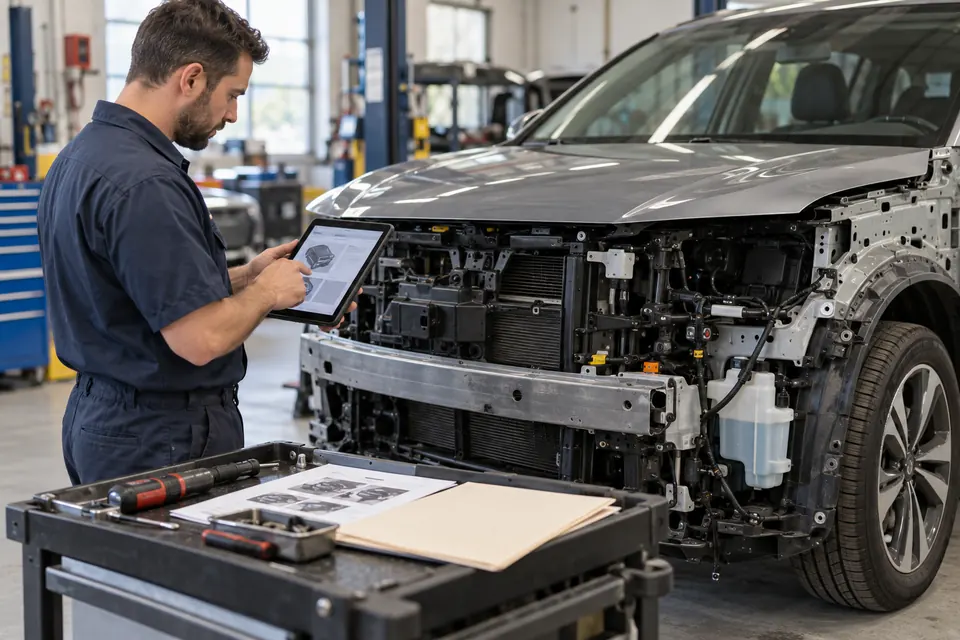
Generated illustration of vehicle-specific repair research. It is not a Boudreaux’s customer repair, an OEM document or certification evidence.