
BOUDREAUX’S COLLISION · REPAIR EDUCATION
Paint Booth Conditions and Finish Quality
Refinishing depends on the coating system, surface preparation, application and relevant environmental conditions. Air movement, cleanliness and temperature can influence the process. A booth photograph alone does not establish the settings or every quality-control step used for a repair.
From the Boudreaux’s archive
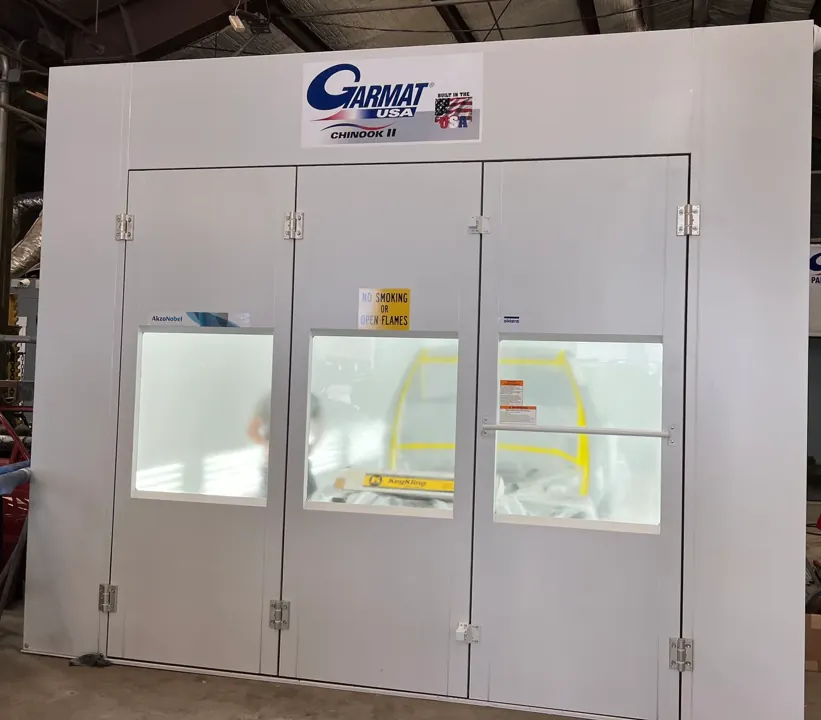
Owner-supplied historical paint-booth archive view. It documents equipment appearance, not process settings, coating-system compliance, current inventory at both locations, certification or a guaranteed finish result.
What to Clarify for Your Vehicle
Ask which coating-system instructions govern the work and how finish concerns are reviewed. Do not infer a manufacturer certification or a guaranteed result from equipment branding. Shop capability claims should be supported separately from general explanations of how refinishing works.
The refinishing environment affects the process
Airflow, cleanliness and environmental conditions influence how refinishing materials are applied and cured. Paint products have operating instructions that account for conditions such as temperature and humidity. A paint booth provides a controlled work area, but the presence of a booth alone does not establish that every product requirement was met.
The relevant question is whether the refinishing process followed the instructions for the material and job. Equipment, material preparation, application and curing form a process rather than a single quality feature.
Evaluating a finish without guessing at the cause
A dust inclusion, texture difference or other surface concern is an observation. It does not by itself prove that the booth was dirty or that a particular technician made an error. Several factors can influence the result, and the repairer needs to evaluate the actual surface.
For example, a small raised speck and an overall difference in texture are different concerns. Describe what you see, where it is and under what lighting it is visible. A close-up photograph can help locate it, but should be paired with a wider view so the shop can identify the panel.
What matters at the repair handoff
Ask for aftercare instructions specific to the refinishing materials used. The time at which a vehicle can leave the shop does not necessarily answer when every cleaning, coating or protection product may be applied.
If there is an appearance concern, have the shop evaluate it before trying abrasive cleaners or polishing. Some issues may have a suitable finishing correction; others require a different response. The solution should follow inspection and the material instructions rather than a generic promise that every defect will buff out.
Further repair information
PPG: coating and curing-condition background
General background and product examples do not replace the applicable instructions for the actual vehicle, material and operation.
Related Guidance
Report finish observations without diagnosing the environment
If you notice a texture, color, speck or other surface concern, identify the panel and viewing circumstances. Keep different observations separate rather than declaring that the booth caused all of them. A photograph can help locate the issue, while the provider evaluates the actual finish and applicable repair record. An owner’s visual report does not independently identify a filtration, application or product problem.
At delivery, retain the final area description and any care instructions. Do not sand, polish or apply a coating to investigate the concern before speaking with the shop. Treatment can change the condition and may conflict with the relevant product directions. Ask how the provider wants to review the surface and what information would help. This page explains the customer conversation without establishing a particular equipment inventory, process or finish warranty at both Boudreaux’s locations.