
Illustration: Warning Lights After a Collision
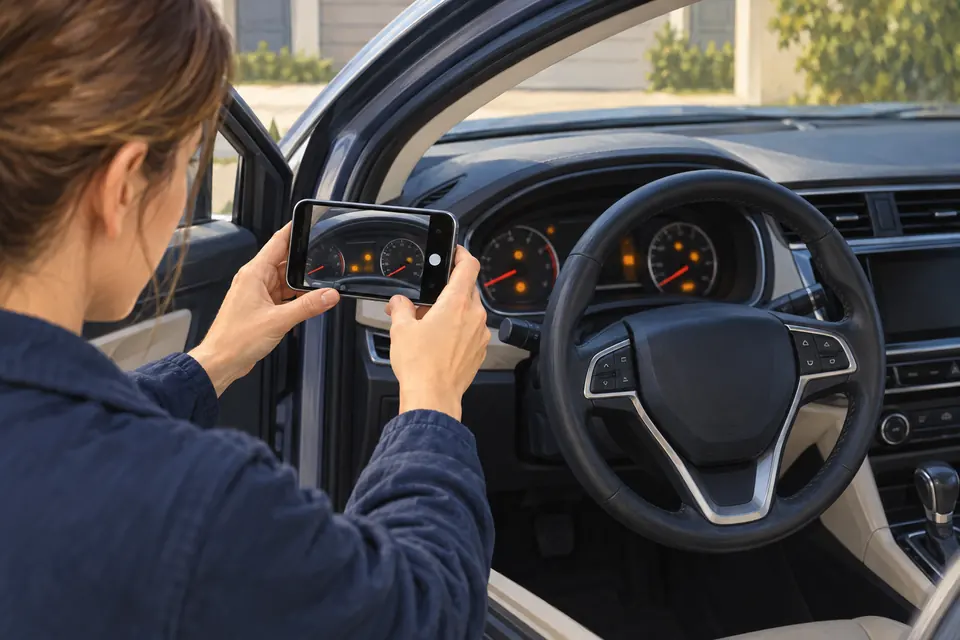
Generated educational illustration: parked dashboard warning observation. Not an actual customer repair, diagnostic result, staff member or Boudreaux’s facility.
Can I ignore a warning light if the car still runs?
A warning light or message after an impact should be recorded and discussed with the repair shop. It can indicate a system concern, but the display alone does not identify the required repair.
Avoid repeatedly clearing warnings or assuming the vehicle is safe because it still drives. Tell the shop when the warning appeared and how the vehicle behaved. Diagnosis may need both electronic information and physical inspection; absence of a warning is not proof that every affected system is correct.
How This Fits Into the Repair Plan
Record the message and behavior without unsafe testing. Keep any unresolved warning explicit, including the assessment needed and who will provide the next update.
Related Repair Guidance
Record the message and the change in behavior
A dashboard warning is an observation that should be described precisely. Tell the shop the symbol or wording, when it appeared and whether another function changed. A general statement that a light is on may not identify the system or the relevant next assessment.
Mention warnings that existed before the collision and any recent work or modification. The timing helps define the history without establishing the cause by itself. A message observed after impact should not automatically be attributed to one damaged part without supporting findings.
If a photograph is useful, take it while safely stopped rather than using a phone while driving. Do not move an uncertain vehicle merely to capture a display. Explain if an image is unavailable and share the wording as accurately as you can.
Do not repeatedly reset or disconnect equipment to make the warning disappear. Preserve the observation and ask about the appropriate assessment. A changed display after an improvised action does not independently prove the underlying concern is resolved.
Related reading: Electronic Faults After Collision Damage and What a Clear Diagnostic Scan Cannot Prove.
Understand what the warning can and cannot establish
A displayed message and diagnostic information can help direct investigation, but they are not a complete replacement instruction. Ask which findings identify the concern and support the proposed correction for the actual vehicle.
The absence of a warning is also limited information. A physical component or a vehicle-specific requirement may still need assessment even if the dashboard appears normal. Ask which relevant inspection and technical information apply to the collision and proposed work.
Different electronic operations should be named clearly. Scanning, fault investigation, programming, initialization and calibration are not interchangeable labels. Ask which task is proposed and what finding or requirement supports it rather than assuming every warning needs the same operation.
If the concern affects the vehicle’s driving condition, discuss appropriate transport and receiving arrangements before moving it. A dashboard description cannot establish every physical safety question, and a short route to the shop does not answer the uncertainty.
Keep unresolved warnings explicit in the repair conversation
If the warning cannot be explained at the first estimate, ask what investigation will resolve it and when an update is expected. Keep the question provisional rather than treating a reset or guessed component name as the final scope.
When findings change the plan, request the dated revision and explanation. Ask whether the change concerns the indicated system, another component, setup or verification. Where insurance is involved, distinguish the technical operation from the claim review and authorization question.
At pickup, discuss any remaining warning or unavailable function with the shop. Ask which relevant checks were completed and what the supplied record establishes. A general final summary should not obscure an unresolved observation.
If a message returns later, record the exact wording, conditions and timing and contact Boudreaux’s before resets. Keep the repair record with the observation. The useful next step follows the actual concern, not a universal online rule about the dashboard symbol.
Questions About Warning Lights After a Collision
Technical Reference
I-CAR: strategy based collision diagnostics. Manufacturer requirements for the exact vehicle control the repair method. A reference link does not imply Boudreaux’s certification or affiliation.