
Illustration: Collision Repair Supplements After Teardown
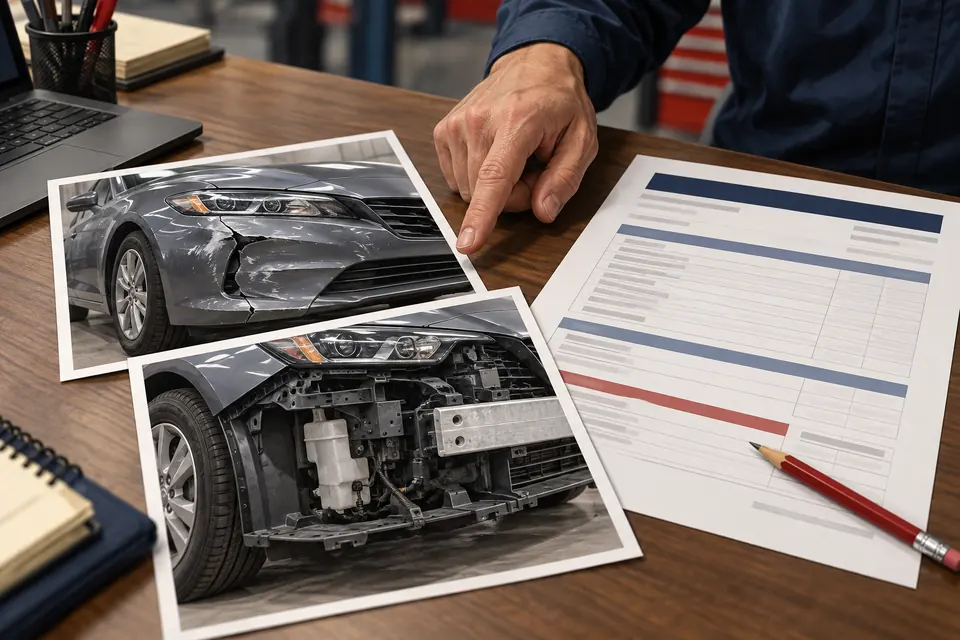
Generated educational illustration: supplement estimate new finding review. Not an actual customer repair, diagnostic result, staff member or Boudreaux’s facility.
Why are supplements common after teardown?
A supplement documents additional damage or required operations identified after the initial estimate. Teardown often creates the access needed to establish those items.
The documentation may include photographs, parts information and explanations of required work. A supplement is not automatically evidence that the initial estimate was careless, nor a guarantee of payment. Ask which findings are new, how they support the proposed work and which authorization or coverage questions remain.
Track each changed line through review
Keep a short record of the estimate date, changed line, supporting finding and current response. If only one item is disputed or awaiting clarification, identify it rather than treating the entire supplement as one undifferentiated pending decision.
Ask who is supplying the next explanation and when another update is due. Record your own authorization separately from the insurer’s review. That record helps the shop explain which operation can proceed and which still needs an answer.
Related Repair Guidance
A supplement should explain what changed
Start with the earlier estimate and the current dated version. Ask the shop to identify the new finding or requirement behind each important change. A supplement is easier to understand when it connects the inspection stage, the supporting information and the proposed operation rather than presenting only a larger total.
New access can reveal an item that was not visible during an exterior inspection. Procedure research or more precise parts identification can also clarify the required scope. Ask which kind of change is being discussed. A newly exposed component and a revised part description are different explanations, even if both appear in the same updated estimate.
For a hypothetical bumper inspection, the first estimate might describe visible cover damage. Later access might establish a separate attachment concern behind it. The useful explanation identifies that attachment, the evidence and the proposed action. This example illustrates a revision; it does not predict the findings on your vehicle or describe a particular Boudreaux’s claim.
Keep the dates with the documents. If another person is discussing the first version, provide the current one and identify the changed lines. This avoids a conversation in which an older total is mistaken for the complete scope now being proposed.
Follow the document through review without assuming approval
Ask what supporting information was submitted with the revision. Depending on the question, that may be a photograph identifying the component, an explanation of the inspection finding, parts information or the relevant requirement for an operation. The evidence should address the actual line under discussion rather than an unrelated general statement about repairs.
Submission and acceptance are separate milestones. Ask whether the documents have been sent, whether a response has been received and which items remain under review. A useful update identifies the unresolved question and who is following up instead of describing every pending item as approved.
If an insurer requests clarification, ask which line or evidence needs explanation. Keep that request with the current estimate so the response addresses the same issue. Avoid assuming a request for information establishes either that the operation is unnecessary or that payment will ultimately be accepted.
Discuss your own authorization separately. The shop can explain its findings and proposed work, while the insurer addresses coverage and payment for the claim. Understand what decision is being requested from you and any payment question that remains open before approving additional scope.
Understand how the revision affects the next stage
Ask whether the change affects parts ordering, access, another operation or a later check. An added item can influence the sequence even when it looks small on the estimate. Identify the dependency controlling the next step and request an update point.
A revised total does not by itself establish a revised delivery date. Ask which milestones have been reached: the item identified, the decision reviewed, the part ordered, the part received or the relevant operation ready to proceed. These milestones help explain timing without relying on an unsupported promise.
If a transportation or rental arrangement depends on the schedule, verify the applicable arrangement directly with the responsible provider or insurer. Do not assume a supplement automatically extends a particular benefit. Keep the shop’s timing information and the coverage answer as separate records.
For Boudreaux’s, contact the New Orleans or Luling location handling the vehicle and reference the estimate date. Request a concise summary of confirmed changes, remaining questions and the next update. The goal is a repair conversation grounded in the current evidence and decisions, not a prediction that every supplement follows the same approval path.
Questions About Collision Repair Supplements After Teardown
What a supplement should explain
A supplement updates a repair scope when additional information supports a change. Hidden damage, a confirmed part requirement or an operation identified after access can be reasons for revision. The explanation should identify the finding and the added or changed work, rather than only a new total.
Ask which estimate version is current and what owner authorization is needed. A submission to an insurer does not automatically settle every approval or payment question. Keep the revision and its supporting records with the initial estimate.
Compare the scope, not just the dollar difference
Separate newly identified damage from changes in parts, access or other operations. If a line is unclear, identify it and ask for its purpose. The goal is a traceable plan, not an assumption that every change is either unnecessary or automatically approved.