
BOUDREAUX’S COLLISION · REPAIR EDUCATION
Wheel Bearings After a Collision
A wheel bearing or hub can require assessment when an impact affects the wheel area. Noise, movement or other symptoms need diagnosis; not every sound after a crash establishes bearing damage. A wheel that rotates is not by itself a complete condition check.
From the Boudreaux’s archive
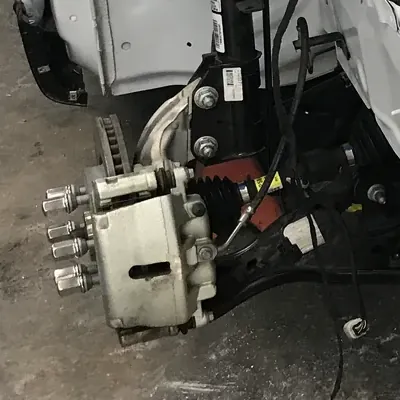
Owner-supplied GMC project archive detail showing an exposed wheel hub and brake assembly during disassembly. It illustrates access to the wheel-area components, not internal bearing condition, a replacement requirement, a wheel-speed diagnosis or a completed repair.
What to Clarify for Your Vehicle
Describe new noises and when they occur without attempting a risky road test. Ask which hub, bearing and neighboring components are being evaluated. The selected shop should confirm the specific operation and any service arrangement needed.
A bearing concern needs an inspection
Wheel bearings support wheel rotation. An impact affecting the wheel assembly can make the bearing and surrounding components relevant to the inspection. Noise, looseness or vibration may prompt diagnosis, but those symptoms alone do not identify the bearing as the failed part.
The wheel, tire, hub and other nearby components can present related symptoms. Replacing a bearing without establishing the cause may not resolve the concern.
Provide a useful symptom description
Describe when the noise or vibration occurs, whether it began after the impact and which area it seems to come from. Do not perform high-speed or abrupt-turn tests to demonstrate it. An unsafe assembly should be assessed and transported appropriately.
Ask what inspection supported the diagnosis and whether related damage was evaluated. At delivery, review any unresolved symptom with the shop. Keep the diagnostic explanation with the repair scope, particularly if additional mechanical work was authorized separately.
Example: a new rotating noise after a wheel impact
A vehicle develops a new noise after its wheel is struck. The owner may suspect a bearing, but the repairer still needs to distinguish among possible causes in the wheel assembly and nearby components. The sound’s location and circumstances are useful history, not a confirmed failed part.
Describe whether the noise was present before the impact, when it occurs during normal use and whether another symptom accompanies it. Do not perform high-speed or abrupt-turn tests to sharpen the diagnosis. If operation is uncertain, discuss transport and assessment.
Ask what inspection supports the proposed work and whether related damage was considered. If a bearing is replaced but a symptom remains, report it rather than assuming the new part proves the whole assembly is resolved. Keep the diagnosis and final scope together. This avoids turning a plausible owner guess into an unsupported replacement decision and makes any later follow-up easier to understand.
Further repair information
Manufacturer example: Chrysler bearing and hub collision bulletin
General background and manufacturer examples do not replace current applicable information for the actual vehicle and operation.
Related Guidance
A wheel impact needs more than a noise diagnosis
Depending on the vehicle, it may also sit near wheel-speed sensing components. A curb strike or collision can involve the tire, wheel, knuckle, suspension and hub together. The repair decision therefore starts with the impact path and the vehicle manufacturer’s inspection instructions, rather than a guess based on one sound.
Tell the shop which wheel took the hit, whether the wheel moved in the opening, and when any new noise appeared. A hum, vibration or grinding sound can have several causes. Calling it a bad bearing before inspection can steer the conversation away from another damaged component. Describe what you noticed during necessary travel; do not make extra trips or deliberate steering maneuvers to reproduce it.
Some manufacturers specify hub or bearing replacement after particular collision conditions even when an obvious symptom is absent. Ask whether an applicable requirement was researched for your vehicle and whether the impact circumstances make it relevant.
Understand the bearing line on the repair plan
A proposal may list a bearing separately or include it within a larger hub assembly. The arrangement depends on the vehicle. Ask the shop to identify the affected corner and explain whether the proposed operation follows an inspection finding, a manufacturer requirement, or both. That explanation is more useful than comparing part names alone across estimates.
Keep related work distinct. An alignment adjustment changes wheel geometry within the available adjustments; it does not restore a damaged bearing. Replacing a hub also does not establish that the wheel, tire or suspension survived the impact. If those items need examination, the plan should show how each question will be resolved.
For a claim discussion, request the supporting finding in ordinary language, such as damage to an attachment or a required replacement following the documented wheel impact. Ask what has been confirmed and what remains pending disassembly. A preliminary estimate should not be mistaken for a completed diagnosis.
What to record before the vehicle returns to use
At handoff, ask which corner was repaired, which neighboring components were assessed, and whether any related warning or symptom remains unresolved. If wheel-speed sensing was involved, ask what applicable diagnostic or functional checks were completed. A post-repair scan and a physical inspection answer different questions.
Keep the invoice and any explanation of the replacement basis with the collision records. If a new concern appears after delivery, report the date, driving circumstances and affected area promptly. Do not remove the wheel or raise the vehicle to investigate on your own. Ask the shop whether transport is appropriate before bringing it back.
Boudreaux’s has two receiving locations, New Orleans and Luling. Confirm the chosen shop and the scope of the collision-related mechanical assessment when arranging intake. This guide does not promise general bearing maintenance at both facilities. For immediate drive-or-tow questions, use the accident help guidance and speak with the receiving shop.