
COLLISION REPAIR
ADAS Calibration After a Collision
Modern vehicles can use cameras, radar and other sensors to support features such as forward-collision warnings, lane-related functions, blind-spot monitoring and parking assistance.
When collision repairs affect the position, mounting, alignment or operating conditions of those systems, manufacturer procedures may require inspection or calibration.
When Calibration May Be Required
Depending on the vehicle, repair and manufacturer procedure, calibration considerations can arise after work involving:
- bumpers or sensor mounting areas
- windshield/camera areas
- radar units or brackets
- suspension components
- wheel alignment
- structural repairs
- camera/sensor replacement or removal
This list is educational, not a claim that every listed repair always requires calibration.
Static and Dynamic Calibration
Some vehicles use static procedures involving targets or fixtures while stationary. Others can require a dynamic procedure performed under specified driving conditions. Some systems can require combinations of procedures.
The exact method comes from the vehicle and manufacturer procedure—not a one-size-fits-all rule.
Why Position Matters
A camera or radar sensor can be physically present and still require calibration if its relationship to the vehicle has changed. Small changes in mounting position, ride height, alignment or component replacement can matter to systems designed around precise reference points.
Alignment and Structure
ADAS work can connect with structural measurements and wheel alignment because the vehicle's geometry can affect the reference conditions used by certain systems.
Related Repair Guidance
Identify the Installed System
Vehicles can use different combinations of cameras, radar, parking sensors and other assistance features. Two similar models may not have the same package. The repair plan should identify what is actually installed and which damaged or removed parts intersect it. A general list of ADAS features is not a procedure for a specific vehicle.
Ask which sensor or system is involved and what repair operation creates the requirement. That keeps the conversation tied to the vehicle rather than a claim that every collision requires every calibration or that no warning means no action.
Separate Scanning From Calibration
A diagnostic scan retrieves information from supported systems. Calibration establishes the references specified for a sensor or related system. Clearing codes, programming and initialization can also be distinct tasks. The same tool being used for several operations does not make their purposes interchangeable.
Ask which task is proposed, why it is required and what completion record is available. An estimate line marked “scan” does not independently show that a required calibration took place. The procedure determines the method and the prerequisites.
Prerequisites and Repair Sequence
Depending on the procedure, calibration can require correct mounting, vehicle loading, tire condition or pressure, alignment, target placement and workspace conditions. These are examples of why the exact requirements need research; they are not a checklist that applies identically to every vehicle.
Completing repairs and prerequisite checks in the appropriate sequence helps establish the reference conditions. Ask which steps must happen first and what confirms them. A sensor that is present, connected and free of codes may still have a setup requirement after the affected operation.
Static and Dynamic Methods
A static calibration uses a stationary setup with the specified targets and equipment. A dynamic procedure uses prescribed driving conditions. Some systems require a combination. A routine test drive is not an interchangeable substitute, and the method cannot be selected only because it is more convenient.
Ask which method applies and what establishes completion. Confirm the vehicle-specific method and the location carrying it out before the visit. Ask the selected shop whether a specialist is involved and what records will be supplied.
Documentation and Owner Questions
A useful record identifies the vehicle, system, procedure and completion result, with relevant limitations or prerequisite information where available. A generic clear-scan report and a calibration record answer different questions. Ask the shop to identify the procedure and result for each affected system, and to explain any unfinished requirement. I-CAR’s scanning and calibration guidance explains why the two tasks should be distinguished.
ADAS Think is among New Orleans planning resources for identifying calibration considerations. Confirm the actual method, provider and any relevant certification separately. Before arranging work, confirm the system, location and process. Do not intentionally test collision avoidance or lane assistance against a hazard.
Go Deeper Into Your Repair Questions
More Answers in This Repair Topic
Sensor mounting and vehicle-specific calibration questions
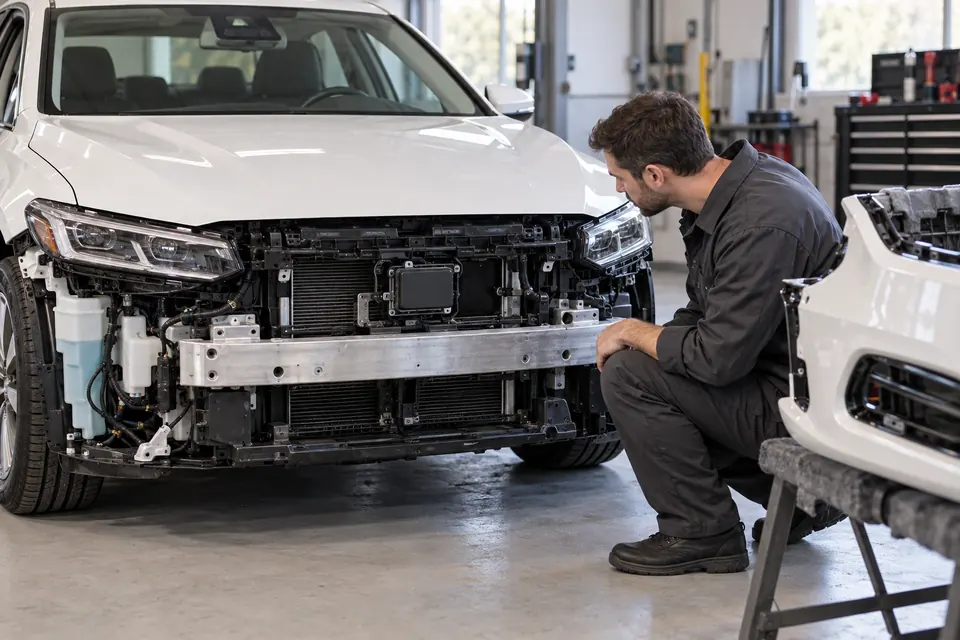
Generated illustration of driver-assistance sensor locations. The vehicle-specific procedure determines any required calibration and completion record.