
BOUDREAUX’S COLLISION · REPAIR EDUCATION
Structural Repair vs Panel Adjustment
Moving a fender, hood or door to improve fit is not the same operation as restoring specified structural dimensions. An outer panel may be adjustable even when its supporting structure needs evaluation. Conversely, a fit issue can be limited to an attachment without structural damage.
Illustration: Structural Repair vs Panel Adjustment
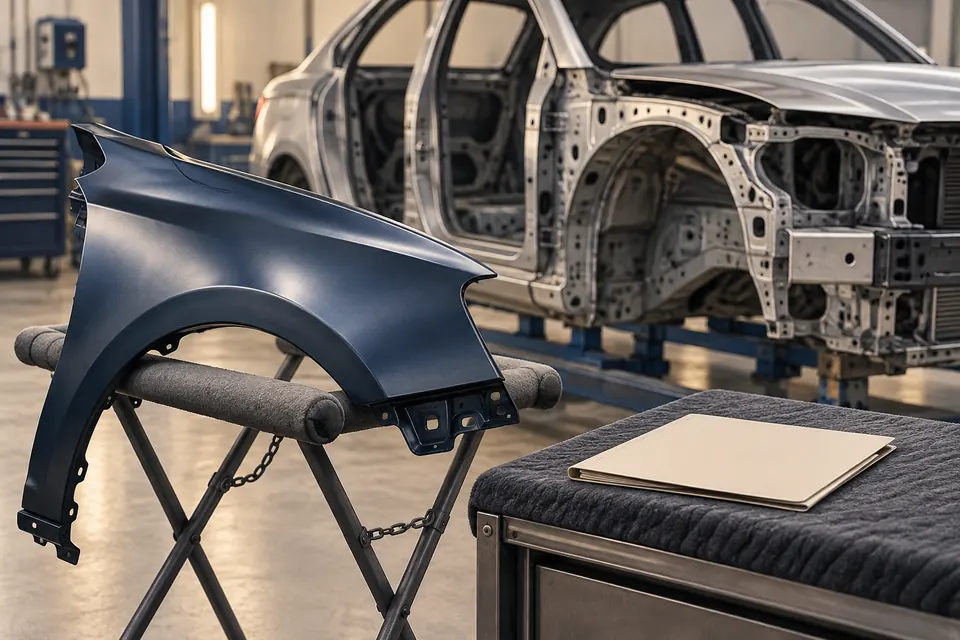
Generated educational illustration: panel fit and structural scope. Not an actual customer repair, diagnostic result, staff member or Boudreaux’s facility.
What to Clarify for Your Vehicle
Ask what finding supports the proposed operation. Useful documentation identifies whether the concern involves an outer panel, a mount, an opening or a structural component. A label such as frame repair should not replace a description of the actual affected parts and procedures.
A better-looking gap does not answer every structural question
Panel adjustment addresses the position of a particular exterior or closure component. Structural correction concerns a different condition involving the relevant body or frame geometry. Either can affect appearance, but they are not interchangeable descriptions.
Ask which condition was established before interpreting the proposed operation. A changed panel gap can be an observation that prompts assessment; it is not enough to determine the cause. Likewise, a structural concern should be explained through its findings rather than through appearance alone.
The repair plan should identify whether the work concerns the panel, attachment, opening or underlying structure. That distinction helps an owner understand the estimate without assuming every fit issue is a frame problem.
An example of why the cause matters
Imagine a door that sits differently after an impact. One assessment might identify an adjustment or attachment concern. Another might establish a relevant change in the opening or surrounding structure. The observation is similar, but the work needed to address the confirmed condition can differ.
A useful explanation says what was checked and which finding supports the treatment. It should not jump directly from “the gap looks wrong” to a repair conclusion. Ask what remains uncertain if further access or measurement is needed.
A cosmetic improvement alone is not the same explanation as documenting the applicable structural condition. Ask how the proposed work and verification relate to the identified cause.
Compare the operations by the question each answers
- What panel or opening observation started the assessment?
- Which condition was actually confirmed?
- Does the proposed work concern adjustment, an attachment or structure?
- What information supports the repair method?
- Which fit and dimensional checks apply afterward?
Keep those answers connected to the estimate version. That makes a later supplement or scope explanation more precise than treating all work near an opening as one broad panel adjustment.
Further repair information
General background and product examples do not replace the applicable requirements for the actual vehicle and operation.
Related Guidance
Compare proposals by the affected component and repair stage
Two estimates that use alignment or adjustment language may describe different tasks. Ask whether each proposal concerns an outer panel, an attachment, a body opening or a structural operation. Check the inspection stage and whether concealed access is still pending. A proposal written from exterior photographs may not have the same information as one prepared after disassembly and measurement.
If the scope changes, retain the dated revision and the finding that explains it. At delivery, keep relevant fit and measurement records together without assuming one replaces the other. If a latch, steering or other control concern appears, report it separately and discuss safe use before further driving. This guide helps you ask which work addresses which condition; it does not diagnose structural damage from a gap or promise that a panel adjustment is the correct solution for your vehicle.