
Illustration: Steering-Angle Sensor Resets After Collision Repair
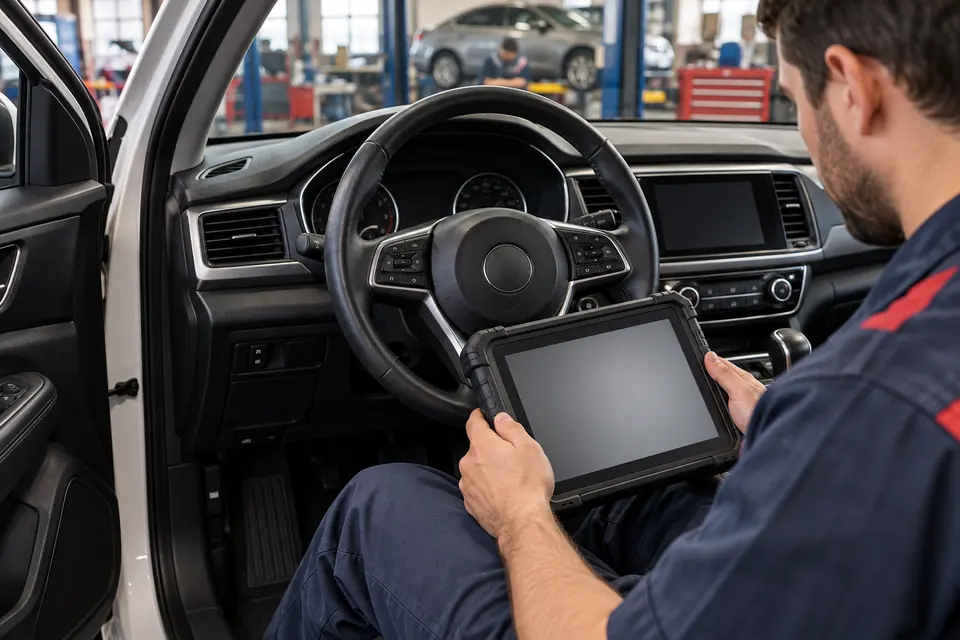
Generated educational illustration: steering position electronic setup review. Not an actual customer repair, diagnostic result, staff member or Boudreaux’s facility.
Does resetting a steering-angle sensor replace alignment?
A steering-angle sensor provides information about steering position. Certain repairs or alignment operations can have reset or calibration requirements under the vehicle’s procedures.
This electronic setup is different from physically correcting wheel geometry or repairing a damaged steering part. Ask whether the applicable procedure requires a reset and when it belongs in the repair sequence. An off-center wheel should be diagnosed rather than corrected by an electronic reset alone.
How This Fits Into the Repair Plan
Keep three questions separate: the physical steering condition, the geometry assessment and any required electronic reference setup. Ask which finding or vehicle requirement supports each proposed line.
Related Repair Guidance
Steering position information and physical steering condition
A steering-angle or steering-position sensor supplies information about steering position. Its role is different from the physical condition of steering and suspension components. When a collision repair plan includes a reset or calibration, ask which system and requirement the operation addresses.
An off-center wheel, unusual steering feel and an electronic warning are observations to investigate. They do not all establish the same fault. Tell the shop what changed after the impact and whether a similar concern existed before it. Keep that history separate from a diagnosis supplied by someone who has not assessed the vehicle.
I-CAR describes steering-angle setup requirements that can be associated with alignment, structural repairs or other specified events. The relevant vehicle information determines what applies. See I-CAR’s steering-angle sensor overview for background, then ask about the actual operation on your vehicle.
An electronic reset does not repair a damaged physical component or independently correct wheel geometry. Ask the shop to distinguish inspection, mechanical or structural work and electronic setup when explaining the plan. That distinction helps you understand several related estimate lines without treating them as duplicates.
Understand the requirement and the sequence
Ask what work or finding makes the setup relevant. The answer should connect the sensor operation with the identified vehicle and applicable procedure. A generic statement that every modern car needs the same reset is less useful than that specific explanation.
Ask which relevant work must be complete before the setup can proceed. Alignment and other physical work can be part of a larger sequence, while diagnostic information addresses its own questions. The procedure determines the prerequisites; a general article is not a set of instructions for an owner to perform the operation.
For a hypothetical repair, a plan might include inspection of an affected wheel area, required physical work, alignment and a separate electronic setup. Those tasks can be related while still accomplishing different purposes. The example does not establish that all four are required for every impact.
If the requirement is still being researched, request the open question and the next update point. If another provider will perform an operation, clarify who coordinates it and how the result is added to the repair record. Confirm arrangements with the selected shop rather than assuming identical coverage for every vehicle at both locations.
Make the completion explanation useful at pickup
Ask what record or explanation documents the setup performed and when it occurred in the repair. Keep the date, vehicle identity and operation name with any supplied information. A scan report, an alignment record and a setup result can represent different tasks.
If the task could not be completed, ask what prevented it and what remains unresolved. An attempt should not be mistaken for a completed operation. Discuss the vehicle’s status and handling directly with the shop before assuming an unexplained record is an all-clear.
Refer back to the steering concern you described at intake. Ask how it was investigated and how the completed work relates to it. The fact that a reset was performed does not by itself explain a continuing physical symptom.
After pickup, record any new warning or steering concern with its timing and circumstances and contact the repairing location. Avoid deliberately creating an unsafe road test or clearing diagnostic information to see what happens. Ask the shop what handling and follow-up are appropriate.
At Boudreaux’s, New Orleans has the confirmed alignment capability. Discuss the exact vehicle and related setup with the location handling the repair. Your estimate request begins that conversation; it does not confirm an appointment or a universal electronic-service arrangement.
Questions About Steering-Angle Sensor Resets After Collision Repair
Keep the completion record clear
If the estimate lists alignment and sensor work, request the purpose of each. At delivery, report any remaining warning or off-center wheel. A completed electronic procedure should not be used to explain away an unresolved physical concern.