
From the Boudreaux’s archive
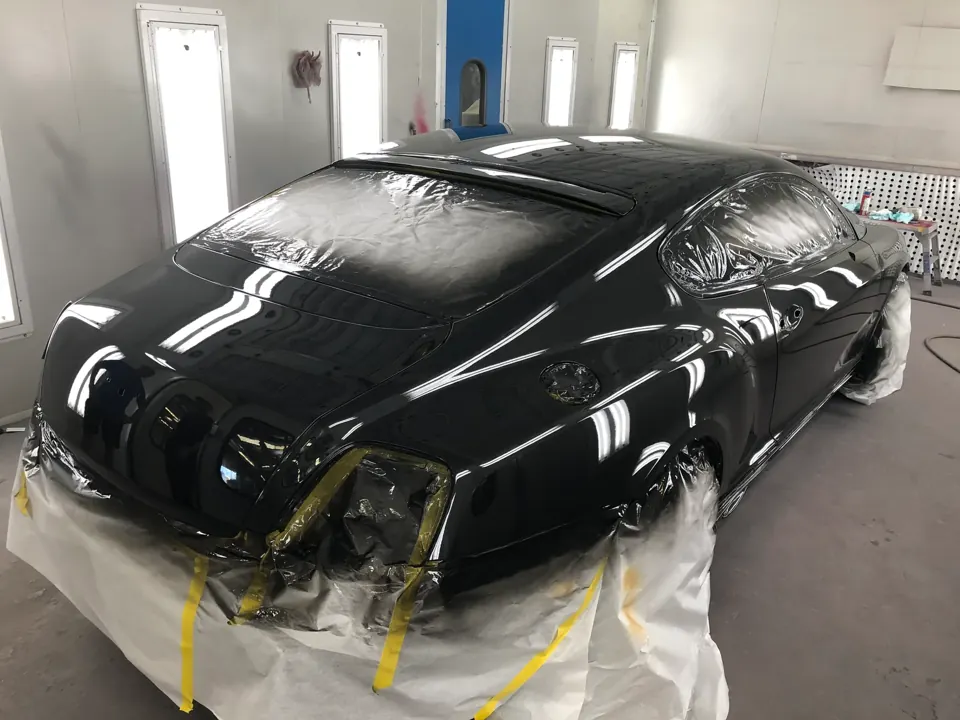
Owner-supplied archive view showing booth-light reflections across a masked vehicle. This is lighting context, not a controlled daylight comparison, measured color match or record of a selected formula.
Why does paint look different indoors and outdoors?
Lighting changes how a color and its effect particles appear. A match evaluated under only one lighting condition may not look the same outdoors or from a different angle.
Color-corrected lighting and comparison with the actual vehicle help assess the proposed finish. A spray-out can reveal differences before painting the vehicle. Ask how the shop checks appearance; photographs taken under different lighting are not a reliable way to compare two colors.
How This Fits Into the Repair Plan
Describe the panels, light and viewing position together. Ask how the actual finish and any relevant sample were compared; a photograph of booth reflections is context rather than a matching result.
Related Repair Guidance
Describe the viewing conditions as well as the color concern
When a finish appears different, tell the shop where and how you observed it. Direct sunlight, shade, indoor lighting and a photograph can produce different impressions. The conditions help make the concern repeatable rather than relying on a broad statement that the color is wrong.
Describe whether the difference is between adjoining panels, across one panel or visible only from a particular position. Identify the side and surface involved. A comparison made in one condition does not establish the same appearance under every other condition.
Phone images are useful context, but camera exposure, glare and screen settings can alter what another viewer sees. Keep an overall image with the closer view if photographs are useful. Do not treat a picture viewed on a different screen as the only basis for judging the actual finish.
Share known earlier paintwork or coating changes on nearby panels. The comparison needs to distinguish the repair area from the existing vehicle finish. A paint code identifies information for the process without documenting the history or appearance of every adjoining surface.
Related reading: Viewing Angle and Metallic or Pearl Paint and Automotive Paint Matching After Collision Repair.
Understand how a supported comparison informs the plan
Ask how the shop assesses color appearance on the actual vehicle and what relevant sample or variant information is considered. The useful explanation relates the finish choice to the vehicle rather than promising that the paint code supplies one universally identical result.
For finishes whose appearance changes with angle, ask whether the comparison considers the relevant viewing positions as well as lighting. A straight-on view and an angled view can answer different questions. Neither should be substituted for the other without explanation.
If adjoining work or blending is proposed, ask which operation and layer are involved. The reason should be connected to the supported finish plan. A color concern does not by itself identify the complete preparation or clearcoat scope.
Do not ask the shop to solve a lighting-dependent impression by applying an arbitrary product or polishing an unfamiliar surface. The actual finish condition and supported method should determine the next step. An owner’s clear observation is more useful than an improvised technical remedy.
Make handover and follow-up comparisons useful
At pickup, discuss the visible concern with the shop in conditions that allow it to be understood. Identify the panels and viewing position rather than relying only on a phone image. Ask what finish operations were completed and what care guidance applies.
If a later difference appears, record when and where you noticed it and the conditions that make it visible. Contact the repairing shop before polishing, coating or otherwise changing the surface. Altering it can complicate assessment of the original observation.
Ask about the applicable follow-up terms for the actual repair if needed. Ask for the terms for your repair and assessment of the actual viewing conditions. The useful result is an explained assessment of the actual vehicle.
Before approving a revised finish proposal, ask which finding supports the change and which surfaces are involved. Keep the dated scope and explanation together. Boudreaux’s can discuss the vehicle’s current finish and the observed concern using information that is clearer than a single unexplained color label.
Questions About Lighting and Automotive Paint Matching
Technical Reference
PPG: creating a sprayout card. Confirm the applicable vehicle and product-system guidance with the repairing team. This reference does not identify Boudreaux’s paint brand, warranty or a universal care interval.