
Illustration: Automotive Color Variants: Why One Paint Code Can Have Options
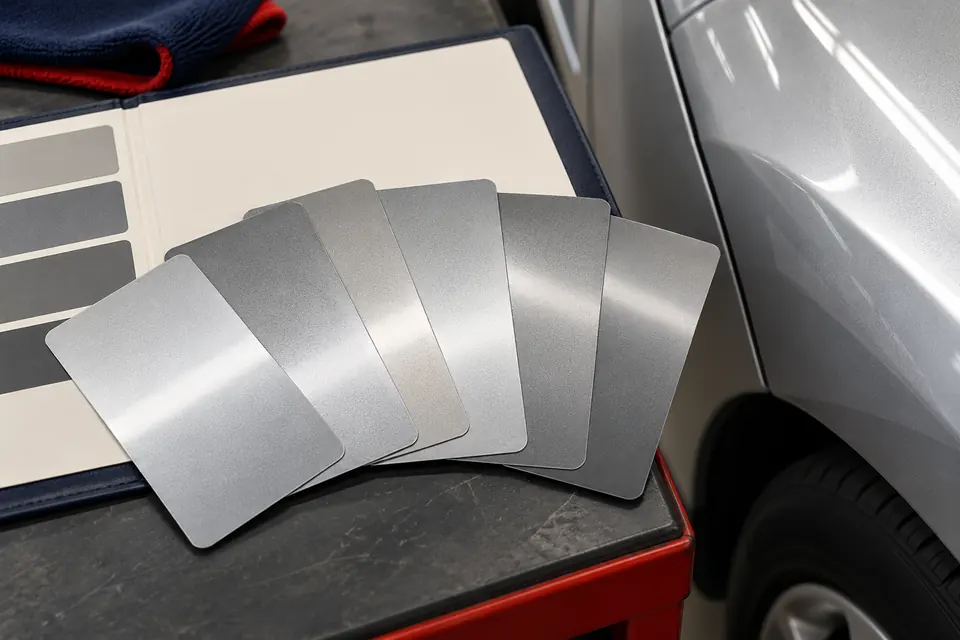
Generated educational illustration: paint code variant sample selection. Not an actual customer repair, diagnostic result, staff member or Boudreaux’s facility.
Can one factory paint code have several variants?
A color code can have more than one refinish formula or variant. Differences in the original finish and the vehicle’s current appearance can affect which option is the best starting point.
The shop may compare color samples, instrument readings or a spray-out with the actual vehicle. The closest formula still needs the correct application. Ask whether the selected variant was compared with the surrounding finish rather than assuming every vehicle with the same code looks identical.
How This Fits Into the Repair Plan
Ask how the chosen matching option was compared with the finish present. Keep any changed variant information and affected surface scope with the dated plan rather than assuming the first listed name settles the work.
Related Repair Guidance
A code and a matching option answer different questions
A paint code can identify useful color information while a matching system may provide relevant variants or options. Ask how the actual vehicle finish is compared with the available information. Do not assume every code has only one universally identical result or that every listed option fits your vehicle.
The relevant formula or variant needs to be considered against the finish actually present. Share earlier repairs, coatings or known changes and distinguish uncertainty from facts. An original code does not document the history or condition of every adjoining panel.
A variant label should not be selected only because its name sounds familiar. Ask what supported comparison informs the choice. The owner’s useful role is understanding the decision rather than choosing a formula from a generic chart or online photograph.
If the code itself is unclear, ask what identification resolves it before the proposal is treated as final. A guessed character or broad color name should not silently become the foundation for the complete refinish scope.
Related reading: Why the Paint Code Is a Starting Point and Metallic Paint Matching and Flake Appearance.
Understand the comparison and the related work
Ask which relevant surfaces, lighting and viewing positions are considered on the actual vehicle. A sample or screen image has a purpose, but it should not be treated as universal proof of appearance under every condition.
Where the finish changes with viewing angle, describe that observation clearly. A straight-on comparison and an angled view can answer different questions. The relevant paint-system information and actual comparison should guide the supported choice.
If blending or adjoining work is proposed, ask which surfaces and layers are involved. The variant question is not the entire preparation or clearcoat scope. Keep those operation descriptions clear instead of treating a formula selection as proof that every finish requirement is settled.
If assessment or identification changes the plan, request the dated revision and explanation. Ask whether it changes the selected information, preparation, color operation or adjoining scope. Keep the reason with the estimate so the decision remains reviewable.
Keep the selected information in context
At pickup, discuss visible finish on the actual vehicle and ask what operations were completed and what relevant care guidance applies. A recognizable variant name is identification context, not the entire record of preparation and finished work.
If a concern appears later, record the panel, conditions and timing and contact Boudreaux’s before changes. Do not apply products to try to force the finish toward an assumed chart color. The actual surface needs assessment rather than an improvised formula judgment.
Ask about applicable follow-up terms for the actual repair where needed. This guide does not promise that every matching option creates an identical result on every vehicle or screen. Keep the final scope and relevant instructions with the record.
For a comparison between estimates, identify whether they include the same surfaces, preparation and supported color work. Different labels may describe different assumptions rather than a directly equivalent operation at another price.
Questions About Automotive Color Variants: Why One Paint Code Can Have Options
Technical Reference
PPG: identifying a refinish color formula. Manufacturer requirements for the exact vehicle control the repair method. A reference link does not imply Boudreaux’s certification or affiliation.